
Has Programming Ended in the AI Era?
A Shaken Assumption: Do Humans No Longer Need to Write Code?
In recent years, the idea that “programming is over” is no longer an exaggeration—it has become a realistic question for many people. As LLM-based tools begin to take over a significant portion of code writing, tasks that once required hours of thought are now repeatedly being completed in minutes. Especially for simple CRUD APIs or script-level work, it is now common to obtain results faster than writing the code manually. At this point, a natural question arises: do we still need to learn programming in the future?
This question feels convincing not only because technology has advanced. In many organizations, performance is increasingly evaluated based on speed, and the ability to quickly produce results using AI directly translates into visible outcomes. For junior developers or beginners, the act of writing code manually can start to feel inefficient. If a system already knows the answer, why should one go through the process of writing working code from scratch? In this context, the narrative that “prompting will replace coding” is becoming stronger.
However, this question hides an important assumption: that “the act of writing code itself is the essence of programming.” If this assumption were true, then once code generation is automated, programming might no longer be a critical skill. But this assumption oversimplifies the actual structure of software development. Code is merely the output. Before it comes the process of defining problems, designing solutions, and controlling complex systems. Automating only the output may enable production, but it does not guarantee understanding or control.
Therefore, this article does not engage in the debate of whether programming is necessary or not. Instead, it reframes the question itself. What we need to consider is not who writes the code, but who can understand and control it. This distinction is not just semantic—it fundamentally redefines how development will be practiced and what the role of developers will be. And to clarify this, we must first revisit what programming actually is.
The Essence of Programming: Not Code, but the Control of Complexity
What Exists Before Code: Problem Solving and Structural Design
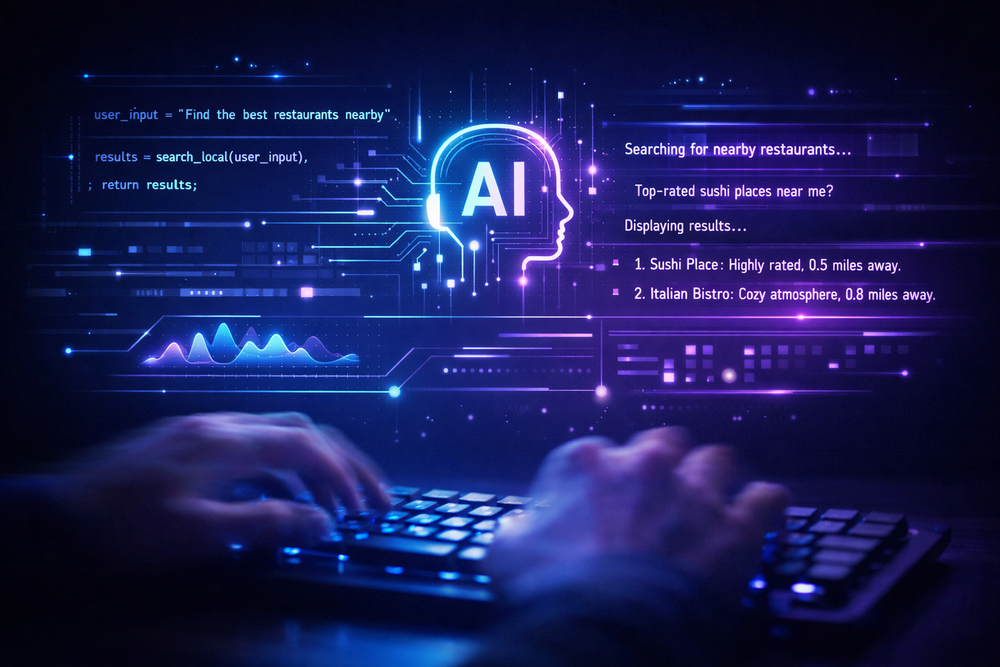
The moment programming is reduced to code writing, AI appears as a powerful substitute. But even a slightly deeper look into the practice of programming reveals that code writing is only one part of a much larger process. Developers first define the problem to be solved, decide how to break it down, and design the relationships between its components. Only then do they translate that structure into code. In other words, code is the result—not the essence.
The most important ability in this process is not simply solving problems, but transforming them into a manageable form. Real-world problems are often complex, ambiguous, and filled with constraints. It is impossible to directly translate them into code as they are. Developers must repeatedly decompose problems, remove unnecessary elements, and retain only the essential structure. This is the act of controlling complexity. And this ability remains constant regardless of the language or tools used.
Programming as the Skill of Managing Complexity
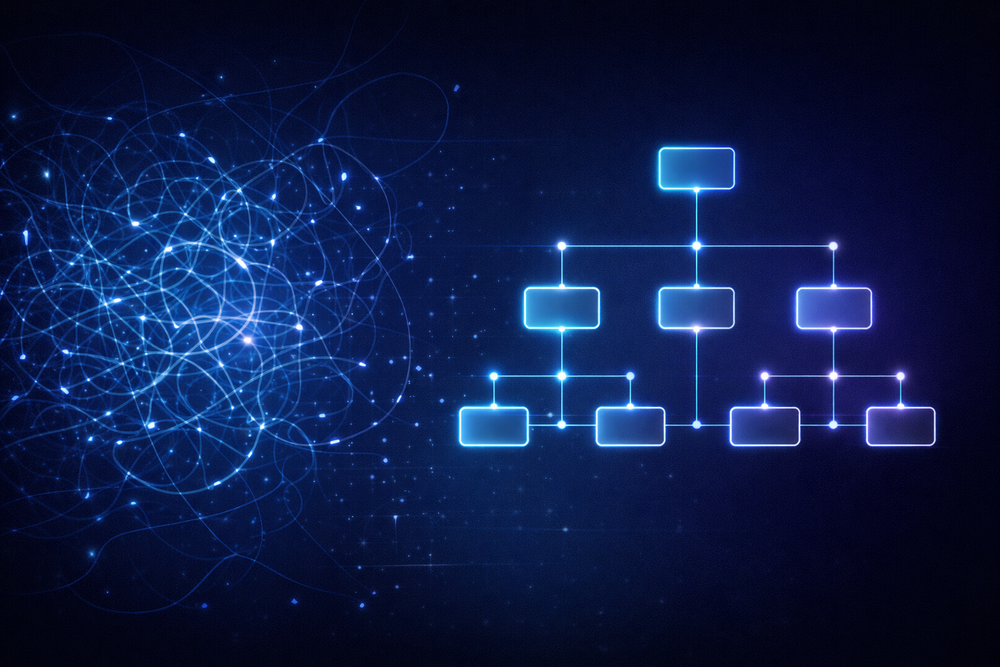
Complexity is an unavoidable element in software systems. As features grow, data accumulates, and systems scale, complexity naturally increases. The problem is not the existence of complexity, but when it is left uncontrolled. Uncontrolled complexity leads to bugs, makes maintenance difficult, and ultimately destabilizes entire systems. Therefore, a good developer is not someone who creates more features, but someone who reduces complexity—or at least keeps it within a manageable level.
From this perspective, the evolution of programming languages and frameworks has followed the same direction. Their goal has been to provide higher levels of abstraction, reduce repetitive work, and allow developers to focus on core problems. But all these tools are merely means to better manage complexity. No matter how advanced the tools become, if the person using them does not understand the structure, complexity will inevitably become unmanageable again.
At this point, an important question emerges. If code generation is automated, does complexity disappear as well? Or does it remain in another form? This question is central to understanding programming in the AI era. And to answer it, we must first examine how past technological advancements have dealt with complexity.
The Traditional Paradigm: Abstraction Has Reduced Complexity
From Assembly to High-Level Languages: Predictable Simplification
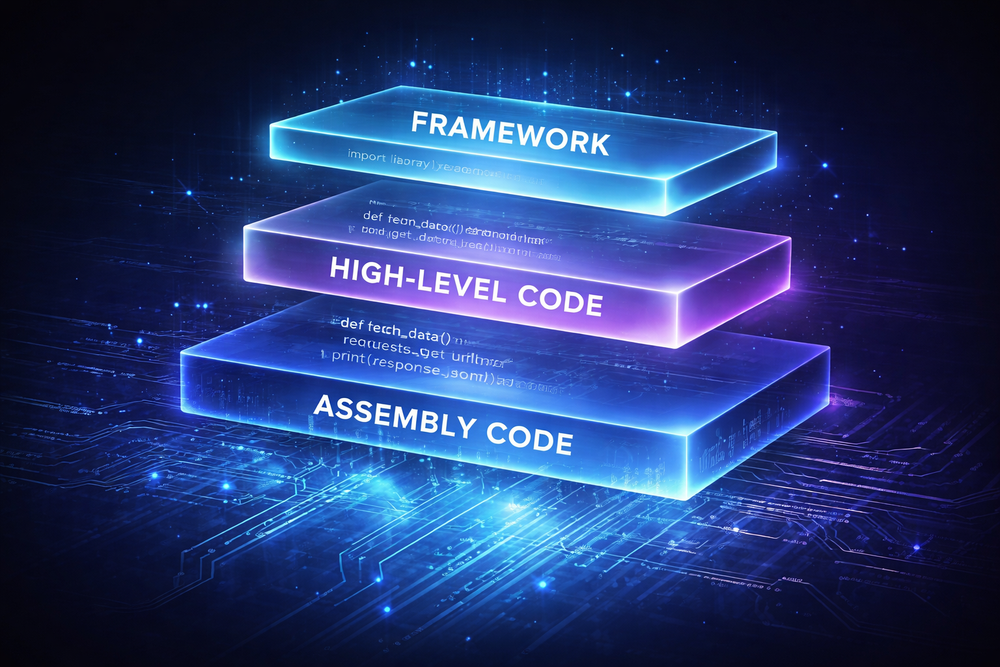
Looking at the history of software development, technological progress has not merely enabled more functionality—it has consistently moved in the direction of reducing complexity. In the early days, assembly language required direct control at a hardware-near level, demanding a high cognitive load. A single small mistake could break the entire program, and understanding code required knowledge of hardware architecture. Programming was a task that only a limited number of people could perform.
The introduction of high-level languages fundamentally changed this situation. Through constructs such as loops, conditionals, and functions, developers no longer needed to deal directly with hardware details. The key point is that this abstraction did not simply add convenience—it transformed complexity into a manageable form. Developers could express intent more clearly with less code, improving the overall comprehensibility of systems.
Deterministic Systems and Reliable Transformation
A critical component in this process was the compiler. Compilers transform high-level code into machine code, but this transformation is fundamentally deterministic. Given the same input, they produce the same output, and the process is predictable. Developers can rely on this property to reason about system behavior and trace the cause of problems when they occur. In other words, abstraction does not merely reduce code—it provides a predictable structure that enables complexity to be managed.
This paradigm later extended to frameworks and libraries. Developers could operate at increasingly higher levels, and repetitive tasks became more automated. However, the crucial point is that all of this progress moved in the direction of reducing or minimizing complexity. Unnecessary complexity was hidden behind abstraction, allowing developers to focus only on what mattered.
From here, a natural next question arises. Is today’s AI-based code generation simply an extension of this trend, or is it something fundamentally different? If it is the same, then we have merely gained another abstraction tool. But if it is different, then we are standing at a point where the very way we handle complexity is changing. Understanding this distinction is the starting point for truly understanding programming in the AI era.
A New Structure: LLMs Are Not Abstraction, but Generation
Not Compilation, but Sampling: The Rise of Non-Deterministic Systems
The traditional paradigm we examined earlier shared a common characteristic: the relationship between input and output was predictable. Whether transforming high-level languages into assembly or processing logic within frameworks, the results followed consistent rules. However, LLM-based code generation is fundamentally different. Even with the same prompt, there is no guarantee that the same code will be produced each time. This system is not a rule-based transformer, but rather a sampling system that selects the most plausible result from a probabilistic distribution.
This difference is not merely an implementation detail. It fundamentally changes how developers understand and control systems. In the past, it was possible to reason about how code would behave, and that reasoning carried a high level of reliability. But with LLM-generated code, it is difficult to fully trace the generation process, and often unclear why a particular approach was chosen. In other words, the result exists, but the process is opaque. This opacity introduces new burdens in every stage—debugging, optimization, and scaling.
A Prompt Is Not Code
Some argue that “prompting is the new coding.” But this analogy misses a critical distinction. Programming languages have clearly defined syntax and semantics, and code written in them is guaranteed to perform specific behaviors. In contrast, a prompt is merely a means of conveying intent, and the result depends on the system’s internal state and probabilistic choices. A prompt is not a specification—it is closer to a request.
This difference becomes especially clear when dealing with complex systems. For simple tasks, LLMs can be highly effective. But in systems with multiple interacting components, small differences can lead to significant issues. And these issues cannot be resolved simply by tweaking the prompt. This is because the root cause lies not in the code itself, but in the non-deterministic nature of how the code is generated. At this point, we reach an important conclusion: LLMs are fundamentally different from traditional abstraction tools, and treating them the same way is dangerous.

The Core Difference: Complexity Has Not Disappeared—It Has Moved
The Illusion of Productivity: The Rise of Hidden Costs
The most immediate effect of using AI tools is speed. With just a few lines of description, working code is generated, and repetitive tasks are completed rapidly. This experience is powerful, naturally leading to the conclusion that productivity has increased. However, this judgment focuses only on the code-writing phase. From the perspective of operating real systems, new costs emerge in later stages—understanding, validation, and maintenance.
LLM-generated code often succeeds in solving problems, but not always in the most appropriate way. It may introduce unnecessarily complex structures or provide solutions that work in specific cases but fail to generalize. Such code is created quickly, but when modifications or extensions are needed, it often requires far more effort than expected. In other words, complexity has not been eliminated—it has been hidden during the creation phase and reappears later.
Hidden Complexity and the Difficulty of Control
In traditional systems, complexity was directly visible in the code. Developers could read the code, understand its structure, and reduce complexity through refactoring when necessary. However, in LLM-based code, complexity is distributed not only within the code but also across the generation process. It is difficult to know why the code was written in a particular way or what alternatives were considered. As a result, even identifying where to begin solving a problem becomes unclear.
In such situations, code reviews and testing become even more critical. But they also have limits. It is practically impossible to validate every execution path, and when generated code behaves unexpectedly, tracing the root cause can be extremely time-consuming. Developers end up spending more time on understanding and validation, offsetting—or even reversing—the initial gains in productivity.
At this point, one important fact becomes clear: AI has not removed complexity. It has simply moved it elsewhere. And that new location is harder to observe and more difficult to control. Using AI without understanding this structure may lead to systems that appear simple on the surface but are far more unstable internally.

The Sorcerer’s Apprentice: The Risk of Production Without Understanding
The Path to Uncontrollable Systems
In environments where code is generated while complexity remains hidden, developers increasingly add functionality without fully understanding the system. At first, it may seem like adding a small feature. But without a clear understanding of how it interacts with the existing structure, unexpected problems arise. When AI is used again to fix those problems, new solutions are layered on top of old ones, making the structure progressively more complex.
As this process repeats, control is gradually lost. Developers accumulate more code, but their confidence in how that code works diminishes. Eventually, the system reaches a state where “it works, but no one knows why.” This is the classic Sorcerer’s Apprentice trap—a tool initially used for convenience ends up creating a system that can no longer be understood.
Why Writing Code Yourself Still Matters
The most fundamental way to avoid this problem is simple: write the code yourself. This is not just about developing technical skill—it is about understanding the system. While writing code, developers make decisions and experience the consequences of those decisions. The intuition formed through this process cannot be easily gained through theory alone.
The ability to read code is also developed through this experience. Without having written code yourself, it becomes difficult to fully understand code written by others—or generated by AI. And code that cannot be understood cannot be controlled. Therefore, skipping the coding process simply because “AI can write code for you” may seem efficient in the short term, but it is a highly risky choice in the long term.
At this point, we return to the original question. The question of whether we should learn programming is not really about the necessity of writing code. It is about whether we want to possess the ability to understand and control systems. And the answer to that question has already emerged naturally from everything discussed so far.
The Right Place for AI: Not a Code Generator, but an Assistant
Redefining the Tool: From Generation to Understanding
As discussed earlier, using AI purely as a code generator may boost short-term productivity, but in the long run, it risks weakening control over systems. This naturally leads to the question: how should AI be used? The key shift here is to redefine AI not as something that creates in place of us, but as something that supports understanding. This distinction is not merely about usage—it fundamentally changes how developers think.
Using AI as an assistant means placing the developer at the center, with AI serving a supporting role. For example, it can be used to analyze existing code behavior, supplement explanations of specific concepts, or compare multiple approaches. In this process, the developer remains the decision-maker, while AI functions as a tool that supports those decisions. This mode of use strengthens understanding and helps remove unnecessary friction when dealing with complex problems.
What to Delegate—and Where to Stop
The challenge lies in setting boundaries. Without clear criteria for what should and should not be delegated to AI, it is easy to revert to a code-generation–centric approach. In particular, areas such as overall system structure or API design are the most dangerous to delegate. These decisions are not just about implementing functionality—they determine long-term scalability and maintainability. Mistakes in this domain grow exponentially more costly over time.
On the other hand, repetitive tasks, exploratory code writing, or quickly generating specific syntax and expressions are areas where AI can be highly effective. The key is that these tasks do not determine the core structure of the system. In other words, AI should not be used to create structure, but to improve efficiency in implementing it. Without this perspective, developers gradually delegate more decisions to AI and ultimately lose control again.
In this context, the ability to use AI effectively is not simply about writing better prompts. It is about knowing where to delegate and where to intervene. And this ability shares the same foundation as the essence of programming itself—the ability to understand and control complexity. At this point, we can move to the next question: if the role of writing code decreases, what takes its place?

The Direction of Change: Less Coding, More Importance Elsewhere
Beyond Code: The Rise of Thinking and Structure
The claim that the importance of code writing may decrease in the AI era is partially valid. Repetitive and standardized coding tasks are increasingly automated, allowing developers to focus on higher-level problems. However, the key shift is not simply that “we need to code less,” but that “we must focus on different things.”
Developers are moving away from being mere implementers of functionality toward roles that define problems and design solution strategies. In this process, communication skills and clarity of thought become critical. The same applies to interactions with LLMs: vague inputs lead to vague outputs, while clear intent produces more appropriate results. In other words, the ability to use AI effectively is directly tied to the ability to structure and articulate one’s thinking.
The Rise of Architecture and Business Understanding
At the same time, understanding system architecture becomes increasingly important. The ability to determine how an entire system should be structured becomes more valuable than writing individual pieces of code. This includes not only technical design, but also understanding how business requirements are translated into systems. Developers are increasingly positioned as the bridge between technology and business.
Interestingly, these skills were always important but relatively underemphasized. Because code writing consumed much of the time, there was less opportunity to invest in structural thinking or business understanding. Now, as AI takes over some of that workload, more energy can be directed toward these areas. This is not just a shift in roles—it is a redefinition of what makes a developer valuable.
Ultimately, developers in the AI era are no longer evaluated by how well they write code, but by how well they understand problems, structure them, and control complex systems. This shift is gradual, but its direction is already clear. Failing to understand it may lead to a loss of long-term competitiveness, even while appearing technically proficient.

Practical Limits: AI Still Cannot Control Complexity
Technical Limits: Lack of Consistency and Structural Understanding
One optimistic view of AI is that current limitations will eventually be resolved through technological progress. However, the structure of current LLMs reveals clear constraints. LLMs fundamentally operate by predicting the next token, and they struggle to maintain long-term structure or generate consistently coherent designs. This is not merely a performance issue—it is a structural limitation of the model itself.
For example, given the same requirements, an LLM may propose different approaches or generate results that are inconsistent with previously produced code. While this may not be critical in small projects, it becomes a serious problem as systems grow larger. In environments where multiple components interact, a loss of consistency can destabilize the entire structure. And this issue cannot be easily resolved simply by training on more data.
Limits as a Tool and Realistic Expectations
Considering these limitations, viewing AI as a universal solution is risky. AI is undoubtedly a powerful tool, but its role must remain fundamentally supportive. In areas where complexity must be controlled, human intervention is essential. Defining system structure and ensuring its integrity still depend on human judgment.
There are also new costs associated with using AI—validation, debugging, and restructuring. These costs may not be immediately visible, but they grow over time. Therefore, effective use of AI requires not just leveraging its capabilities, but also clearly understanding its limitations and placing it in the right role.
At this point, a balance emerges. AI is transforming development, but not by replacing everything—rather, by redistributing roles. Understanding what remains and what changes within this redistribution is what ultimately defines the developer of the future.
Conclusion: Programming Does Not Disappear—It Becomes Visible
What Changed Is Not the Technology, but the Standard
If we follow the discussion so far, we arrive at a shared conclusion. AI has not eliminated programming. Instead, it has forced us to redefine what we mean by programming. In the past, the ability to write code appeared to be the core competency of a developer. But that standard is no longer sufficient. Code itself can now be generated more easily than ever, yet the ability to judge whether that code is correct, appropriate, and sustainable in the long term remains beyond automation.
This shift is less a technological breakthrough and more a change in standards. Previously, the ability to write code alone could create a certain level of value. Now, it is no longer enough. As AI takes over production, what remains for humans is understanding and control. And this role is more demanding—it requires deeper experience and more sophisticated thinking. Therefore, the statement that “programming has become easier” is only partially true. More precisely, surface-level tasks have become easier, while fundamental tasks have become more important—and more difficult.
Without Understanding, There Is No Control
If there is one message repeatedly emphasized in this article, it is the importance of understanding. The reason we write code and design systems is ultimately to understand and control their structure. AI may appear to be a tool that allows us to skip this process, but in reality, it amplifies the risks of doing so. Systems built without understanding may work at first, but they begin to break down the moment change becomes necessary.
And when that moment arrives, we are forced back to the beginning. We must read the code, understand the structure, and figure out why it works the way it does. This process cannot be delegated to AI. Because understanding is not simply the accumulation of information—it is the combination of experience and judgment. Learning programming, therefore, is not just about learning how to write code, but about developing the ability to understand and control complex systems.
What Becomes Visible: The True Standard of Developers
The AI era does not reduce the need for developers—it makes distinctions between them clearer. Surface-level productivity is no longer enough to differentiate individuals. Instead, the ability to understand structure, define problems, and control complexity becomes the defining standard. For some, this is an opportunity; for others, it becomes a barrier. Because these abilities cannot be acquired in a short period of time.
Ultimately, this transformation leads to a single question: are you someone who generates code, or someone who understands systems? This is not just a choice—it defines the direction of your career. AI will continue to advance, and code generation will become increasingly commoditized. But the ability to decide what to build, how to maintain it, and when and how to change it will remain a human responsibility.
Let us return to the question posed at the beginning of this article. Should we still learn programming in the AI era? Now the question should sound different. Learning programming is not about learning how to write code—it is about learning how to understand and control. And this ability does not disappear as technology evolves. If anything, it becomes more visible.