When Did the Concept of the Software Supply Chain Emerge
There was a time when software development was relatively simple. Developers could build programs with just a text editor and a compiler, and it was common to implement required functionality from scratch. External libraries did exist, but they were limited in number, and developers could directly understand and manage most of the code included in a project. In an era when codebases were not as massive as they are today, this approach was entirely practical. The behavior of a program could be explained clearly within the scope of the code that was written, and developers could understand the system as a single, cohesive structure.
However, as the internet and the open-source ecosystem grew, this situation began to change. Developers no longer needed to implement every feature themselves. Instead, assembling existing libraries became the standard development strategy. This shift dramatically increased productivity but also introduced a new structure. A single program could now depend on dozens, sometimes hundreds, of external libraries. Each of these libraries, in turn, depended on others, forming a complex graph of dependencies. As a result, the proportion of external code began to exceed the code written directly by developers.
The emergence of package managers accelerated this transformation. Tools such as npm in the JavaScript ecosystem, pip in Python, and Maven or Gradle in Java began to automate dependency management. Developers could include dozens of packages in a project by adding just a single line of configuration. While this automation made development more convenient, it also brought a significant shift. Developers increasingly stopped reviewing the full contents of the code they used. Dependency trees grew deeper, and projects began to include large amounts of code that developers had never personally examined.
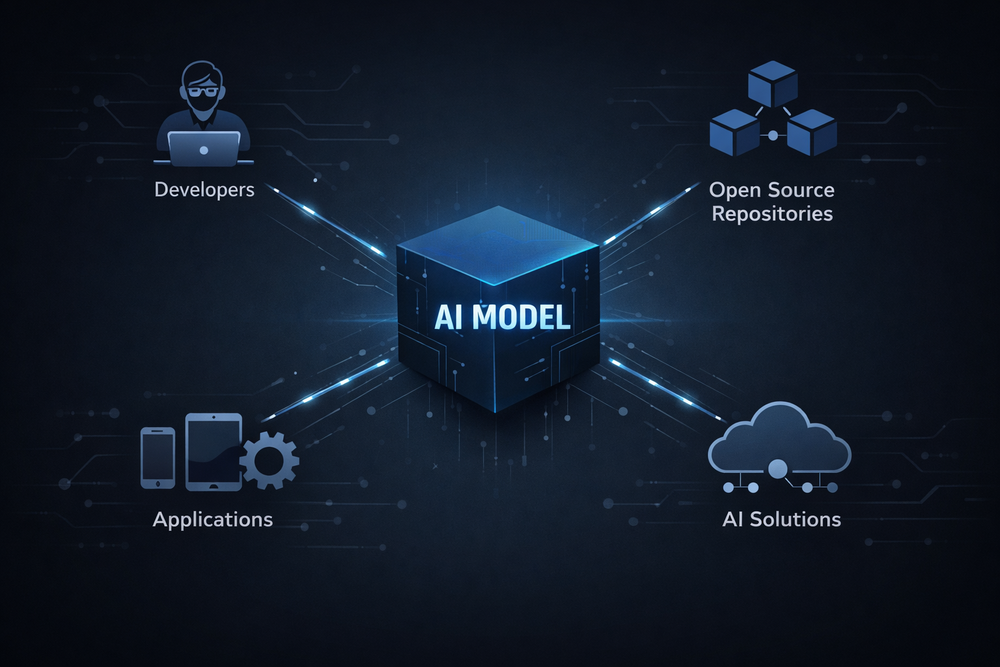
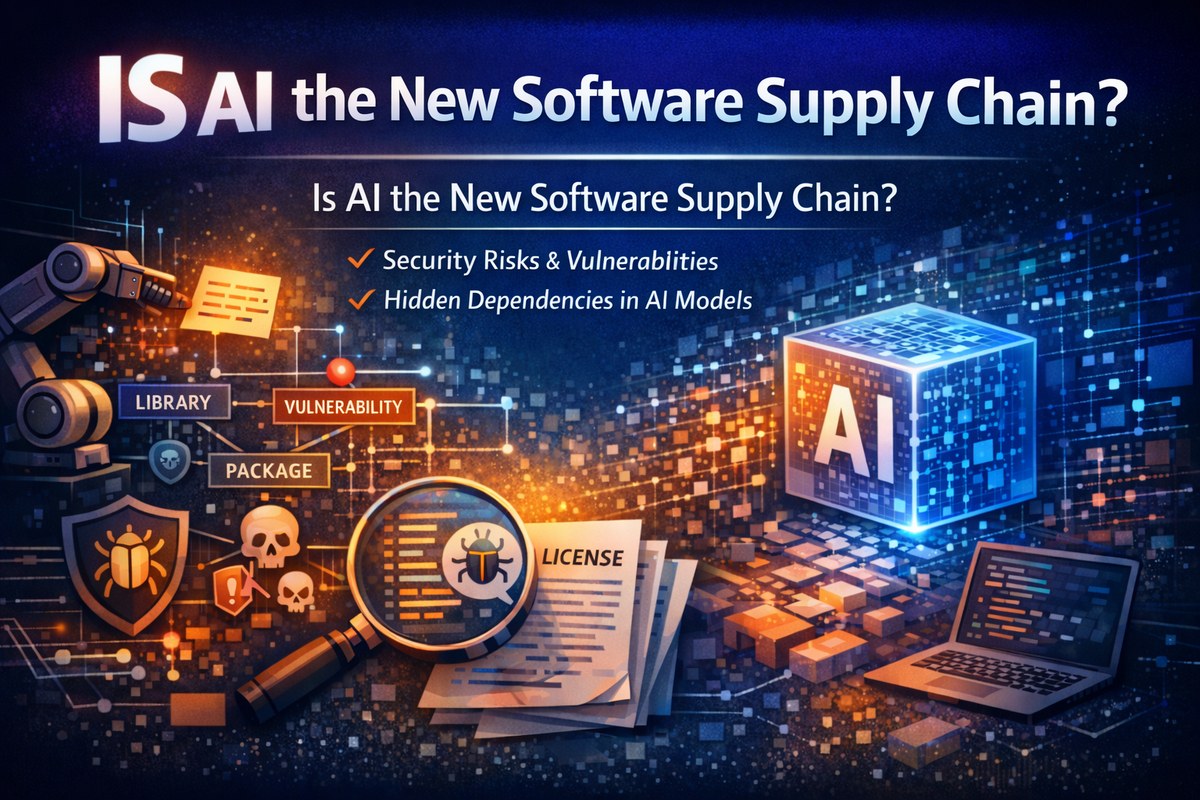
At this point, the concept of the software supply chain emerged. Software was no longer seen as a single codebase, but as a complex structure composed of interconnected pieces of code. For a program to run, multiple package repositories, build tools, libraries, and development tools must work together. This structure closely resembles the supply chains found in manufacturing. Just as producing a car requires hundreds of parts sourced from different companies, software is built by combining code from diverse origins into a single product.
Initially, this perspective was mainly used to explain development productivity and open-source collaboration. However, over time it became clear that this structure represented not just a change in development practices, but a much broader issue involving security and legal responsibility. The concept of the software supply chain is no longer just a metaphor—it has become a fundamental framework for understanding the modern software industry. And as this supply chain structure intersects with emerging technologies, it continues to evolve into even more complex forms.
Why Are Supply Chain Attacks So Powerful
The importance of the software supply chain is not simply due to the increasing complexity of development structures. It also has profound implications from a security perspective. In traditional security models, attackers had to target specific systems or applications directly. However, in a supply chain structure, the attack model changes fundamentally. Instead of attacking individual systems, attackers target upstream components, allowing a single breach to impact countless systems simultaneously.
A representative example is the SolarWinds incident. Attackers infiltrated the software update process of SolarWinds, a company that provides network management tools. They inserted malicious code into legitimate update files, and as a result, numerous corporations and government agencies that installed the update became compromised at the same time. This was not a typical hacking incident. The attackers did not target individual organizations—they attacked a critical point in the software supply chain, namely the update mechanism. As a result, the scope of the attack expanded globally.
Following this incident, the security industry’s focus on the software supply chain increased dramatically. Developers and organizations realized the importance of understanding what components make up the software they use. This led to the emergence of the concept of SBOM (Software Bill of Materials). An SBOM is a document that lists all software components within a program—what libraries are included, which versions are used, and what dependencies exist. It closely resembles how manufacturing industries manage lists of parts used in products.
However, supply chain attacks are not limited to large-scale incidents. Attacks such as dependency confusion, where attackers create similarly named packages to trick developers into installing them, or the compromise of maintainers’ accounts in popular open-source projects to inject malicious code, are also forms of supply chain attacks. These attacks are particularly dangerous because developers often incorporate them into their code without realizing they are under attack. Package managers automatically install dependencies, and developers tend to assume that these dependencies are safe.
This structure highlights the nature of supply chain attacks. They do not target a specific application—instead, they target the development process itself. Attackers exploit the tools and libraries that developers trust to spread malicious code. This approach is highly efficient: compromising a single package can affect thousands of projects that depend on it.
Ultimately, the software supply chain has created a new attack surface that goes far beyond development convenience. And this structure continues to grow more complex over time. As the open-source ecosystem expands and dependency chains deepen, the scale of the supply chain also increases. In this environment, any new technology naturally becomes part of the supply chain. And in recent years, AI code generation technology has begun to integrate deeply into this structure as well.
The Emergence of AI Code Generation Tools
One of the most significant changes in the development environment in recent years has been the emergence of AI code generation tools. Tools such as GitHub Copilot, Claude Code, and Cursor have gone beyond simple autocomplete and have begun to transform the development process itself. Initially, they suggested variable names or short code snippets, but they have now reached the point where they can generate entire functions and even complex logic. Developers are increasingly shifting from writing code from scratch to reviewing and refining code proposed by AI.
This shift represents more than just a productivity improvement. In the past, the origin of code was relatively clear—it was either written by the developer or taken from a specific library. However, in AI code generation, the situation is different. When a developer provides a prompt, the model generates new code based on that request. It is often impossible to determine which projects influenced the output or which documents contributed to its ideas. The generated code is likely the result of patterns combined from vast amounts of training data.
Because of this characteristic, AI code generation differs fundamentally from traditional development tools. Compilers and package managers process code written by developers. In contrast, AI models directly participate in the code creation process. The structure, style, and even implementation approach of code can be influenced by AI suggestions. In a sense, part of the code a developer writes is effectively determined by the model.
From the perspective of the software supply chain, this represents a highly significant shift. In traditional supply chains, the flow of code was relatively clear—libraries were downloaded from repositories and included in projects. However, in AI code generation, code is not delivered as packages. Instead, learned patterns stored within the model are transformed into new code outputs. This means that the origin of the code is no longer a specific repository, but potentially the entirety of the model’s training data.
At this point, a new question emerges: is an AI code generation model simply a development tool, or is it a new form of software supply chain? The data used to train these models likely includes countless open-source projects and coding patterns. In that sense, an AI model may be viewed as a compressed representation of the entire internet’s code ecosystem. When a developer generates code through AI, that code can be seen as the result of passing through an invisible and massive supply chain.
This question is not merely philosophical. As AI code generation becomes deeply integrated into development environments, these models are becoming critical infrastructure. And this leads to the next issue: without understanding how AI models are trained and operate, it becomes impossible to fully grasp the structure of this new supply chain. In the next section, we will explore exactly that—how AI models compress and represent the broader code ecosystem.
Are AI Models Compressed Databases of the Entire Internet’s Code
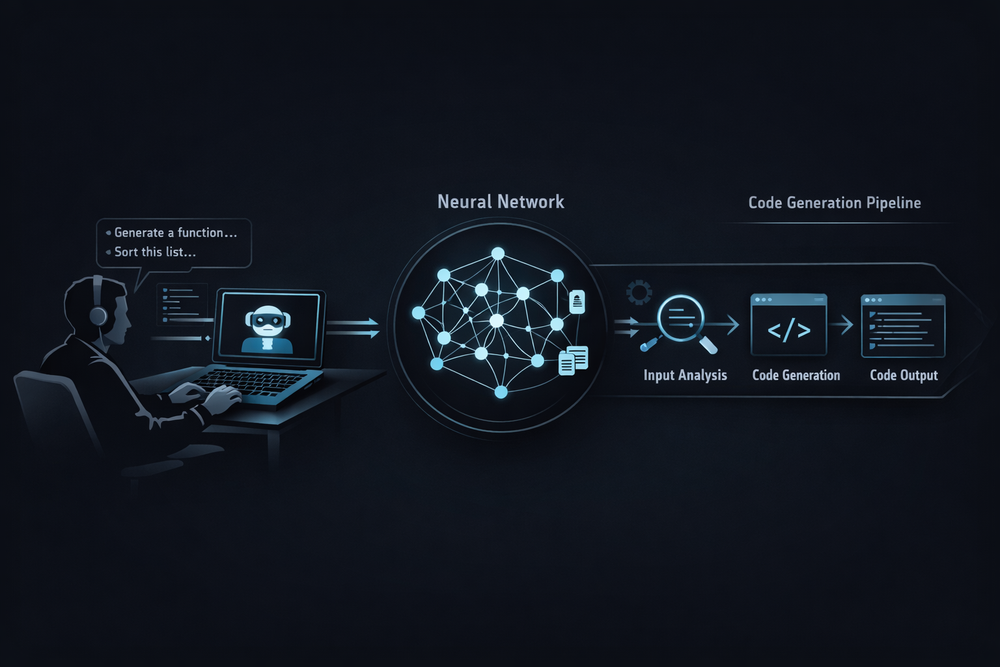
The most important reason AI code generation tools differ from traditional development tools lies in their internal structure. They are not simple programs, but collections of learned knowledge. Traditional tools operate based on explicit rules—compilers apply syntax rules, and package managers download libraries from repositories. Large language models (LLMs), however, function in a completely different way. They learn from vast amounts of data and store patterns within their internal parameters. When a user provides a prompt, the model generates new text or code based on those parameters. In other words, the model does not directly reference a specific codebase; it produces results from a learned pattern space.
To explain this structure, many researchers describe LLMs as a kind of compressed database. The idea is that massive amounts of code and documents from the internet have been compressed into model parameters during training. Of course, the model does not store specific code files verbatim. Instead, it learns statistical relationships such as function structures, algorithmic patterns, and common library usage. As a result, even without explicitly “remembering” a specific project, the model can reconstruct similar code patterns. In this sense, LLMs differ from search systems. Search engines retrieve existing documents, whereas language models recombine patterns to generate new code.
It is precisely this characteristic that gives AI code generation models a fundamentally different nature from traditional software supply chains. In conventional supply chains, the origin of code is clear—it comes from specific Git repositories or package registries. However, code generated by AI is not directly sourced from a single project. Instead, it is the result of patterns drawn from countless pieces of training data and combined within the model. In a sense, the model itself can be viewed as a compressed representation of the entire internet’s code ecosystem.
From this perspective, AI models are not just development tools but a new form of knowledge infrastructure. Developers now rely not only on package repositories but also on model parameters as another layer of knowledge. When we ask AI to generate code, the output is not simple autocomplete—it is likely the result of statistical patterns derived from the entire code ecosystem of the internet. And this is exactly why AI code generation can be interpreted as a new type of software supply chain. If traditional supply chains represent the movement of code, then AI models represent a latent supply chain of compressed code patterns.
Structural Differences Between Traditional Supply Chains and AI Supply Chains
Once we begin to view AI models as a form of supply chain, the differences from traditional software supply chains become clear. Traditional supply chains are relatively transparent. Developers can identify which libraries they use and what dependencies those libraries rely on. Package managers calculate dependency graphs and download the required code, leaving clear records in the process. It is possible to track when a specific version of a library was installed and which projects depend on it. This transparency is what enabled tools like SBOM to emerge.
However, AI code generation models operate in a completely different way. It is often difficult to know exactly what data a model has been trained on or which code patterns are embedded in its internal parameters. Most commercial models do not disclose the full list of training data. Even when some datasets are revealed, it remains extremely difficult to determine how strongly specific code patterns are reflected within the model. As a result, code generated through AI becomes code whose origin is nearly impossible to trace in the traditional sense.
This difference has significant implications for supply chain management. In traditional supply chains, when a problem arises, the root cause can usually be traced. If a vulnerability is discovered in a specific library version, developers can identify affected projects and apply updates. In contrast, AI-generated code introduces a much more complex situation. If a vulnerable code pattern has been learned by the model, it may be repeatedly generated across many different projects. Yet tracing the exact origin of that pattern becomes extremely difficult.
Another key distinction is how code moves through the system. In traditional supply chains, code is distributed as packages. These packages include version numbers and licenses, allowing developers to manage them explicitly. AI models, however, do not distribute code as packages. Instead, they generate code patterns. These patterns may not be direct copies of any single project and may instead be combinations of patterns learned from multiple codebases. In this sense, the AI supply chain operates not through the “movement” of code, but through the reconstruction of patterns.
This structural shift is beginning to change how we understand the software ecosystem itself. Traditionally, code was thought to move from one repository to another. But in an AI-driven environment, code is no longer transferred—it is reconstructed within the model. This makes the supply chain far more abstract than before. And it is precisely at this point that new forms of risk begin to emerge.
New Risks Introduced by AI Code Generation
The fact that AI code generation creates a new kind of supply chain is not just a technical curiosity—it represents real risk. The existence of a supply chain implies that it can become a target for attacks. We have already seen through multiple incidents how impactful traditional software supply chain attacks can be. In an environment where AI code generation is deeply integrated into development workflows, new types of risks begin to emerge.
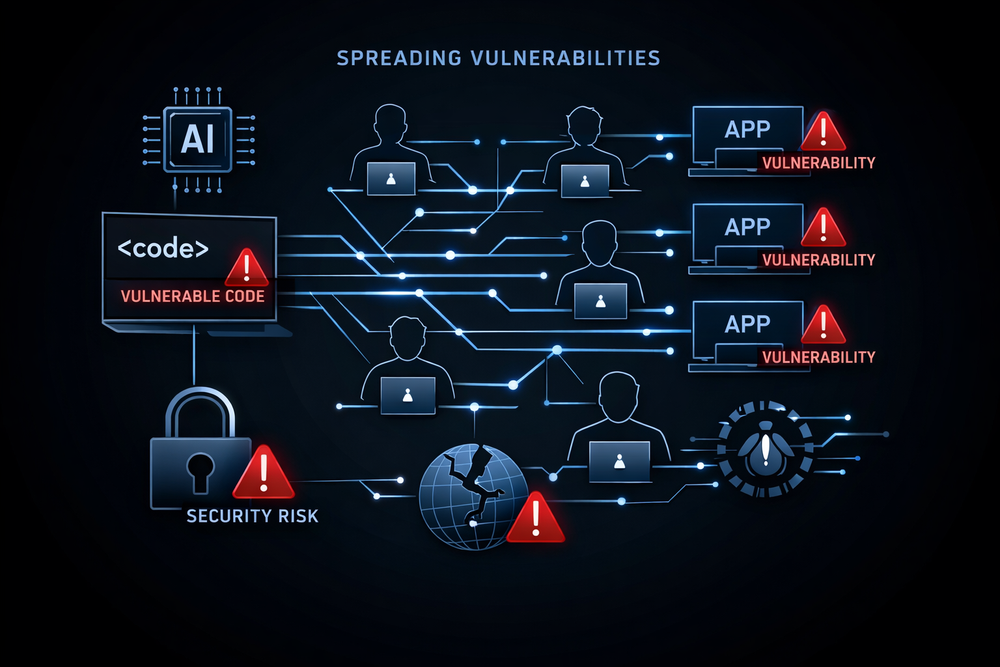
The first risk is the propagation of vulnerable code patterns. Language models generate code based on patterns learned from training data. If that data contains code with security vulnerabilities, the model may learn those patterns as if they were normal or acceptable practices. In fact, some studies have reported cases where AI-generated code includes security flaws. This suggests that models may reproduce insecure patterns from their training data. The critical issue is that such code does not appear in just a single project—if many developers use the same model, these vulnerabilities can be repeated and amplified at scale.
The second risk arises from the difficulty of tracing code origins. In traditional development, it is relatively straightforward to identify where a piece of code comes from. However, with AI-generated code, it is often unclear whether the output is directly derived from a specific project or simply a reconstruction of similar patterns. This ambiguity significantly complicates legal issues, especially those related to licensing. If code patterns from an open-source project are indirectly reconstructed through a model, it becomes unclear which license, if any, should apply.
Another important concern is that while AI models provide powerful automation, they may also weaken the developer’s decision-making process. As developers increasingly rely on AI-generated code, there is a growing risk that code is integrated into projects without a deep understanding of how it works. This can make security vulnerabilities or logical errors more difficult to detect and resolve. The fewer developers who fully understand the structure of the code, the harder it becomes to diagnose and fix problems when they arise.
These risks are still in their early stages. AI code generation technology continues to evolve and is becoming more deeply embedded in development environments. However, one fact is already clear: AI code generation is not just a productivity tool—it is creating a new form of supply chain structure. And wherever a supply chain exists, issues of management and accountability inevitably follow. This means we must now consider not only the convenience AI provides, but also how it reshapes the broader software ecosystem.
This naturally leads to the next question. Beyond technical risks, how will legal responsibility and licensing systems evolve in an AI-driven supply chain environment? To answer that, we must examine the new relationship forming between AI code generation and open-source licensing.
New Issues in Licensing and Legal Responsibility
The supply chain structure created by AI code generation extends beyond technical concerns into legal territory. In particular, the licensing system—one of the most critical elements of the open-source ecosystem—is now facing new questions in the context of AI-generated code. Traditional open-source licensing models were built on a relatively clear assumption: it is possible to identify where a piece of code originated and to verify the license conditions attached to it. Developers could review those licenses and decide whether to include the code in their projects. While this process could be cumbersome, it at least provided a foundation for determining the legal status of code.
However, in an AI code generation environment, this assumption begins to break down. It becomes difficult to clearly trace the origin of the code produced by a model. Large language models are likely trained on vast amounts of open-source data, including code under licenses such as GPL, MIT, and Apache. Yet it is nearly impossible to determine which specific license, if any, influenced a given generated code snippet. As a result, many organizations have started to establish internal policies governing the use of AI-generated code. Some prohibit using such code directly, while others require additional review processes.
This issue goes beyond the interpretation of legal documents. Open-source licenses are not just contracts—they are mechanisms that sustain collaboration within developer communities. Copyleft licenses enforce that derivative works maintain the same license, while permissive licenses allow greater freedom of use. This balance depends on the ability to trace code origins and contributors. But in an AI-driven environment, where such traceability becomes difficult, the application of licensing systems themselves may become ambiguous.
Ultimately, AI code generation is shifting licensing concerns from a matter of legal interpretation to one of supply chain management. Developers and organizations can no longer rely solely on reviewing the license of individual code files. They must now also consider how AI models—as a new element in the supply chain—affect the code generation process. This shift has the potential to fundamentally reshape the rules governing the entire open-source ecosystem.
Software Supply Chain Management in the AI Era
As AI code generation becomes deeply integrated into development environments, the way software supply chains are managed is likely to change as well. Traditional supply chain management tools were designed around package and library dependencies. SBOM documents list the components included in a program, and vulnerability databases track security issues in specific libraries. This approach works effectively in package-based development environments. However, in an AI-driven environment, where code is not delivered as discrete packages, these methods may no longer be sufficient.
For example, code generated by AI models may include patterns or algorithmic structures derived from specific libraries. Yet it is often impossible to determine exactly which projects influenced that code. This creates a fundamental shift from a supply chain perspective. In traditional supply chains, the flow of code can be traced. In AI-driven supply chains, however, code is reconstructed within the model itself, making traceability far more difficult. As a result, the focus of supply chain management may shift from tracking package inventories to analyzing code patterns and generation processes.
This shift is likely to require new types of development tools and policies. For instance, tools may emerge that automatically analyze AI-generated code to detect security vulnerabilities or potential licensing issues. In enterprise environments, organizations may also need to define clearer policies governing the use of AI-generated code—such as when it is allowed, and what review processes are required before integration.
Furthermore, a new perspective is emerging that treats AI models themselves as objects of supply chain management. This includes tracking which datasets a model was trained on, how it is updated, and which versions are being used. While traditional supply chain management focused on packages, the future may introduce a model-centric supply chain layer. Although this evolution may increase complexity, it also pushes the ecosystem toward greater transparency and accountability.
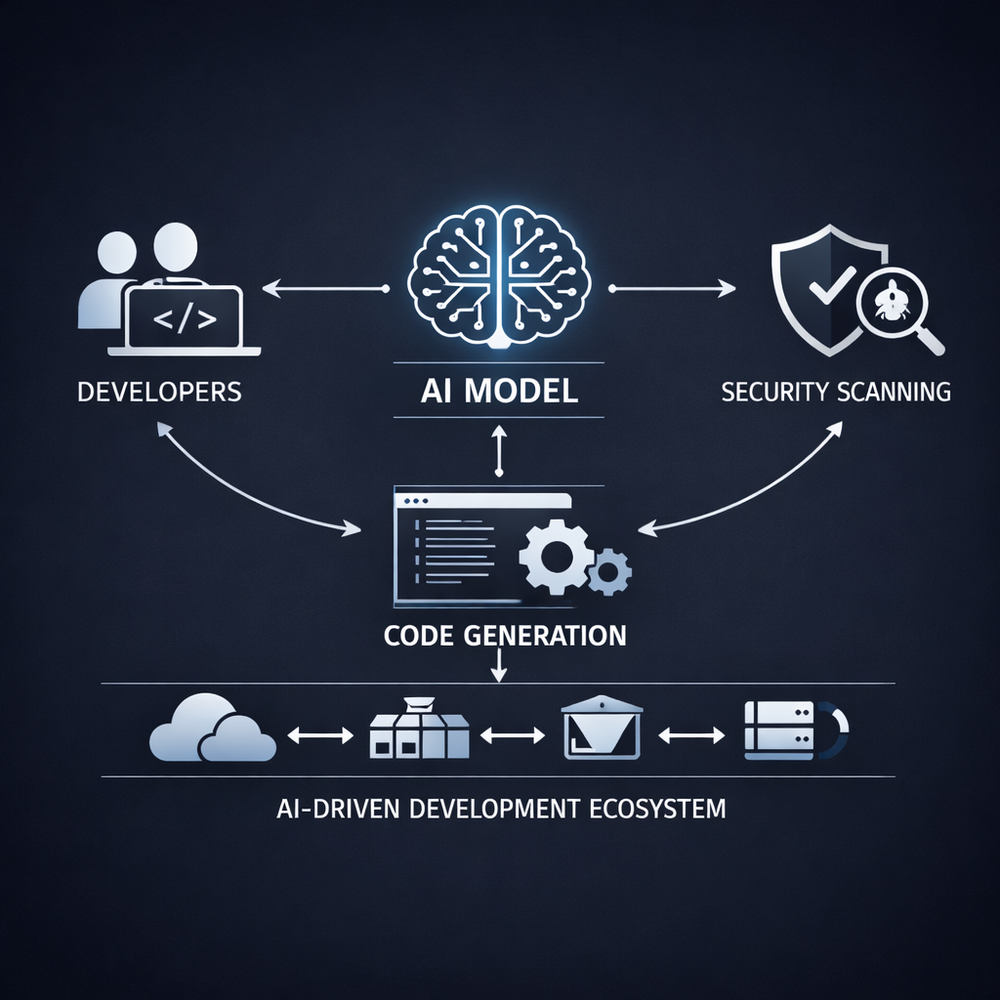
Conclusion — We Are Already Developing on Top of an AI Supply Chain
Bringing together everything discussed so far, one major shift becomes clear. AI code generation is not merely a new tool that improves developer productivity. It is creating an entirely new layer that reshapes the structure of the software ecosystem. In the past, software supply chains were built around package repositories and libraries. Developers downloaded the code they needed and incorporated it into their projects. Although this process could be complex, it still allowed the origin and movement of code to be traced.
In an AI-driven environment, however, code is no longer transferred from a specific repository—it is reconstructed within the model itself. Developers provide prompts, and the model generates code based on learned patterns. The resulting code may not come directly from any single project; instead, it may be a combination of patterns derived from multiple codebases. This fundamentally differs from traditional supply chain models and creates a new type of supply chain structure. We are no longer building software solely on top of code repositories—we are now developing on top of an invisible supply chain embodied by AI models.
This transformation is still in its early stages. AI code generation technology is evolving rapidly and becoming increasingly integrated into development environments. More developers will adopt AI tools, and as a result, the structure of software supply chains will continue to change. In this process, issues such as security, licensing, and even development culture itself are likely to move toward new forms of equilibrium.
It is possible that in a few years, the concept of “AI supply chain management” will become as standard as SBOM is today. But one thing is already certain: we are no longer simply writing code—we are creating software through interaction with a vast and complex code ecosystem. And within that ecosystem, not only human developers but also code-generating models have become essential components.
At the beginning of this series, we raised a question about licensing in AI-generated code. That question has now led us here. In an era where AI writes code, how should software be created and shared? The answer is not yet fully defined. But one fact is clear: the world in which we are developing is no longer the same as the software ecosystem of the past.