
The World Before GitHub — Why Open Source Was Difficult
Before GitHub emerged, the world of open source looked very different from what we are familiar with today. Developers today can explore projects, modify code, and contribute through Pull Requests with just a few clicks in a browser. However, until the early 2000s, participating in open source projects involved a much more complex and closed structure. While the code itself was open, the process of participating in that code was not truly open. This contradictory structure became one of the biggest barriers to the growth of open source.
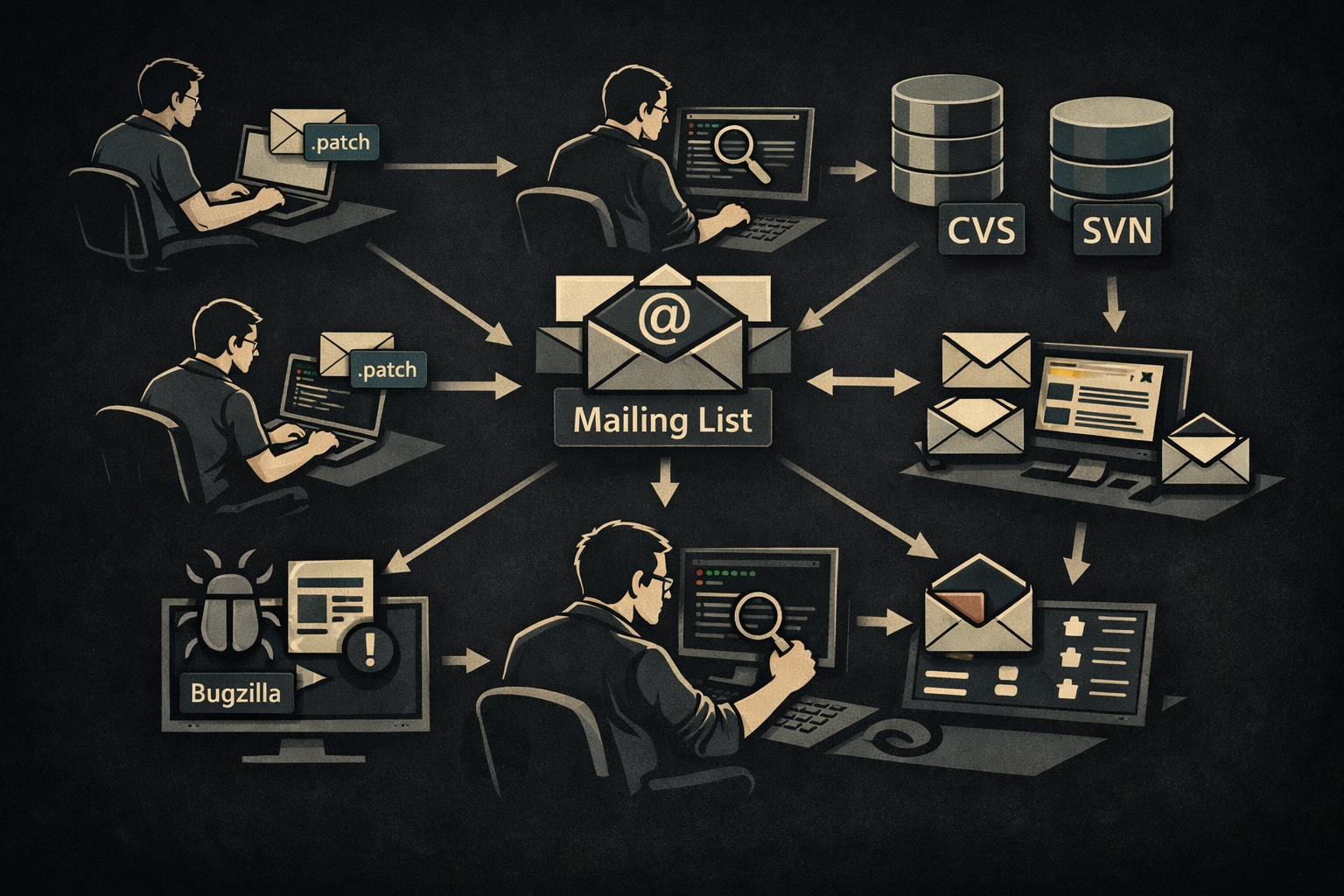
At the time, developers primarily collaborated through mailing lists. To contribute to a project, one had to modify the code, generate a patch file, and send it via email. Then, a project maintainer would review the patch and manually apply it to the codebase. This process required more than just technical skill. It demanded an understanding of the project’s rules, communication style, and sometimes even its implicit culture. In other words, writing good code was not enough—one had to adapt to the internal culture of the project to contribute.
The problem was that this structure naturally created a high barrier to entry. For new contributors, mailing lists felt unfamiliar and difficult, and patch-based collaboration was far from intuitive. Moreover, because the process of code changes was not structurally visible, it was difficult to understand what others were working on. As a result, many open source projects remained centered around a small group of core developers.
The collaboration environment of that time was also highly fragmented in terms of tools. Code repositories were hosted on CVS or Subversion, issue tracking was handled by separate systems like Bugzilla, and discussions took place on mailing lists. To fully understand a single change, one had to navigate across multiple systems, which disrupted the flow of collaboration. Ultimately, while open source was technically accessible, it functioned more like a semi-open system that was difficult to participate in.
This structure did contribute to the growth of open source to some extent, but it also clearly exposed its limitations. The fact that code is open and the fact that anyone can easily participate are fundamentally different things. And at this point, a critical question naturally emerges. If the code is open, why is collaboration still closed? This question would later become an important foundation for the emergence of Git and GitHub.
Git Existed, But Collaboration Was Still Difficult
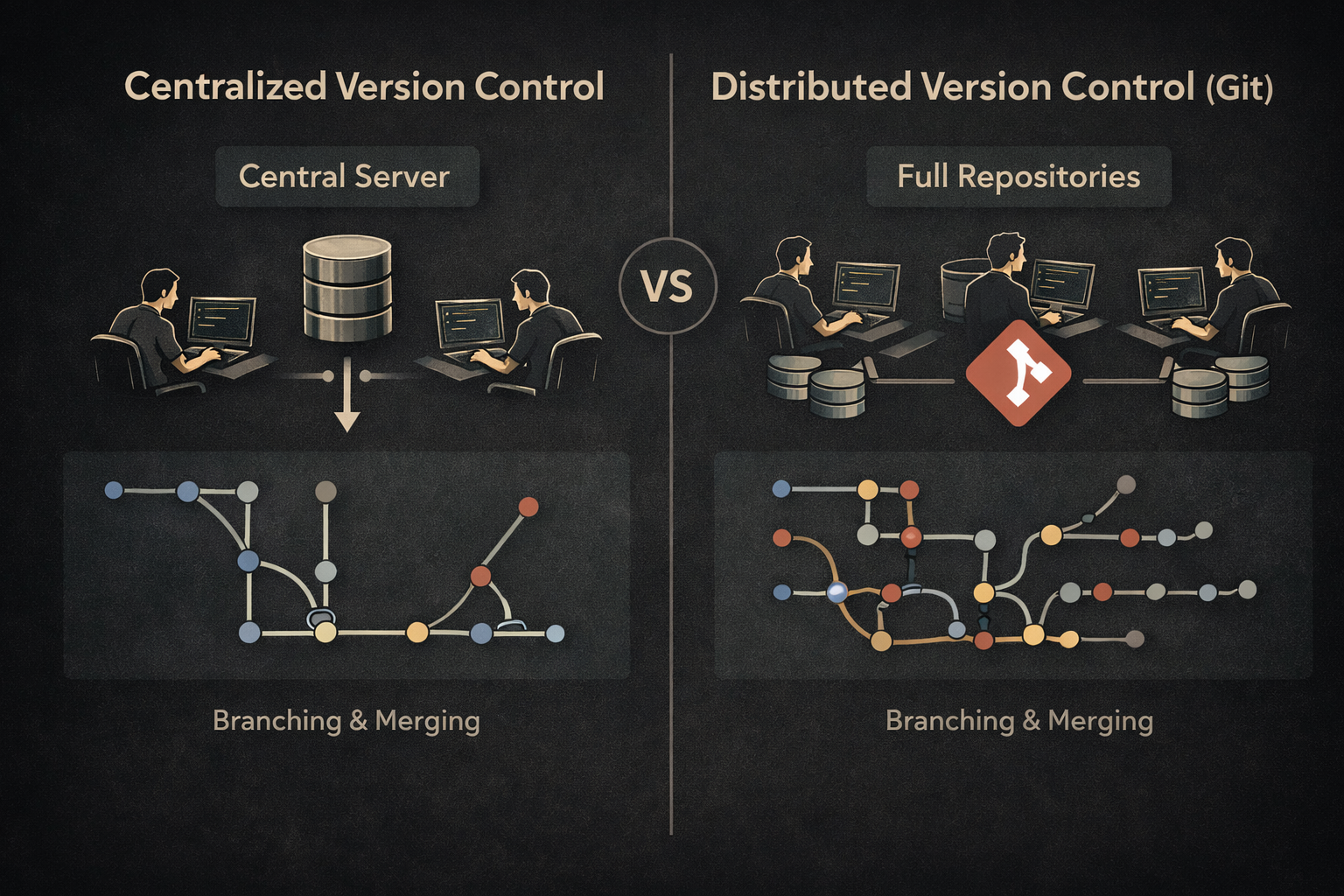
One of the attempts to solve these problems was the emergence of Git. Git introduced a completely different approach compared to traditional centralized version control systems. Each developer could have a full copy of the repository, and branching and merging became highly flexible. This was a revolutionary concept at the time, especially considering that Git was created to address collaboration issues in Linux kernel development. In this sense, Git can be understood as a tool that provided the technical foundation for collaboration.
The most important characteristic of Git was its distributed nature. Development was no longer dependent on a central server, and all operations could be performed offline. Additionally, branching became lightweight, allowing for parallel work and experimentation. In theory, this created a much more flexible and scalable collaboration model. However, reality turned out to be different. Git was powerful, but that power translated into complexity for users.
Git was a command-line-based tool, and in its early days, it was not easy to use. Concepts like commit, rebase, and merge were not intuitive, and resolving conflicts required a deep understanding. More importantly, Git itself lacked a proper interface for collaboration. It was purely a version control tool and did not provide visual representations of changes or integrated communication features. In other words, Git made collaboration possible, but it did not make collaboration easy.
As a result, even with Git, many projects continued to rely on mailing lists and patch-based workflows. While Git repositories existed, code reviews and communication were still handled through traditional methods. This highlighted a clear limitation—there were aspects of collaboration that Git alone could not solve. The technical foundation was in place, but the way people collaborated had not yet changed.
At this point, a critical transition was needed. What was required was not just a better version control system, but a new approach that could redefine collaboration itself. Git had laid the groundwork, but it needed a new layer on top—a layer that could transform how people actually worked together. And that role would be fulfilled by GitHub.
The Emergence of GitHub — It Was Not Just a Hosting Service
When GitHub appeared in 2008, it initially looked like a simple Git repository hosting service. However, it carried a much deeper transformation. GitHub was a service that placed a collaborative interface and user experience on top of Git. It was an attempt to hide the complexity of Git and make collaboration intuitive.
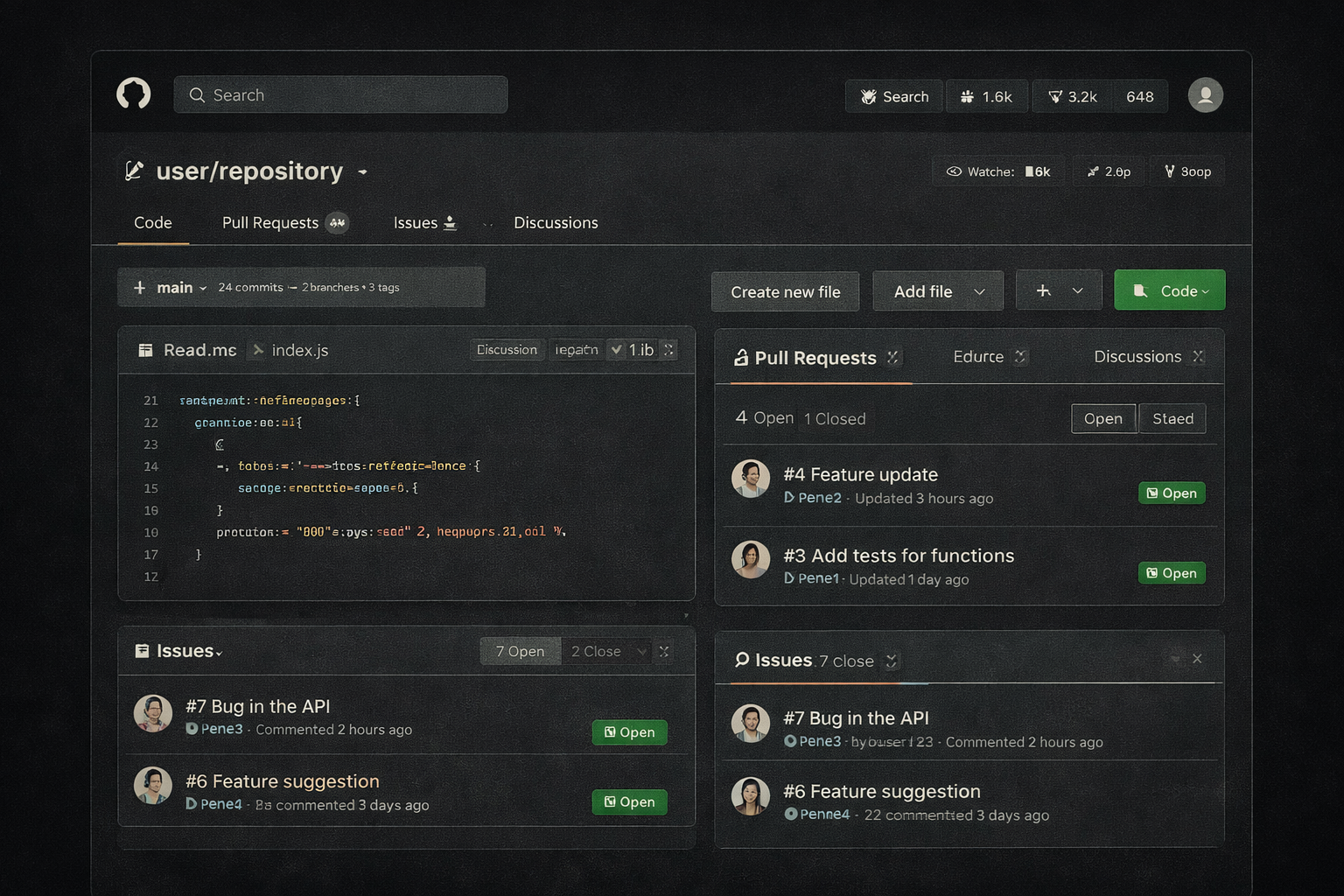
The core of GitHub was not the code itself, but the interactions surrounding the code. It allowed developers to see who made changes, in what context those changes were made, and what discussions took place around them—all in a single space. Previously, code, issues, and discussions were separated across different systems. GitHub unified them. This was not just an improvement in convenience—it was a redefinition of the collaboration structure itself.
GitHub also made Git significantly more accessible through its web-based interface. Developers no longer needed to master complex commands to review changes, compare code, or participate in discussions. This lowered the barrier to entry for Git and transformed it into a collaboration tool accessible to anyone, rather than something reserved for experienced developers.
What fundamentally distinguished GitHub from previous services was that it turned collaboration from a “feature” into an “experience.” It was no longer just about uploading and downloading code, but about creating an environment where people could communicate and collaborate around that code. This structure would later expand into concepts such as Pull Requests, Forks, and Social Coding, ultimately reshaping the entire open source ecosystem.
The emergence of GitHub was not merely the arrival of a new service. It marked the beginning of a fundamental transformation in how open source collaboration worked. And from this point on, that transformation would evolve beyond simply sharing code into building an entirely new collaborative culture centered around code.
Pull Request — The Feature That Standardized Code Review
One of the most decisive changes brought by GitHub was the establishment of the concept known as the Pull Request. Until then, code changes were typically made by creating patch files and sending them, or by a small number of developers with direct repository access applying changes themselves. In such a structure, it was difficult to conduct code reviews in a systematic way, and discussions around changes were often fragmented and scattered. However, the Pull Request provided a structure that grouped code changes into a clear unit and naturally layered discussion and review on top of it. This change was not simply the addition of a feature, but rather a fundamental redefinition of the unit of code collaboration.
The core of the Pull Request was not just about “showing” changes, but also about “enabling discussion.” It allowed developers to visually compare what code had been added or removed, and to leave comments directly on specific lines. This transformed code review from an abstract concept into a concrete interactive process. Previously, reviews were conducted through emails or documents, but now it became possible to have conversations centered directly around the code itself. This structure naturally improved the quality of reviews while also increasing the speed of collaboration.
More importantly, Pull Requests began to expose collaboration as a visible “process.” Every detail—how a feature was added, what discussions took place during its development—was preserved as part of the project history. This went beyond simple change tracking and became a valuable resource for understanding the context of a project. Ultimately, the Pull Request transformed code review from a simple verification step into a structure where collaboration and learning happen simultaneously.

As this structure spread, more and more projects began to adopt Pull Requests as the standard collaboration method. Writing code was no longer the only important skill; how that code was shared and reviewed became equally critical. The Pull Request provided the most intuitive answer to that question and soon became deeply embedded not only in open source but also in internal development processes within companies.
The Fork Button — The Moment That Lowered the Barrier to Entry
If Pull Requests changed the way collaboration worked, the Fork button changed the very act of entering collaboration itself. Even before GitHub, it was technically possible to copy and modify code, but the process was not clearly structured, and there was always a psychological barrier involved. In particular, the fear of directly impacting the original project often discouraged developers from contributing. The Fork feature addressed this problem in a simple yet powerful way. With a single click, an entire project could be copied into a developer’s own repository, and all subsequent work could be carried out independently.
This structure gave developers a crucial kind of freedom. They could experiment with new ideas without affecting the original project and try different approaches without the fear of failure. Such an environment naturally encouraged greater participation. In the past, contributing required adapting to a project’s rules and culture, but now it became possible to experiment independently first and share later. This marked a fundamental shift in the paradigm of open source participation.
Another important implication of Fork was that it enabled projects to diverge and evolve in multiple directions. A single project could branch into entirely different paths, sometimes even becoming completely new projects. This was not just code duplication; it functioned as a mechanism for ecosystem expansion. Cases such as MariaDB branching from MySQL or LibreOffice splitting from OpenOffice demonstrate how this structure could lead to entirely new ecosystems.

Ultimately, the Fork button went beyond being a technical feature and acted as a mechanism that provided psychological safety to developers. An environment where anyone could start easily and failure carried no consequences led to an explosive increase in participation. This transformation allowed open source to move beyond a niche domain and grow into a large-scale, participation-driven ecosystem.
Social Coding — The Moment Development Became a Public Network
Another fundamental transformation brought by GitHub was turning development into a social activity. Previously, development was primarily carried out individually or within small teams, and much of the process remained invisible to the outside world. While open source projects were technically public, the internal activities were not shared in real time, nor were they interconnected in a networked form. GitHub completely overturned this structure. Code creation and collaboration processes became fully visible, and developers could observe each other’s activities in real time.
On GitHub, interactions extended far beyond simply uploading code. Developers could “Star” projects they found interesting, “Follow” other developers, and track ongoing activities through feeds. These features transformed development into a form of content, and developers could showcase their skills through that content. This shift redefined development from a closed activity into an open and interconnected networked practice.
This transformation also had a significant impact on the identity of developers. A GitHub profile became more than just an account; it became a record of a developer’s work and a portfolio. Contributions to projects, code written, and problems solved were all publicly visible, and these elements began to serve as key indicators of a developer’s capability. As companies increasingly started evaluating developers based on their GitHub activity, GitHub effectively became a platform that validates a developer’s career.

In the end, Social Coding was not just a collection of features but a shift in how development itself was perceived. Code was no longer an isolated output of an individual but became part of a shared and evolving network. This transformation laid the foundation for GitHub to grow beyond a simple tool into the central platform of the modern development ecosystem.
Why GitHub Became a Platform
As Pull Requests, Forks, and Social Coding converged into a single flow, GitHub began to move beyond the role of a simple code repository. It initially started as a hosting service that made Git easier to use, but as more projects and developers gathered, GitHub naturally evolved into the central hub of the development ecosystem. This transformation was not something that was deliberately designed from the beginning, but rather the result of features and users continuously reinforcing each other. Where code existed, people gathered, and where people gathered, even more code accumulated.
This structure closely resembles the growth pattern of a typical platform. GitHub was no longer just a place to store code, but a space where interactions centered around code continuously occurred. Developers uploaded projects, others forked them, and collaboration happened through Pull Requests. In this process, not only code but also knowledge and experience were shared together. Ultimately, GitHub evolved from being merely a “code repository” into a network platform mediated by code.
Another reason GitHub became a platform lies in its scalability. On GitHub, not only simple libraries but also frameworks, operating systems, and even infrastructure-level projects could be managed. Projects like React, Kubernetes, and TensorFlow grew rapidly on GitHub, creating a structure where developers from around the world could participate simultaneously. This made it possible for technology to evolve not within a single company or organization, but within a global collaborative network.
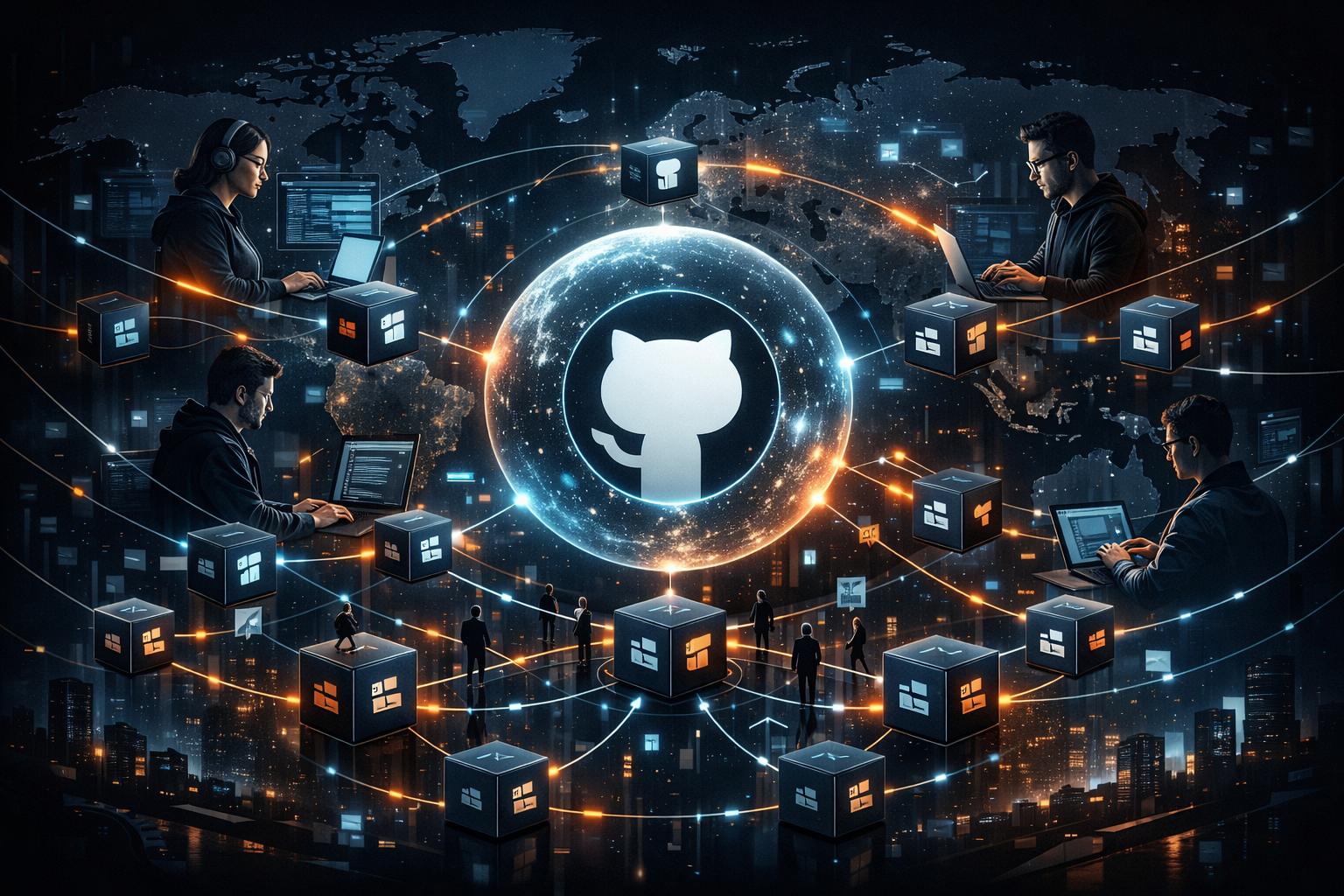
Ultimately, GitHub became not just a service but a platform layer connecting developers and projects. As countless technologies were created and spread on top of this platform, GitHub established itself as a core infrastructure of the modern software ecosystem.
Why Developers’ Portfolios Moved to GitHub
The expansion of GitHub did not only affect how projects were collaboratively developed. It also brought a direct transformation to individual developers’ careers and identities. In the past, resumes and interviews were the primary means of evaluating a developer’s skills. However, with the emergence of GitHub, developers were able to publicly showcase their code and demonstrate how it was actually being used. This introduced a new way to present a developer’s capabilities in a more objective and tangible manner.
A GitHub profile became more than just an account; it turned into a space where a developer’s activity history accumulated over time. Which projects they contributed to, how consistently they were active, and what kinds of problems they solved were all openly visible. Through this process, developers were no longer evaluated simply as people who “could do something,” but rather as individuals who had actually built and contributed to real projects. This fundamentally changed how developers were assessed.
At the same time, GitHub strengthened connections between developers. It became possible to learn from others’ code or build relationships through direct contributions. This structure transformed developer growth from being dependent on individual experience into a process that expanded through a network of collaboration and interaction. GitHub thus evolved beyond a collaboration tool into a platform that actively shaped developers’ careers.
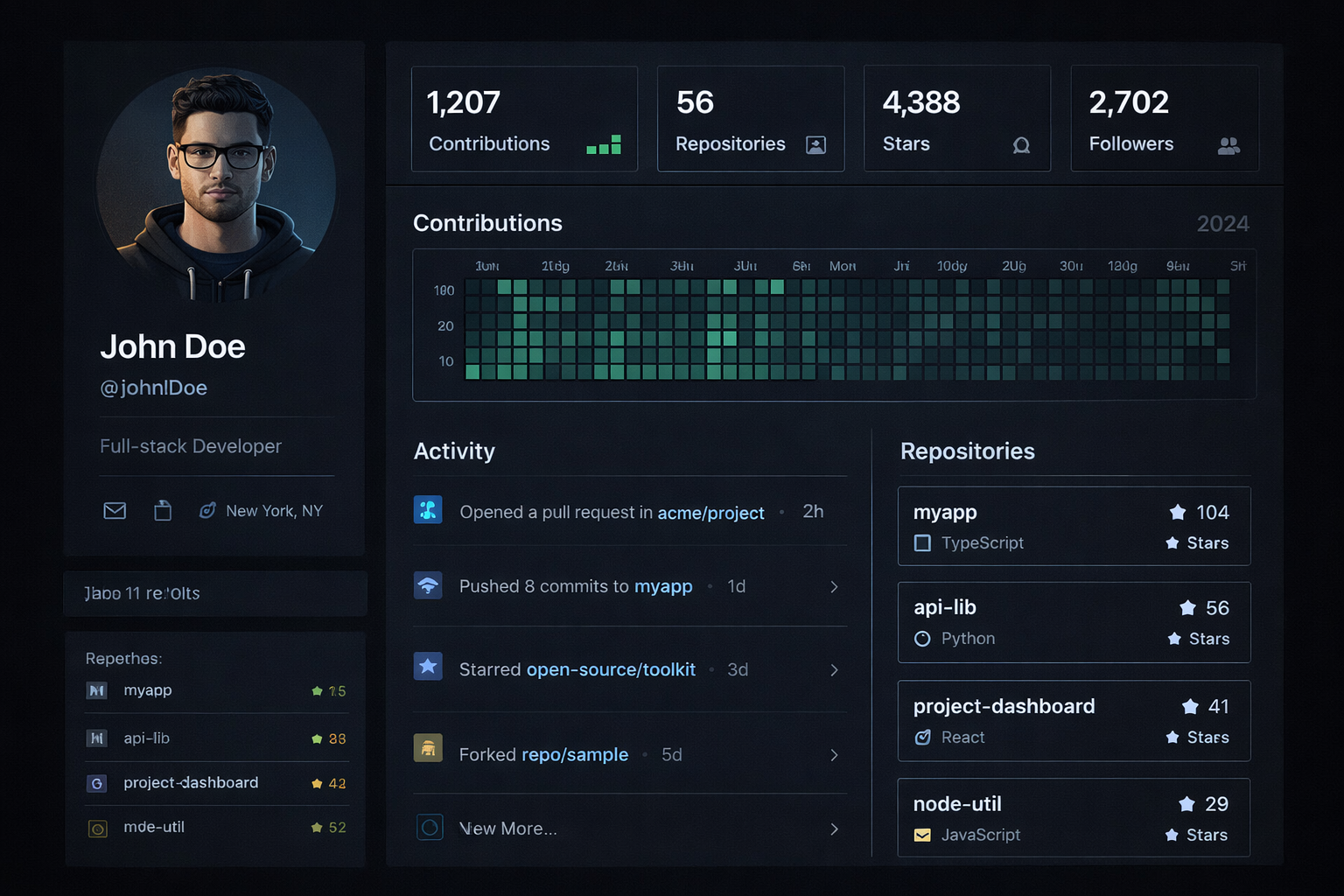
This transformation also influenced how companies approached hiring. Many organizations began to evaluate developers based on their GitHub activity, and open source contributions became an important part of a developer’s credentials. Ultimately, GitHub reshaped both career development and evaluation systems, becoming a platform that expanded the very meaning of being a developer.
After GitHub — How Open Source Changed
The emergence of GitHub accelerated changes across the entire open source ecosystem. Previously, open source projects operated within limited participation structures, but after GitHub, an environment was created where anyone could easily contribute. This shift was not just about increasing the number of participants, but about fundamentally changing how projects grew and evolved. With more people contributing more quickly, the pace of technological advancement also increased noticeably.
Open source projects also became less dependent on specific organizations or communities. On GitHub, projects could operate as independent entities, enabling simultaneous participation from developers around the world. This marked a shift where technology was no longer an internal asset of a particular company, but instead evolved into a shared public asset developed through global collaboration. GitHub was the key infrastructure that made this transformation possible.
Alongside this, the role of open source itself expanded. It was no longer just a source of free code, but a space where new technologies could be experimented with and validated. Both startups and large corporations began to release technologies on GitHub and develop them in collaboration with the community. This indicated a broader shift in which the center of technological development moved from inside organizations to the outside.

Ultimately, open source after GitHub became not just a development approach, but a culture and an industry structure in itself. And this transformation leads to the next stage. Developers are no longer individuals writing code in isolation, but members of a network who collaborate and grow on top of a platform. This flow becomes even clearer in the story that follows.
Conclusion — GitHub Was Not a Tool, but an Event That Changed Development Culture
If you follow the flow up to this point, a clear pattern begins to emerge. GitHub did not create a new programming language, nor did it invent an entirely new technology that had never existed before. Git, as a powerful version control system, was already there, and the concept of open source had been around for quite some time. And yet, GitHub created a level of change significant enough to be called an “event.” The reason is simple: GitHub did not change the technology itself, but rather reconstructed the way people collaborate on top of that technology.
Even before GitHub, code was being shared, but that sharing was limited and incomplete. Participation was difficult, collaboration was fragmented, and records were scattered across different systems. GitHub brought all of these processes together into a single continuous flow. Writing code, making changes, reviewing, discussing, and even deploying began to happen seamlessly on one platform. This shift went beyond mere convenience; it fundamentally altered the structure of development as an activity itself. Development was no longer an isolated task performed by individuals, but was redefined as a collaborative process taking place on a platform.
GitHub also transformed development into something that is visible and observable. Code, commits, reviews, and discussions all became publicly accessible, meaning developers were no longer working in isolation behind the scenes. GitHub profiles and activity histories became part of a developer’s identity, directly influencing their career trajectory. In this way, GitHub evolved beyond a simple collaboration tool and began functioning as a platform that reshaped the social structure of what it means to be a developer. The change was centered not on technology, but on people, which is why its impact spread so deeply and widely.

Ultimately, the most important change GitHub brought was the creation of an environment where anyone could participate in development. Through Fork and Pull Request, the barriers to contribution were dramatically lowered, and through Social Coding, developers became interconnected. This structure transformed open source from a simple method of sharing code into a global collaborative ecosystem. That ecosystem continues to expand, with new technologies and projects constantly emerging from within it.
Development is no longer an activity confined within the boundaries of a specific organization or company. On platforms like GitHub, developers from around the world collaborate simultaneously to build technology together. This transformation was not merely an evolution of tools, but rather a fundamental shift toward network-centered development itself. And this shift does not end here. In the next chapter, another significant change begins to unfold. As knowledge, rather than code itself, becomes the central focus, development culture once again starts to be redefined.