

Conclusion. Platforms Do Not Trust — They Suspect and Cut Off
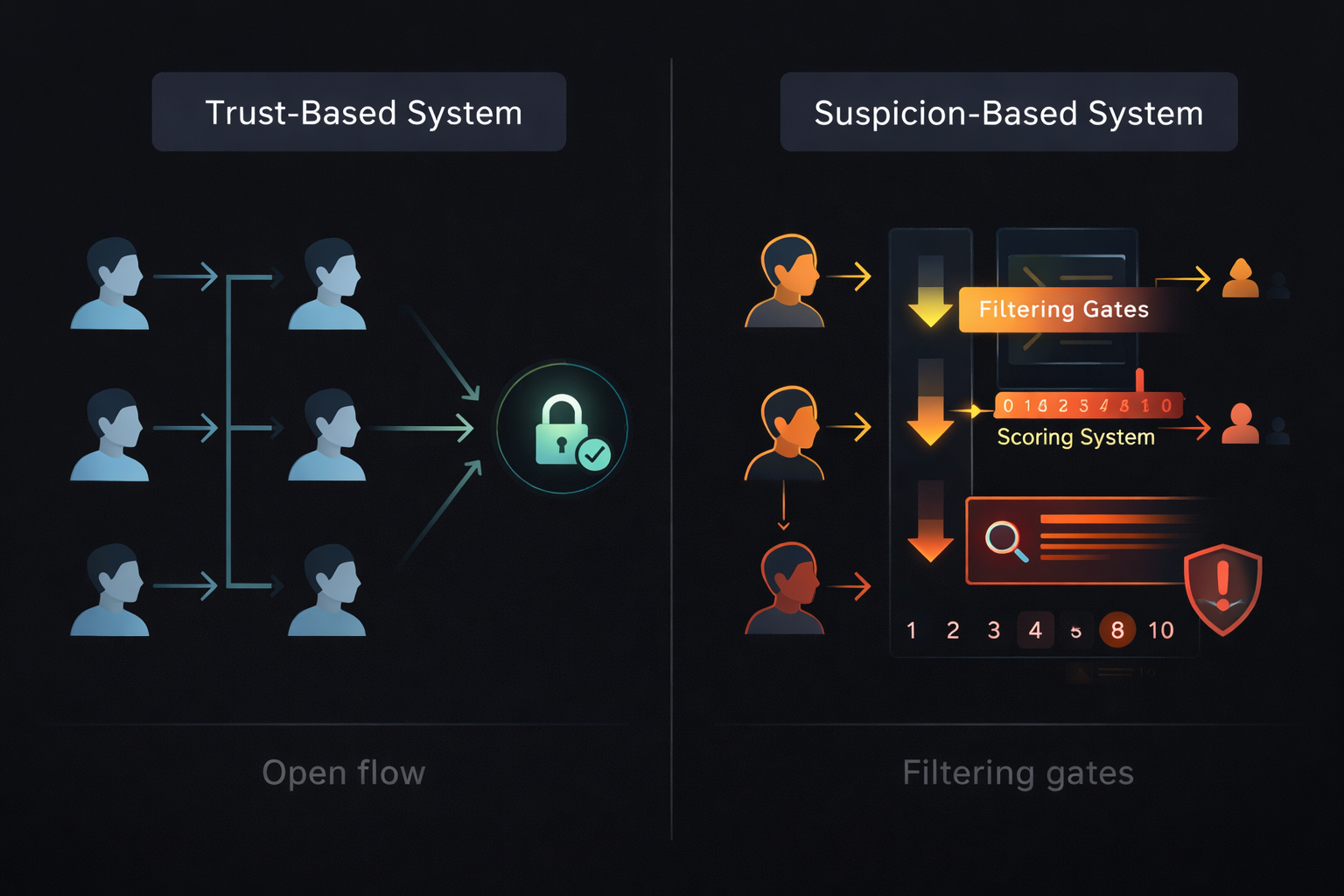
Platforms no longer trust users. This tendency is especially blatant in Meta’s services. The moment a user creates an account and starts posting content, they are no longer treated as a “normal user” by default, but rather as a potential spammer or automated account. This assumption is not openly stated, but it becomes unmistakably clear when you look at how the system actually behaves. The slightest deviation from an expected behavioral pattern can trigger restrictions and block features without explanation. What matters here is that the user’s intent or context is not taken into account during this process. The system merely interprets signals, and that interpretation is usually carried out in an extremely conservative direction. As a result, platforms do not operate on the basis of trust, but on the basis of suspicion.
This article is not simply a personal account of a restricted account. That experience is only the starting point. The real focus is to dissect the structure behind it. The discussion revolves around two central questions: why platforms came to be designed this way, and to whom the cost of that design is transferred. The case that occurred on Threads is not an exceptional incident, but something closer to a case that exposes, in the most explicit way possible, the direction platforms have chosen. In other words, the issue addressed here is not a bug in a specific service, but a problem rooted in the fundamental operating philosophy adopted by modern platforms. And that philosophy is designed so that it is not clearly communicated to users, but instead felt only through its outcomes.
I Did Nothing, and Yet I Was Cut Off
The problem always begins with a simple experience. I had not spammed external links, nor had I promoted any particular product or service. I had never used automation tools, nor had I aggressively tried to grow followers or engage in excessive activity. I had simply written a few posts and used the platform at a normal level. In a situation like this, any ordinary user would have no choice but to conclude that there was nothing worth flagging as problematic. And yet the result was the exact opposite. The account was restricted, functions were blocked, and the user was left standing still, without any explanation at all.
At this point, the first thing that collapses is the user’s intuition. We usually assume a causal relationship: you are penalized because you did something wrong. But the way platforms actually operate does not match that intuition. Restrictions can occur even when no wrong action has been taken, and the reason is not shared with the user. This experience goes beyond mere inconvenience; it shakes the user’s entire understanding of the system. The user can no longer act according to a clear sense of “what not to do.” Instead, they begin to act by guessing what might look suspicious to the system.
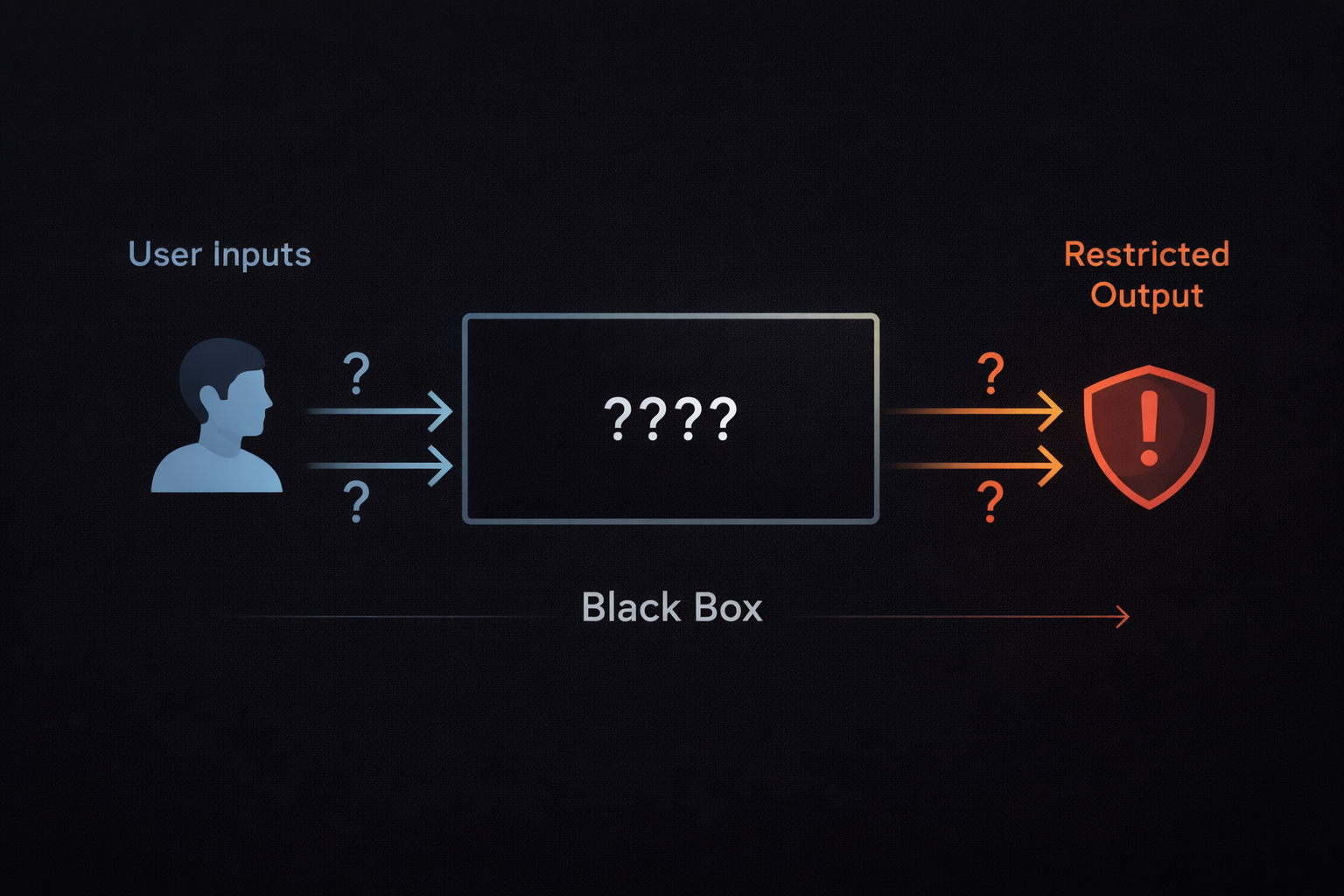
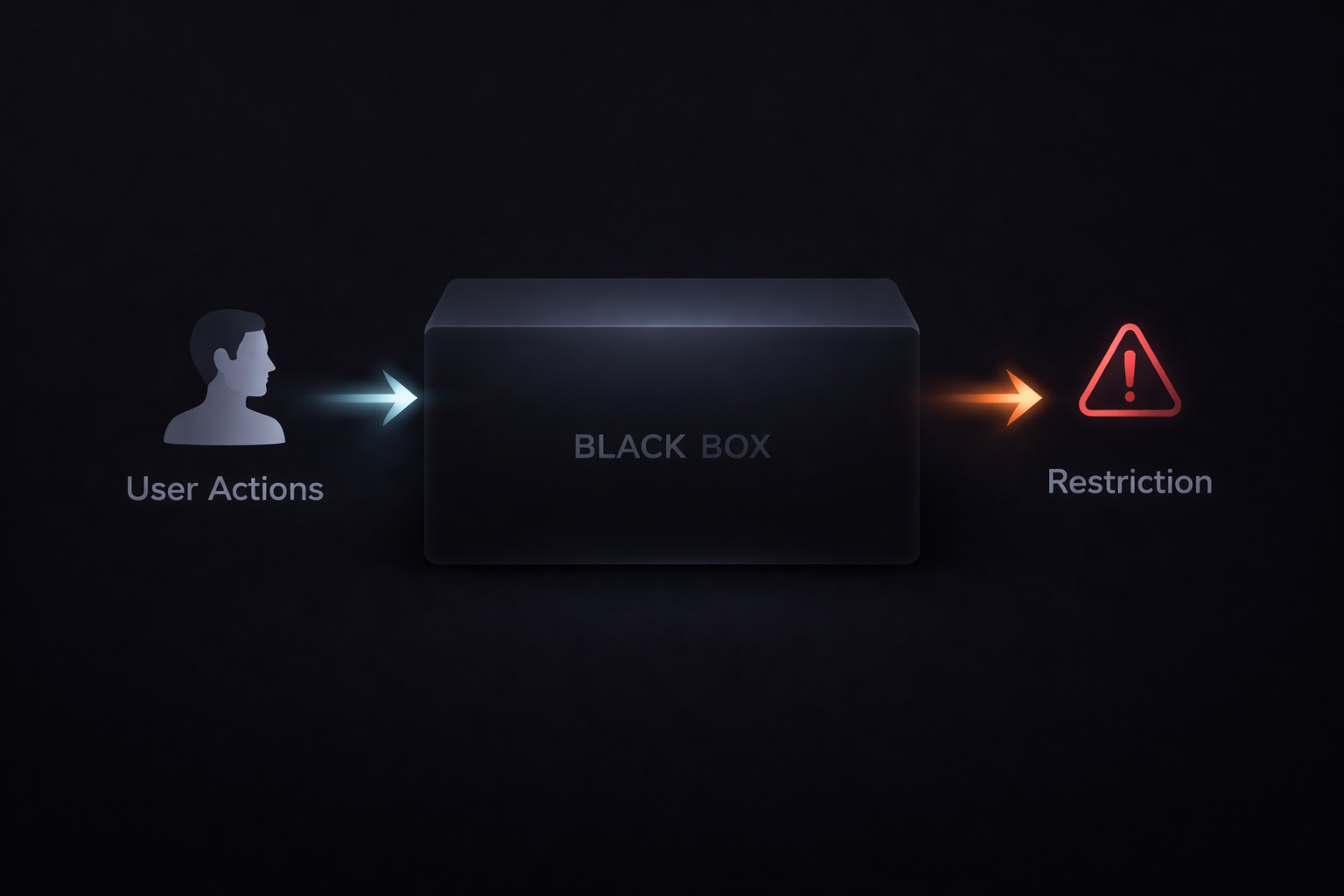
This is a small but important shift. The user is no longer someone who follows rules, but someone who adjusts their behavior in order to avoid the system’s judgment. And at that moment, the platform stops being just a service and becomes a kind of black box. The input is clear, but the output is opaque, and the standards of judgment in between are hidden from view. Inside that black box, the user keeps trying, keeps failing, and gradually becomes more cautious and more conservative in how they behave. In the end, the issue is not just that one account was restricted, but that even normal use itself can become a risk under this structure.
Meta’s Method — It Suspects Behavior, Not Content
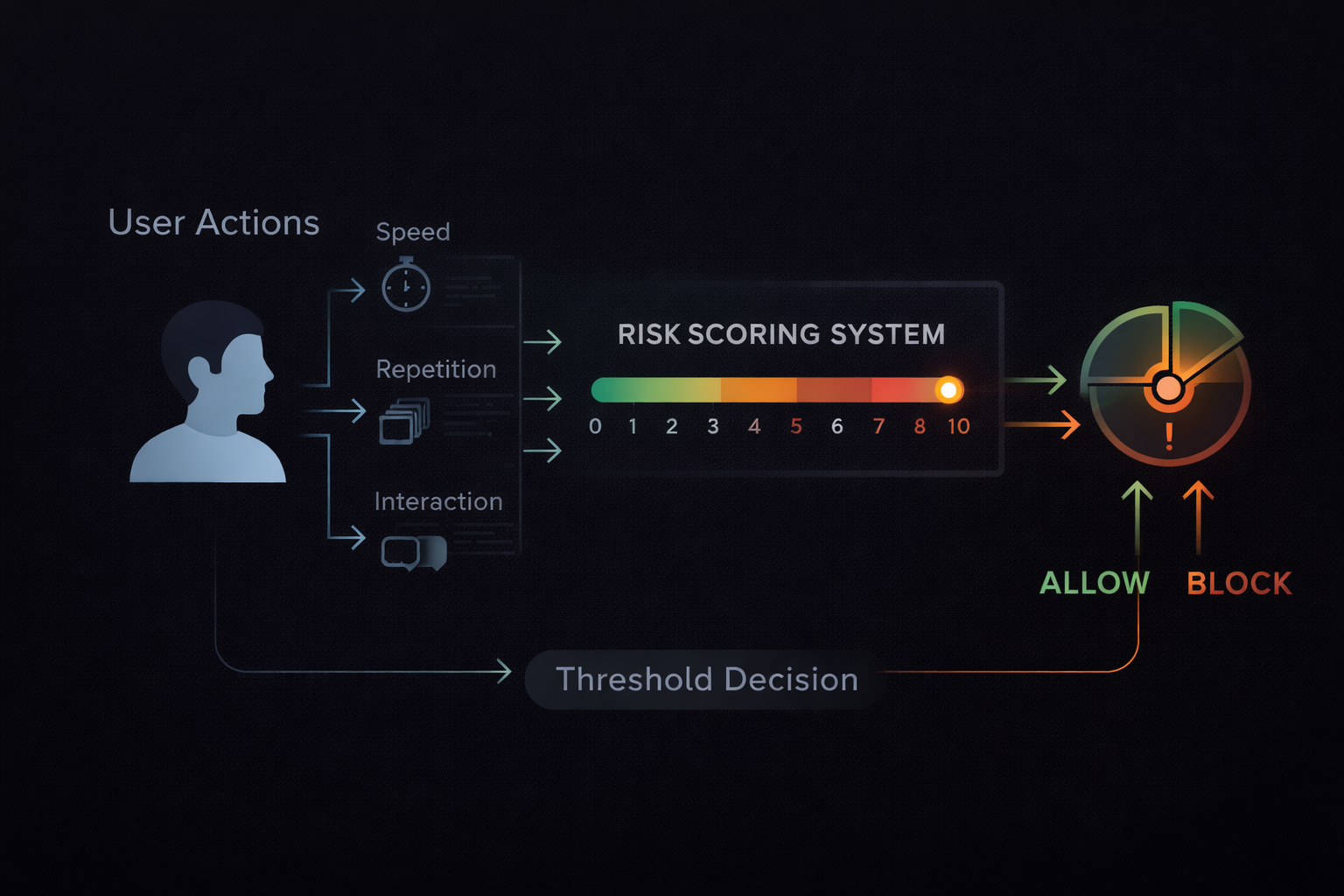
The reason the user’s intuition collapses is that the standard of judgment is different. Users think in terms of content. They judge based on whether they wrote something problematic, violated a rule, or attacked someone. But Meta’s platforms barely rely on this standard. What they care about far more is not content, but behavior. How quickly an account begins activity, what patterns of interaction it shows, how many events occur within a certain period of time—these kinds of factors carry greater weight. In other words, the standard of judgment is not meaning, but pattern.
From a technical perspective, this method is understandable. Analyzing content is expensive and limited in accuracy. Behavioral patterns, by contrast, are relatively easy to collect and more favorable for statistical processing. The problem is that this approach does not clearly distinguish normal users from abnormal ones. Certain patterns may appear in bots, but they can also appear in enthusiastic new users. Yet the system does not distinguish between the two. It only decides whether a suspicious pattern has been detected. And that decision is usually made in a conservative direction.
Ultimately, in this structure, the quality or intent of content does not matter very much. No matter how normal the content may be, restrictions can still occur if the behavioral pattern falls outside the expected range. This creates a deeply unfavorable condition for users. That is because content is something users can control, but there is no clear standard for what kind of behavior will not look suspicious. Users do not know what they should be careful about, and can only keep guessing through experience. As a result, the platform becomes increasingly opaque, and the user experience becomes increasingly constrained.
At this point, an important question emerges. Why do platforms judge users in such an imprecise way? And why is the cost of that design passed on to the user? In the next section, we will dissect this structure from a technical perspective and look more deeply at why this kind of design is almost bound to sacrifice normal users.
Threads’ Actual Structure — It Operates Not on Trust, but on a “Suspicion Score”
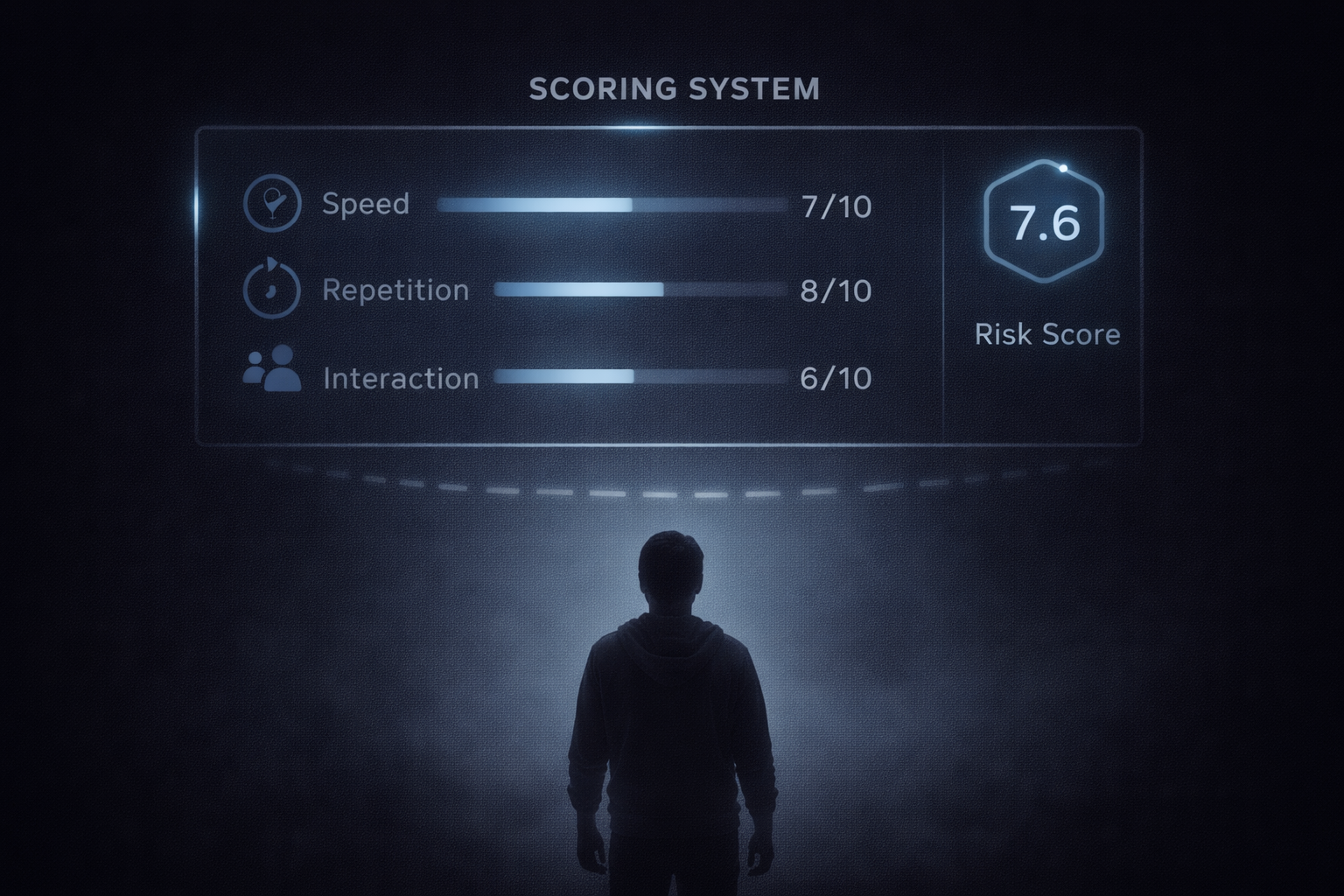
As discussed earlier, Meta’s platforms judge users not by content, but by behavior. Looking at this flow a little more concretely, Threads’ internal structure is closer not to the concept of “trust,” but to a structure that quantifies suspicion. Users do not begin from a state of being trusted by default. Instead, a score accumulates based on various behavioral signals, and this score represents not trust, but risk. The moment the account was created, the speed of early activity, the frequency of interactions, repeated patterns—all of these function as factors that influence this risk score. In this system, what matters is not “how normal you are,” but “how suspicious you are.”
This structure operates in a direction completely opposite to intuition. We usually assume that if we behave normally, there will be no problem. But in this system, what matters more than whether behavior is normal is whether it appears to be an outlier. For example, if activity begins a little faster than that of an average user, or if a certain pattern repeats, that alone becomes a suspicious signal. At that point, the system does not judge whether the behavior is actually problematic. It simply raises the score on the basis of the statistical fact that it is “not typical.” Once a certain threshold is crossed, the account automatically becomes a target for restriction.
The core of this structure is that it is not “a process of building trust,” but “a process of reducing suspicion.” Users do not gain trust through activity; instead, they must adjust their behavior in order to be suspected less. This fundamentally changes the user experience. That is because using the platform turns into limiting one’s own behavior to fit the platform’s standards. In this process, users become increasingly conservative, and instead of natural behavior, they begin to choose safe behavior.
From a Technical Perspective — This Is a System Built on the Assumption of Failure
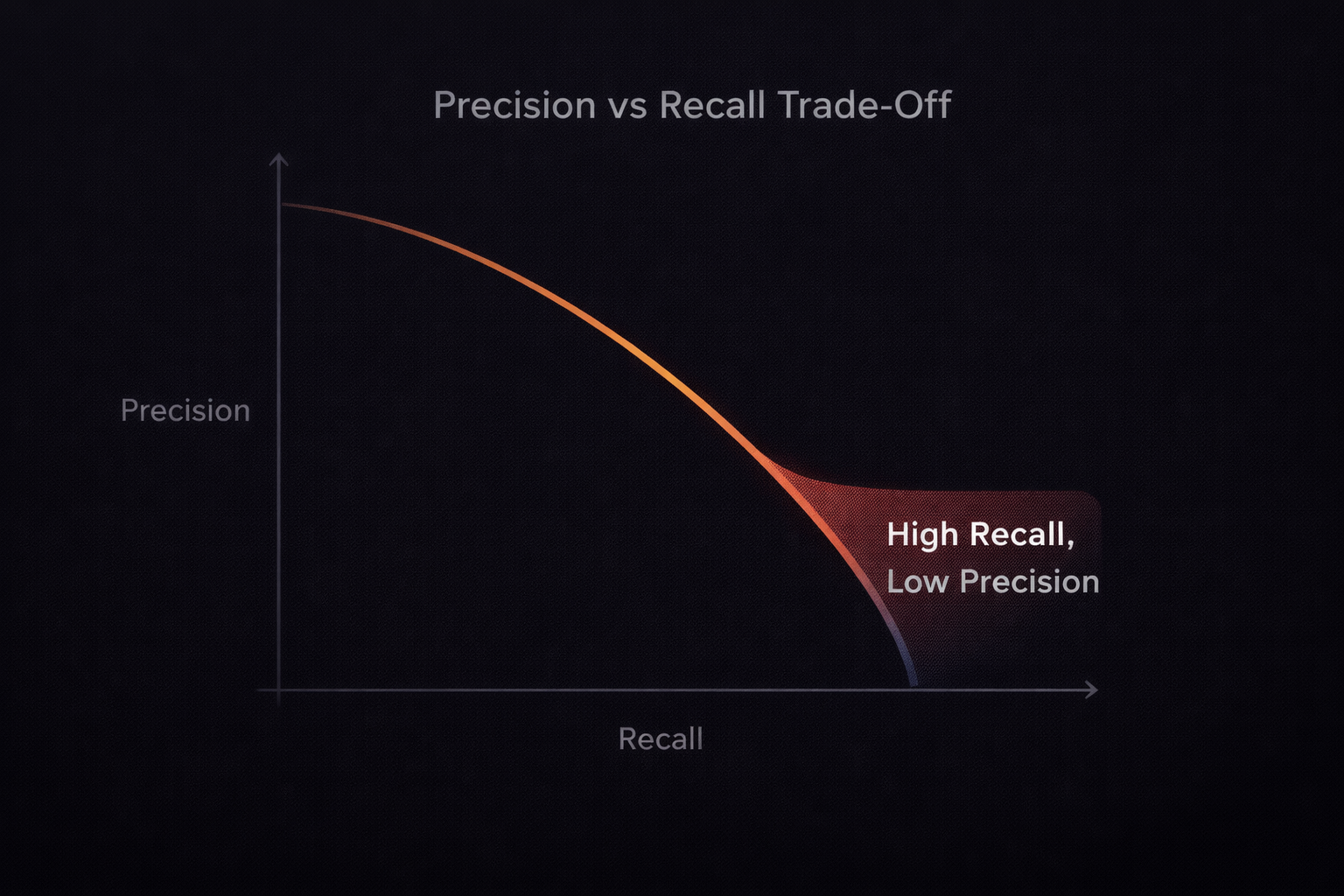
Interpreted from a technical perspective, Threads’ method of judgment is close to a classic anomaly detection system. An anomaly detection system does not aim to perfectly distinguish normal from abnormal. Instead, it aims to block risk signals quickly, even at the cost of tolerating a certain level of false positives. The important concept here is the balance between precision and recall. Rather than balancing the two, the platform makes a choice that is deliberately tilted in one direction.
In the case of Threads, that choice is clear: it raises recall and sacrifices precision. In other words, it is a structure that accepts the possibility of cutting off some normal users in order to reduce the chance of missing spam. This choice is technically quite understandable. Missing spam or bots can have a large impact on the platform as a whole, so minimizing that risk matters. But this choice inevitably comes with side effects. A certain number of normal users will, by structure, be classified as false positives.
What matters here is that this phenomenon is not a simple error. Many users think, “I was just unlucky,” or “the system made a mistake.” But in reality, that is not quite true. This system was never designed with perfect accuracy as its goal in the first place. On the contrary, it is designed on the premise that a certain level of error will be tolerated. In other words, when normal users are restricted, that is not an exceptional situation, but the result of the system functioning as intended.
At this point, the issue of platform responsibility emerges. If the system intentionally tolerates false positives, then there must also be consideration of how to handle the damage suffered by users as a result. But Meta’s platforms, including Threads, provide almost no meaningful mechanism for this. As a result, the cost of that technical choice is passed directly on to the user.
The Method Meta Chose — Risk Avoidance Over Accuracy
Now the question has to change. Why did Meta choose this structure? This choice is not simply the result of technical limitations, but of a clear strategic judgment. From the perspective of platform operations, the greatest risk is spam and malicious accounts. If they spread across the platform, the user experience deteriorates rapidly, and ad revenue and trust are affected as well. For that reason, Meta sets minimizing this risk as its highest priority.
The problem lies in the way that goal is pursued. Rather than solving the issue by increasing accuracy, Meta chooses the direction of blocking when things are ambiguous. From an operational perspective, this method is highly efficient. It can quickly stop spam from spreading across the platform, and it can also produce positive results in internal metrics. But that efficiency is built at the cost of sacrificing user experience. From the standpoint of normal users, it creates an unstable environment in which they can be restricted at any time, for no clear reason.
Within this structure, the platform is in a highly advantageous position. The standards of judgment are not disclosed, the decision-making process remains a black box, and responsibility for the outcome is limited. Users, by contrast, are placed in the exact opposite position. They do not know why they were restricted, they do not know what they are supposed to change, and there is almost nothing they can do except wait. This asymmetrical structure goes beyond mere inconvenience and fundamentally damages trust between the platform and the user.
In the end, what Meta chose was not an accurate system, but a safe system. But the safety being discussed here is not safety from the user’s point of view; it is safety from the platform operator’s point of view. That difference is not small. For users, it appears as uncertainty and restriction. For the platform, it appears as reduced risk and greater stability. And that gap is precisely the essence of the problem we are experiencing.
In the next section, we will look more deeply at why this structure creates an even bigger problem, and how it leads beyond a simple technical choice into a structure of responsibility avoidance.
The Bigger Problem — A System That Does Not Explain
As established in the previous sections, platforms in the Meta ecosystem, including Threads, operate on a technically intentional structure. However, the real issue lies not in the structure itself, but in how that structure is exposed to users. The platform restricts users while providing almost no explanation for why. It offers only generic warning messages or abstract policy links, without any concrete information about which specific behavior caused the issue. As a result, users cannot obtain even the minimum information necessary to adjust their behavior. A decision has been made, but the basis for that decision is concealed.
This structure is difficult to dismiss as a mere UX deficiency. It is a clearly designed structure of responsibility avoidance. The system makes decisions automatically, but when those decisions are wrong, the paths available to correct them are extremely limited. A review request may exist, but the process itself remains close to a black box, and users have no way to intervene other than waiting for the result. In other words, the system holds strong authority, but does not carry corresponding responsibility. This asymmetry goes beyond inconvenience and fundamentally distorts the relationship between the user and the platform.
The larger issue is how this structure is learned by users through repetition. Users become increasingly cautious, engage in fewer actions, and eventually begin to use the platform in a defensive rather than active manner. From the platform’s perspective, this may be a long-term loss, but in the short term, it reduces risk. In the end, by not providing explanations, the platform reduces its operational costs and maintains a structure where those costs are transferred to the user.
We Do Not Follow Rules — We Guess the System
In a system without explanations, users cannot learn the rules. If rules were clearly defined and shared, users could adjust their behavior accordingly. However, on platforms like Threads, such learning is impossible. Because users do not know what went wrong, they act based only on guesses—“this should probably be okay.” This creates an inherently unstable condition. Without clear standards, the same behavior may be allowed in one case and restricted in another.
In this process, users gradually become more constrained. Instead of trying new things, they repeat only behaviors that appear safe. They reduce the frequency of posting, limit interactions, and intentionally lower their presence on the platform. This is not merely a change in usage patterns, but a transformation of the platform experience itself. The user is no longer someone who expresses freely, but someone who optimizes behavior in order to avoid being blocked.
This shift also conflicts with the original purpose of platforms. Platforms grow based on user participation and activity, yet at the same time they maintain structures that suppress that very activity. This contradiction may be sustainable in the short term, but in the long run it erodes user experience. Users gradually feel fatigue and begin to lose trust in the platform. Yet, ironically, this entire process is not clearly recognized by users. It remains only as a vague sensation—“I find myself being strangely cautious.”

This Is Not a Threads Problem — All Platforms Are Moving in the Same Direction
At this point, the issue can no longer be confined to Threads alone. Threads is merely a case that exposes this structure in the most explicit way. Instagram and Facebook, as well as other platforms like TikTok, YouTube, and X, are all evolving in a similar direction. They share one fundamental characteristic: they do not trust users by default, but manage them based on suspicion. This is not just a policy shift, but a change in the underlying philosophy of platform design.
This shift began from technical necessity, but has now become a standard across the industry. To maintain large-scale user bases, automated detection systems are essential, and these systems inevitably include false positives. The problem is that these false positives are increasingly being accepted as normal. Rather than treating them as issues, platforms consider them part of operational cost. And that cost manifests itself in the form of degraded user experience.
Ultimately, we are now in a different environment. The internet of the past was built on an assumption of trust, but modern platforms are built on an assumption of suspicion. Users are no longer entities that are allowed by default, but entities that are conditionally permitted. This change may not be visible, but it creates a fundamental difference. And that difference is likely to become even stronger over time.
At this point, one final question remains. Within this structure, what kind of entities have we become? And how is this shift reshaping the relationship between platforms and users? In the next section, we will bring these questions together and conclude the discussion.
Conclusion. We Have Shifted from Users to Subjects of Verification
When all the preceding discussion is brought together, the most important change is this: we are no longer entities that are trusted by default on platforms. In the internet of the past, the user came first, and the system existed as a tool to support that use. But in today’s platforms, that order has been reversed. The system comes first, and the user has become an entity that must pass the system’s criteria. In other words, usage is no longer a right, but a conditionally granted permission, and those conditions are not clearly disclosed. Within this structure, users cannot know in advance whether their behavior will be allowed; they can only infer it through the outcome.
This change is not merely a shift in policy, but a transformation of user identity itself. We are no longer agents who act freely on platforms, but closer to objects that are constantly evaluated. Creating an account, writing posts, interacting with others—none of these are processes of building trust, but rather processes of resolving suspicion. And this process has no end. Even if a certain level of trust is achieved, that trust can be reevaluated at any time, and the standards themselves can change. Users are never able to reach a stable state and instead remain in a position where they are always potential targets for restriction.
What is important at this point is that this structure is being naturally accepted by users. People are beginning to feel that acting cautiously is normal, and when they are restricted, they respond not by questioning the reason, but by reflecting on their own behavior. This indicates that the system has successfully transferred responsibility onto the user. What should have been the platform’s responsibility—explaining its criteria and acknowledging the possibility of error—is increasingly perceived as an individual user’s problem. This shift is quiet but powerful, because it leads users to internalize the system’s imperfections.
Ultimately, the issue discussed in this article does not end with a single case like Threads. It reflects a direction that modern platforms have collectively chosen, and one that is likely to persist. Platforms will continue to attempt more sophisticated judgments based on larger volumes of data, but achieving perfect accuracy in that process is impossible. Therefore, a certain level of false positives will continue to exist, and the cost will continue to be passed on to users. The problem is that as this structure becomes stronger, the uncertainty and constraints that users must bear will also increase.
At this point, the question becomes simple. Will we accept this structure, or will we recognize it and begin to consider different ways of engaging with platforms? What matters is not the choice itself, but understanding the structure. Adapting without understanding is close to mere compliance, but a choice made with understanding is fundamentally different. This article is an attempt to create that difference. And the starting point is acknowledging that we are no longer simple users, but entities that must be constantly verified.