Why Have Text Editors Become Heavier Over Time?
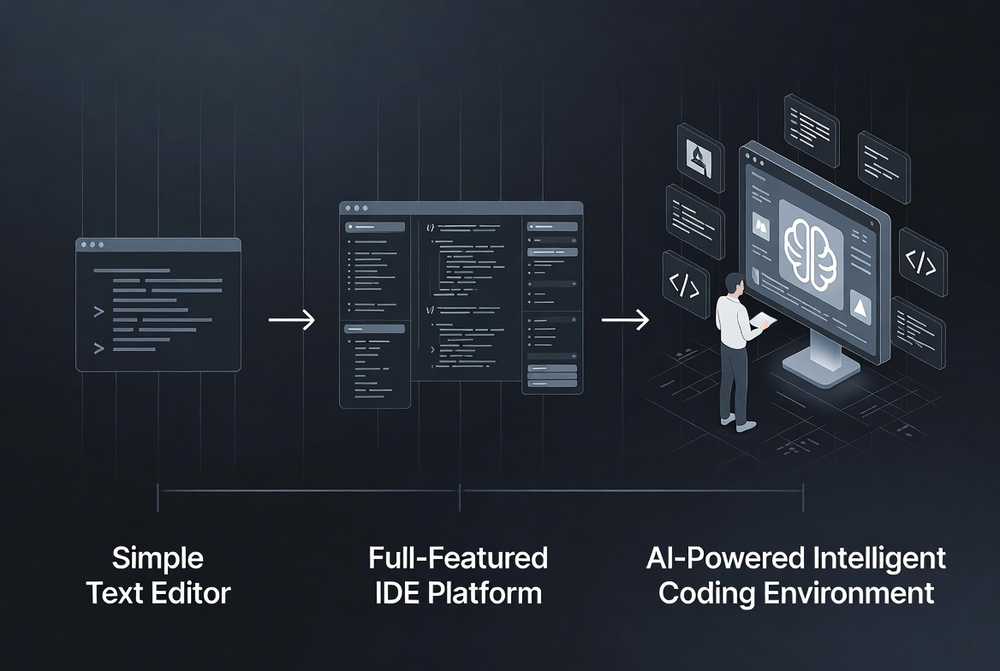
When we think about the text editors developers use today, an interesting reality emerges. Most editors are no longer simple editing tools. They include code auto-completion, project navigation, Git integration, debugging tools, terminal environments, package management, and even AI-powered code generation. While they are still called “editors,” in practice they have become environments very close to full IDEs. Compared to older tools like Notepad or basic text editors, this transformation is quite dramatic. What once only needed to open and modify text files has now become the central tool for handling most development tasks.
This change cannot be explained as a gradual accumulation of features alone. In fact, many users feel discomfort as editors become more complex and heavier, often asking, “Why are all these features necessary?” However, looking more closely, this shift reflects a deeper transformation in the software development environment itself. The amount of code developers must write has increased, system structures have grown more complex, and collaboration methods have evolved significantly. Development tools had no choice but to evolve in response to these changes.
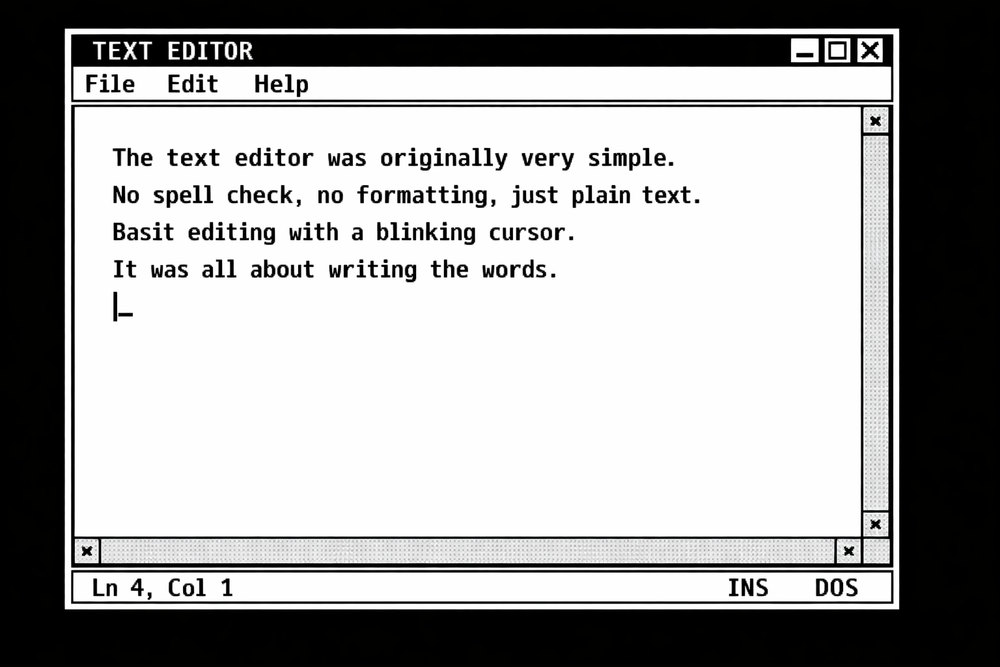
The transformation of text editors into IDE-like environments ultimately leads to a fundamental question: why did a simple editor become a development platform? To answer this, we need to understand the development environment in which text editors first emerged. At that time, software was created in a completely different way. The concept of an integrated development environment, which we now take for granted, did not exist. Text editors were merely small tools for entering code, and most development tasks were performed by moving between separate programs.
This article follows that evolution. It examines how simple text editors gradually acquired more functionality and eventually developed into platforms nearly indistinguishable from IDEs. To fully understand this transformation, we must first look back at past development environments, because the tools we use today are the result of changes accumulated over a long period of time.
Early Development Environments: Editors and Compilers Were Separate Tools
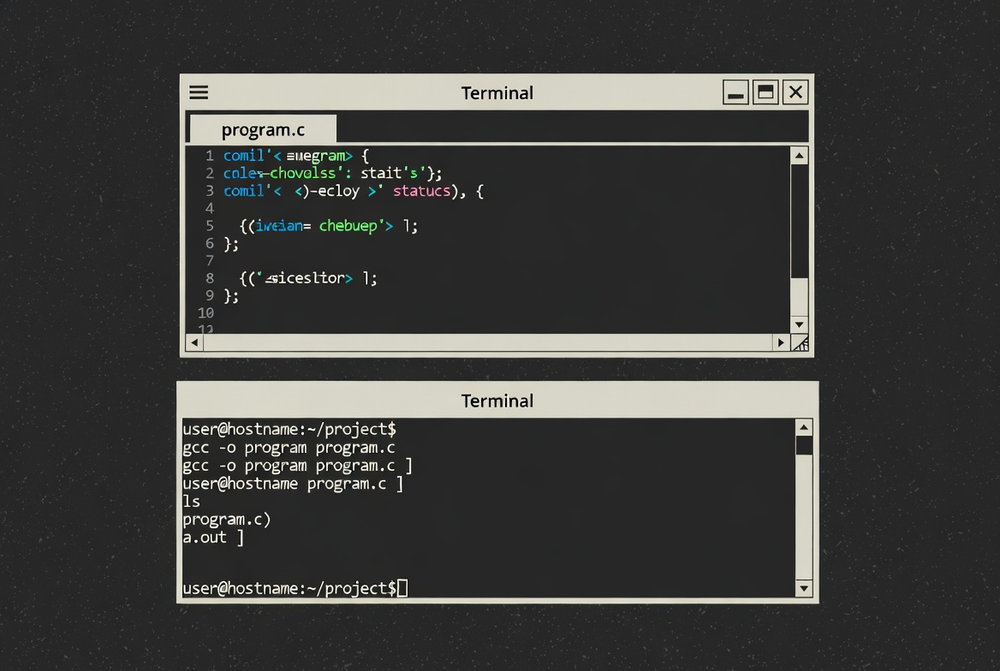
When we look back at early software development environments, they appear quite different from today’s IDE-centered workflows. Developers would open a text editor to write code and save files. Then they would switch to a terminal to run a compiler, build the program, and return to the editor to fix errors. Running or debugging the program was also handled through separate tools. While this workflow may seem cumbersome by today’s standards, it was entirely natural at the time. Development tools existed as independent programs, and developers combined them as needed.
This structure was especially clear in Unix environments. Developers wrote code in a text editor, used build tools like make to compile, and analyzed programs with debuggers such as gdb. Each tool focused on a specific role and was loosely connected to the others. The situation in Windows environments was not much different. Developers often wrote code in simple editors like Notepad and then used separate compilers or development tools. In this era, text editors were literally just tools for entering text—they were not the center of the development environment, but rather peripheral components.
This model was possible because software systems were relatively small. Programs consisted of fewer files, and their complexity was far lower than what we see today. Developers could keep most of the code in their heads, and there was little need for advanced navigation tools to locate functions or files. Features like code auto-completion or sophisticated analysis were largely unnecessary. A text editor simply needed to serve as a place to input code.
However, over time, this situation began to change. As programs grew larger and system architectures became more complex, simple text editors were no longer sufficient for efficient development. Developers had to manage more files, understand relationships between code components, and quickly navigate to specific functions or variables. At this point, text editors began to evolve. What had once been simple input tools gradually transformed into tools designed to assist with working on code.
As Codebases Grew, Simple Editors Hit Their Limits
As software began to be used across more domains, the size of programs expanded rapidly. Projects that once consisted of just a few files grew into systems with dozens or hundreds of files, incorporating complex architectures and numerous libraries. This shift directly impacted how developers worked. As codebases grew, it became increasingly difficult to hold the entire program in one’s head, and even locating a specific function or variable became time-consuming. Simple text editors were no longer sufficient for handling such environments efficiently.
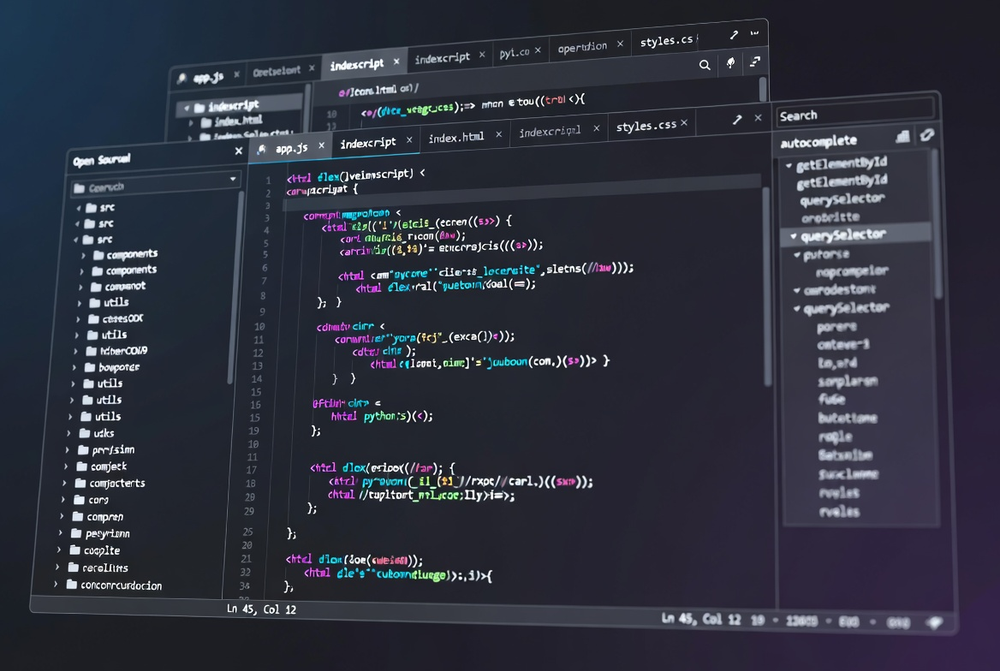
At this point, features designed to assist code editing began to emerge. One of the most notable examples is syntax highlighting. By displaying keywords, strings, and comments in different colors, developers could more easily understand the structure of code. This was followed by code auto-completion, where typing just a few characters would suggest variable or function names, significantly improving development speed. Features such as jumping directly to function definitions or analyzing code references also became increasingly important. These capabilities began to push editors beyond simple text tools into tools that actively support code comprehension.
These changes also influenced the broader structure of development environments. Previously, developers had to locate and fix compile errors manually. Over time, editors began to highlight errors in advance. With the addition of code analysis features, problems could be identified before running the program. As a result, text editors evolved from simple input windows into tools for understanding and analyzing code structure.
This transformation can be seen as the first step toward editors becoming IDE-like environments. As developers required more capabilities, editors moved beyond basic editing and began evolving into environments that support development workflows. The later introduction of plugin systems and extension ecosystems would further accelerate this shift, ultimately leading text editors to become full-fledged development platforms.
Plugin Ecosystems Began to Reshape Editors
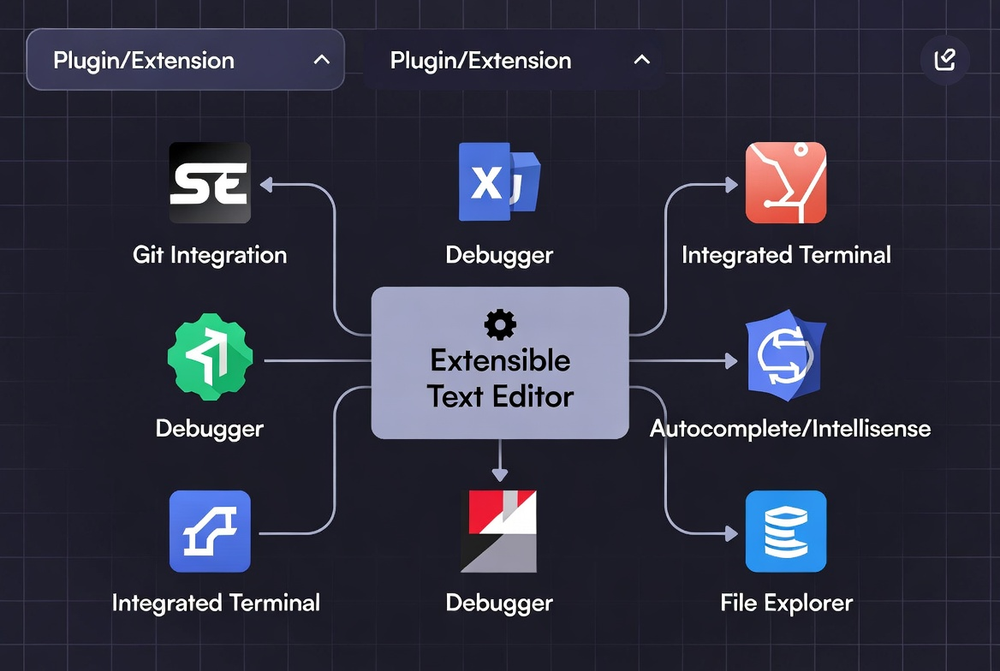
As codebases grew and development environments became more complex, simple editing functionality was no longer sufficient to meet developers’ needs. Features like syntax highlighting and auto-completion began to appear, but implementing everything directly within a single program quickly revealed its limits. Supporting multiple programming languages and diverse environments would make the editor itself overly complex. The solution to this problem was the plugin system—a structure that preserves the editor’s core while allowing additional functionality to be added as external modules. This approach fundamentally changed the nature of text editors.
Editors like Vim and Emacs are representative examples of this shift. Emacs, in particular, became so extensible that it was often described as “more of an environment than a text editor.” Users could add new features through simple configuration files and scripts, even integrating tools like mail clients or file explorers within the editor. Vim also supported a wide range of plugins, enabling features such as code navigation, Git integration, auto-completion, and project management. This extensibility transformed text editors from simple tools into platforms that users could shape according to their needs.
The most significant impact of plugin systems was that the center of development tools began to shift toward the editor. Previously, tools like text editors, compilers, and debuggers existed separately. With plugins, these capabilities started to be integrated into the editor itself. Instead of switching between multiple programs, developers could perform most tasks within a single environment. This not only simplified workflows but also expanded the role of the text editor.
From this point on, the text editor evolved beyond a mere “code input window” into a central hub for development activities. Within the editor, developers could write code, navigate projects, integrate version control systems, and even build and run programs. This shift laid the foundation for modern code editors and marked a key turning point in their evolution into IDE-like platforms.
The Emergence of Sublime Text and Modern Code Editors
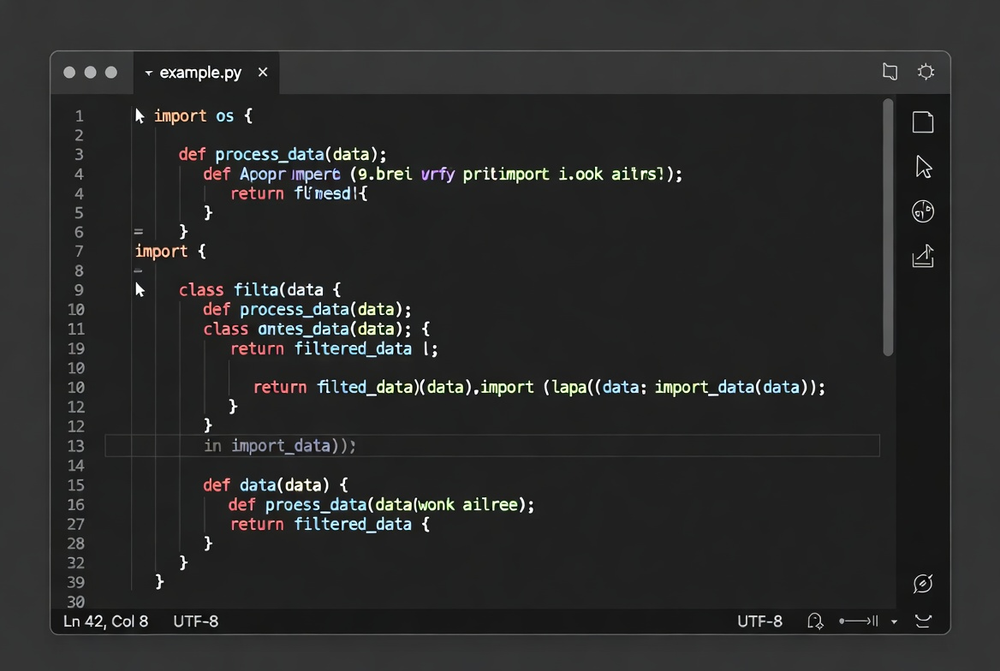
While plugin systems opened up the extensibility of text editors, a new generation of code editors in the early 2010s began to turn that potential into real user experience. Among them, Sublime Text left a strong impression on many developers. Compared to earlier editors, it offered extremely fast startup and a smooth editing experience. Even with files containing thousands of lines of code, it operated without noticeable lag. Its multi-cursor feature, which allowed simultaneous editing in multiple locations, was especially striking at the time.
The true impact of Sublime Text was not just about a few standout features. It fundamentally made code editing faster and more intuitive. File navigation and code search were extremely fast, and its keyboard-centric workflow enabled developers to perform most tasks without relying on the mouse. These characteristics significantly improved productivity and encouraged many developers to adopt text editors as their primary development environment.
Sublime Text also made strong use of a plugin ecosystem. Support for various languages, code analysis tools, and build system integration were all available as plugins, allowing users to customize the editor to fit their needs. This approach influenced many subsequent code editors and introduced a new direction: a lightweight yet powerful development environment.
By this point, text editors had already moved beyond simple editing tools. Developers could handle not only code writing but also project navigation, code search, and build execution within the editor itself. However, they were still not fully equivalent to IDEs. The shift that would truly blur the boundary between editors and IDEs would begin with the next generation of tools.
A New Development Tool Paradigm Created by VS Code
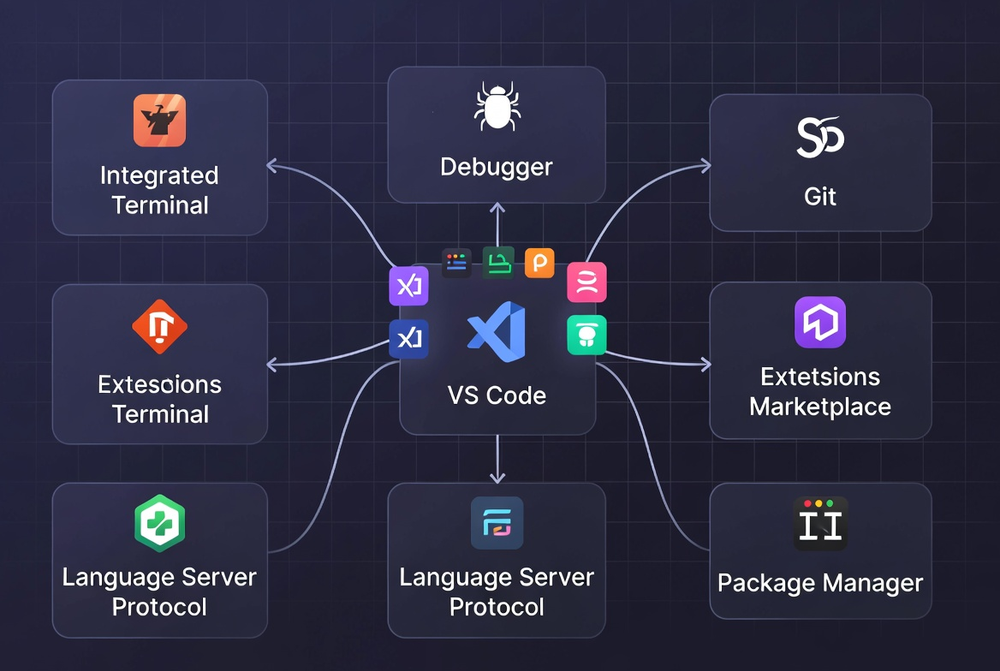
When Microsoft released Visual Studio Code in 2015, it significantly reshaped the direction of text editor evolution. At first, many developers saw it as just another code editor. Over time, however, VS Code evolved beyond a simple editor into something much closer to a development platform. The key lay in its extension system and integrated development environment. While it starts as a lightweight editor, installing extensions transforms it into a workspace capable of handling nearly all development tasks.
VS Code’s extension system goes far beyond a basic plugin model. It includes a built-in marketplace offering thousands of extensions. Features such as language support, debugging tools, code formatters, testing frameworks, and even database management are all available as extensions. Developers can selectively install what they need and shape their own development environment. This structure turns the editor into an extensible development platform, rather than just a standalone program.
A particularly important turning point was the introduction of the Language Server Protocol (LSP). LSP standardizes communication between editors and language analysis tools. Through a single language server, features like code completion, go-to-definition, reference search, and refactoring can be consistently provided across different editors. Previously, each editor had to implement these features separately for each language. With LSP, more powerful and unified code intelligence became possible.
Thanks to this architecture, VS Code quickly became a central tool in the developer community. Tasks such as managing Git, running debuggers, using terminals, and navigating projects could all be performed seamlessly within the editor. Workflows that once required switching between multiple programs became fully integrated into a single environment. As a result, the boundary between text editors and IDEs effectively disappeared.
The editor is no longer just a tool for writing code—it has become the central platform for development work. This transformation provides essential context for understanding the rise of AI-powered editors and the next generation of development tools.
Development Tools Began to Converge into a Single Workspace
With the emergence of modern code editors like VS Code, the structure of development tools began to shift in a fundamentally different direction. In the past, text editors, version control systems, debuggers, build tools, and terminals existed as separate programs. Developers would write code, switch to another tool to build, check errors, and then return to the editor. While this workflow functioned adequately, it introduced significant fragmentation. Constantly switching between programs disrupted focus and made the development environment feel unnecessarily complex.
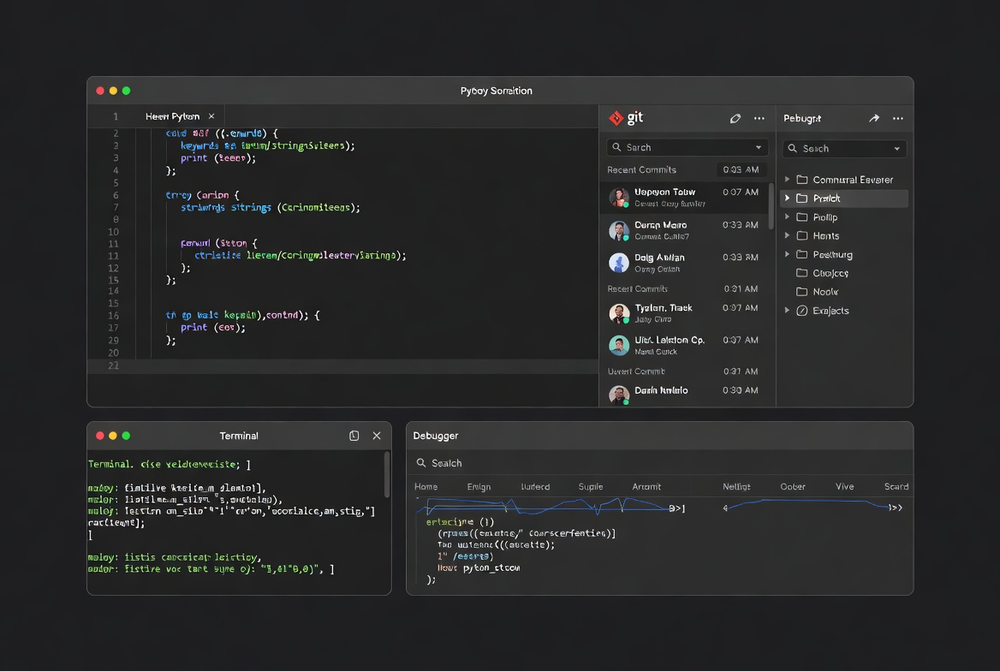
Modern code editors addressed this problem by integrating development tools into a single workspace. Developers can now inspect and manage Git repositories directly within the editor, run debuggers alongside code, and analyze program states in real time. With integrated terminals, tasks such as building projects or installing packages can be performed without leaving the editor. This shift represents more than just added convenience. Developers can now perform most of their work within a single environment, rather than moving between multiple tools.
This integrated structure has had a profound impact on developer workflows. Writing code, executing programs, debugging, and managing version control now form a continuous experience within one interface. In large-scale projects, the benefits are even more pronounced. Navigating and modifying codebases with hundreds of files no longer requires constant tool switching. As a result, the text editor has evolved from a simple code editor into a workspace that encompasses the entire development process.
This transformation has further blurred the boundary between text editors and IDEs. Features that were once exclusive to IDEs are now naturally available within code editors. Developers no longer need to rely on traditional IDEs; instead, they can build their own environments centered around the editor. This trend is closely connected to the emergence of new development tools, particularly AI-driven ones. As development environments become unified platforms, they create a foundation for integrating entirely new capabilities.
And Now, AI Is Entering the Editor
In recent years, text editors have undergone yet another major transformation: the rise of AI-powered development tools. Starting with GitHub Copilot, many code editors have begun integrating AI models for code generation. This capability goes far beyond traditional auto-completion. Instead of merely suggesting the next few lines, AI can generate entire functions or even full algorithmic structures. This shift is fundamentally changing the process of writing code.
Before the introduction of AI, editors were primarily tools for human input. While features like auto-completion and code analysis existed, the responsibility for structuring programs still belonged entirely to developers. With AI code assistants, however, this dynamic is changing. Developers are increasingly reviewing and refining code generated by AI rather than writing everything from scratch. In this sense, the editor is no longer just an input tool—it is becoming an interface where humans and AI collaboratively produce code.
This transformation is redefining the role of text editors. They are no longer limited to editing functionality. Instead, they support the entire coding process, enhance developer productivity, and even participate directly in code generation. New tools like Cursor and Windsurf take this shift even further, placing AI not as a secondary feature but at the core of the development environment.
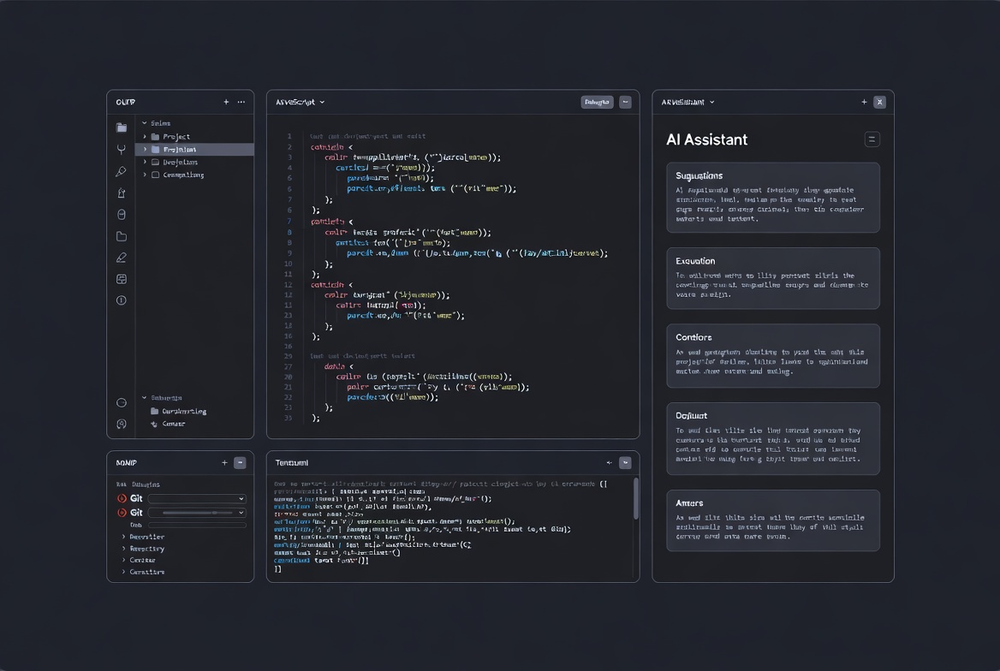
What is particularly interesting is how naturally this change extends from the earlier evolution of editors into IDE-like platforms. Because editors had already become integrated development environments, AI features could be incorporated relatively easily. Code editing, version control, debugging, and package management were already unified within a single workspace. Now, AI acts as an additional layer on top of this foundation, further expanding the scope of the development process.
Text Editors Ultimately Became Development Platforms
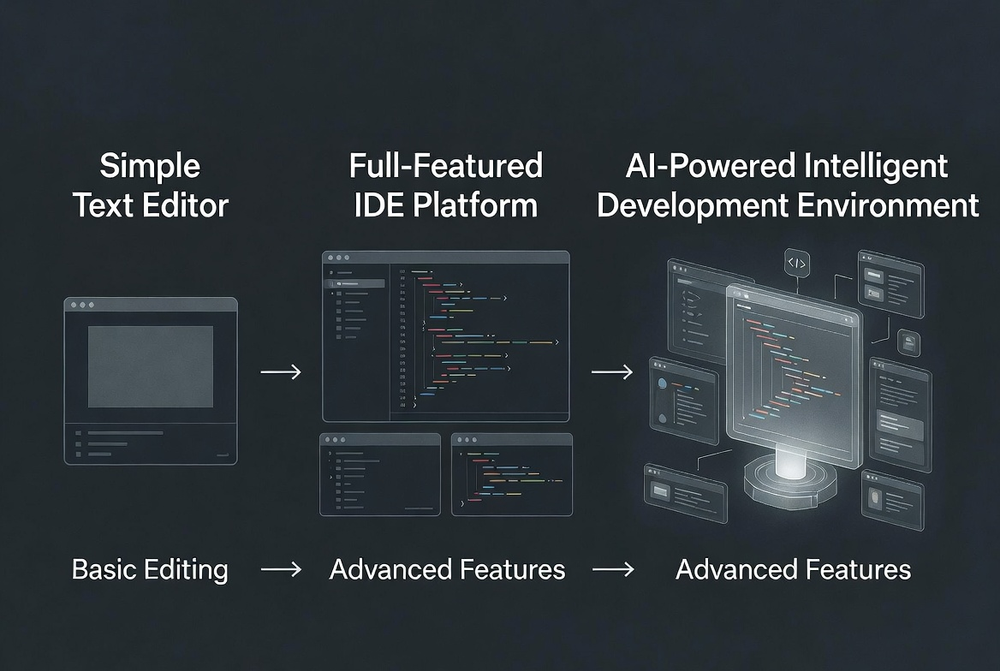
Looking back at the evolution we’ve explored, it’s clear that the path of text editors has taken a remarkably interesting direction. What began as simple text editing tools gradually gained features to support code work, then started integrating various development tools through plugin systems and extension ecosystems. The emergence of modern editors like Sublime Text significantly improved the developer experience, and tools like VS Code effectively expanded text editors into full development platforms. As a result, today’s editors are no longer just code editors—they have become the central tools that encompass the entire development environment.
This transformation is not merely the result of adding more technical features. It reflects a deeper shift in how software is developed. As programs grew larger and collaboration became standard, developers required more powerful tools. Text editors were the tools that absorbed these demands most rapidly. Through extensibility and integration, they continuously adopted new capabilities, eventually reaching a level almost indistinguishable from traditional IDEs.
What’s particularly interesting is that this evolution is far from over. With the rise of AI-powered code generation, the role of the editor is changing once again. Editors are no longer just tools that assist in writing code—they are becoming interfaces that help generate code and support system design. If this trend continues, the development environments of the future may look very different from what we know today.
The history of text editors ultimately leads to a fundamental question: how far can editors evolve? Now that a tool which began as a simple text editor has become a development platform, what comes next? This question naturally leads to the next discussion. Are the emerging AI-powered editors entirely new kinds of development tools, or are they simply the next stage in the long evolution of text editors? The next article will explore this question in greater depth, examining the transformation and implications of AI-driven development tools.
Next Topic: Are AI Editors Truly Something New?
Following the trajectory we’ve explored, we arrive at an interesting conclusion: the code editors we use today are no longer simple text editing tools. Early editors only opened, modified, and saved files, but over time, code analysis features were added, and plugin systems brought various development tools into the editor itself. Modern editors like Sublime Text greatly improved the developer experience, while VS Code transformed editors into development platforms through its extension ecosystem. As a result, today’s editors can handle code writing, debugging, version control, and terminal execution—all within a single environment. And now, AI capabilities are being added on top of this foundation.
At this point, a natural question arises: are the AI-powered code editors emerging today truly a completely new type of development tool, or are they simply the next step in the evolution of text editors? Tools like GitHub Copilot, Cursor, and Windsurf clearly provide a different experience. Developers no longer need to write every line of code themselves—they can review and refine code suggested by AI. In some cases, they describe an entire function or algorithm and let AI generate the code. This workflow can feel fundamentally different from traditional coding practices.
However, when viewed from a broader perspective, AI editors are likely not an entirely new concept but rather the next stage in the evolution of editors. Just as text editors evolved from simple code editors into development platforms, AI is now being added as a new layer on top of that platform. Because editors already had extensible architectures, integrating AI features became a natural progression. Much like code analysis features were once introduced through plugins, AI models are now embedded within editors to support both code generation and understanding. From this viewpoint, AI editors may not represent a complete paradigm shift, but rather an expansion of capabilities within the existing development platform.
Of course, the impact of this shift should not be underestimated. Just as code auto-completion and analysis tools significantly improved productivity, AI-based code generation is likely to reshape how software is built. In particular, repetitive coding tasks and standard patterns will increasingly be handled by AI. At the same time, the role of developers may evolve. Instead of writing every detail manually, developers may focus more on designing system structures and validating AI-generated results.
Seen through the lens of text editor history, this transformation feels like a natural progression. What began as a simple text editor evolved into a code editor, then into an extensible development platform, and is now becoming a new kind of environment integrated with AI. Understanding this evolution provides valuable perspective on the future of development tools. The next article will continue from this point, exploring whether AI editors are merely an extension of existing tools or the beginning of a new development paradigm—and what this shift means for the future of software development.