The Beginning — The Strange News That a Security Company Was Hacked
In December 2020, a piece of news quietly began to spread through the security industry. FireEye, a globally recognized cybersecurity company, announced that it had suffered an internal breach. FireEye was not just another security vendor—it was a firm known for analyzing cyberattacks and providing response strategies to governments and major corporations around the world. It was particularly respected for its ability to investigate nation-state-level hacking operations. For that reason, the fact that FireEye itself had been compromised was deeply shocking to the security community. While breaches can happen to any company, the compromise of a firm dedicated to defending against attacks immediately signaled the seriousness of the situation.
What made the incident even more alarming was that the attackers had not merely accessed internal networks. They had also stolen FireEye’s proprietary security testing tools and attack simulation frameworks. These tools are typically used only in highly controlled environments, raising strong suspicions that the attackers were highly sophisticated.
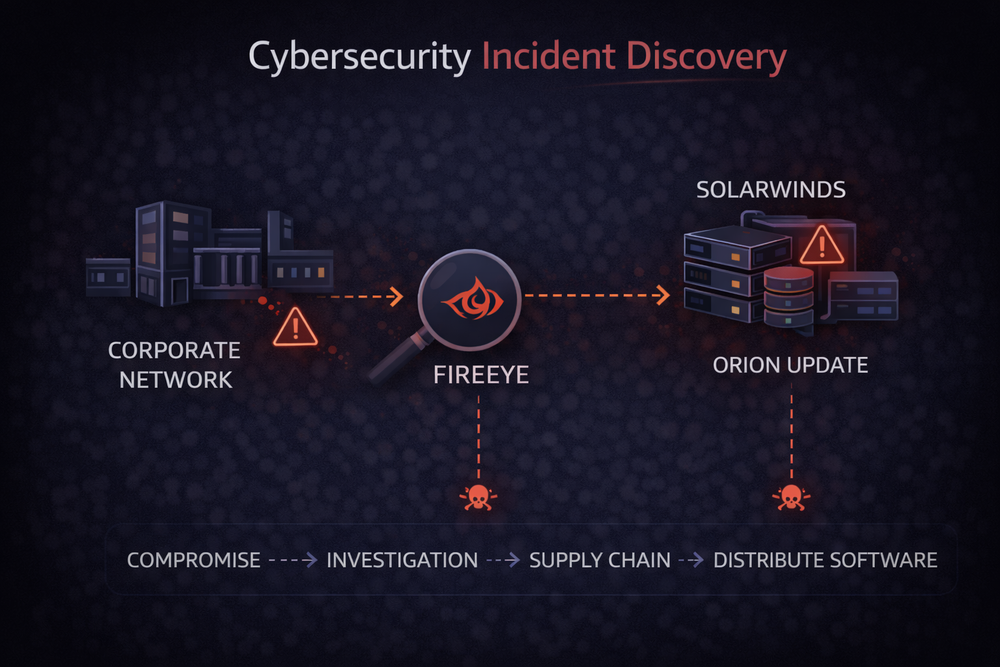
FireEye publicly disclosed the incident and immediately began an internal investigation. At first, it appeared to be a typical corporate breach. However, as the investigation progressed, unexpected clues began to emerge. There was little evidence that the attackers had directly exploited vulnerable servers within FireEye’s infrastructure. Instead, during the process of tracing how the attackers gained access, investigators identified a possibility that seemed unusual: the intrusion may have originated from a legitimate software update.
This scenario was highly unfamiliar to security analysts. Most attacks begin with phishing emails or vulnerable servers, but it is extremely rare for a standard software update to serve as the entry point. The investigation team began tracing the origin of that update, and one name repeatedly surfaced in the process: SolarWinds Orion.
SolarWinds Orion — The Eyes and Ears of Global IT Infrastructure
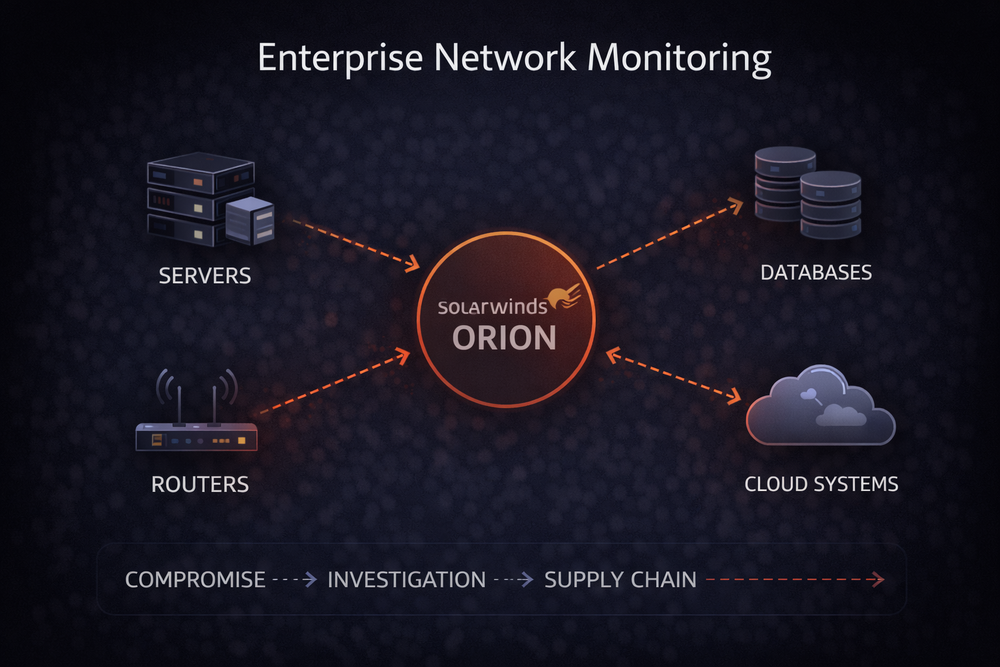
Without understanding the SolarWinds Orion platform, it is difficult to grasp the true scale of the SolarWinds incident. Orion is not just a simple application—it is a network monitoring platform designed to manage an organization’s entire IT infrastructure in an integrated way. It allows administrators to monitor servers, network devices, databases, and application status from a single interface. In large organizations, it functions as a core operational system for IT management. System administrators use Orion to analyze network traffic, check server health, and quickly identify the root cause of issues when failures occur. In essence, Orion acts as a central command and control system for monitoring and managing IT infrastructure.
Because of these characteristics, Orion carries significance far beyond that of ordinary software. It is connected to nearly every system within an organization. Servers, network devices, cloud environments, and data center equipment all communicate with Orion and send it information. This also means that Orion holds extensive access and broad privileges within internal networks. From an attacker’s perspective, this makes it an extremely attractive target. Compromising a network management system can yield far more information than hacking an individual server.
SolarWinds Orion was widely used by organizations across the globe. Large enterprises, financial institutions, security companies, and government agencies all relied on this platform to manage their IT infrastructure. It was especially prevalent within U.S. government agencies, making Orion a critical component of the global IT management ecosystem. In this context, the compromise of Orion updates was not just a software vulnerability issue—it represented a potential breakdown of the trust model underpinning global IT infrastructure.
At this point, security researchers began asking a critical question: if the Orion update had been compromised, could every organization that installed it be placed at risk simultaneously? The answer soon became clear. The SolarWinds incident would go on to demonstrate how a single software update can have an enormous, far-reaching impact.
The Entry Point — Compromising the Build System
What made the SolarWinds incident so shocking to the security community was the method of attack itself. Most cyberattacks involve exploiting vulnerable servers or compromising user accounts. But in the SolarWinds case, the attackers chose a far more subtle target: the process by which software is created—the build system.
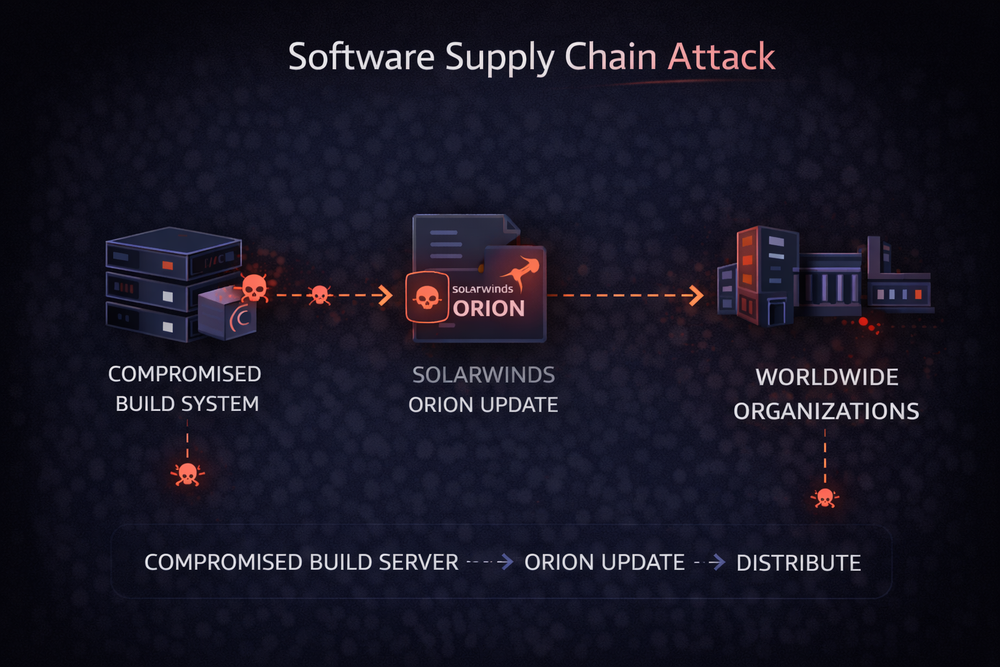
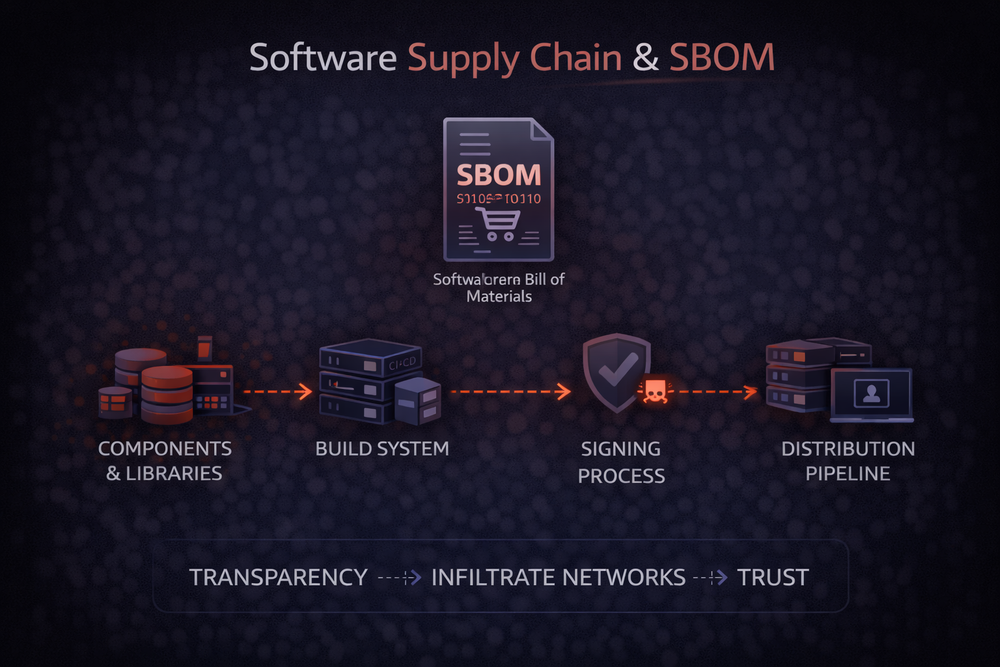
Modern software development is more complex than it appears. Code written by developers is not delivered directly to users. It is first compiled and packaged on build servers, then digitally signed, and finally distributed through update servers. In simplified terms, the process follows this flow: developers write code, it is sent to the build server, the build server transforms it into an executable program, packaging is applied, and a digital signature is added before it is released as an official update. Users trust this entire process when installing software.
In the SolarWinds attack, the attackers intervened at precisely this stage. After infiltrating SolarWinds’ internal network, they manipulated the build system, allowing them to secretly insert malicious code into Orion software updates. The critical detail was that this malicious code appeared indistinguishable from legitimate developer-written code. Because the resulting software carried a valid digital signature, users had no reason to suspect anything. As a result, the attackers successfully distributed malicious code through SolarWinds’ official software update channel.
This approach is extremely dangerous from a security perspective. It does not target the program itself but the entire software production process. Once the build system is compromised, attackers can inject code that was never written by developers into official software releases. These releases are then distributed as legitimate updates. The SolarWinds incident is a textbook example of exploiting this structural vulnerability.
This case reinforced a critical lesson for security researchers. In modern software security, the weakest point is not necessarily the application code itself. The greater risk often lies in the process through which software is built and distributed—the supply chain. The SolarWinds incident demonstrated this reality in the most dramatic way.
The SUNBURST Malware — A Backdoor Hidden Inside Legitimate Updates
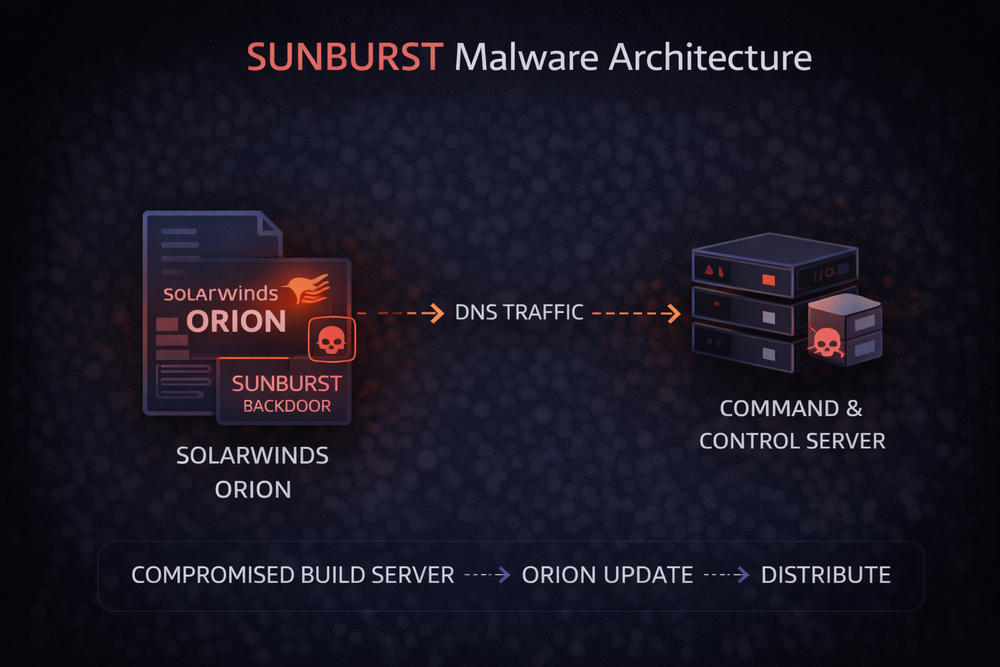
The malicious code inserted into SolarWinds Orion updates later became known as SUNBURST. What shocked security researchers was not merely the presence of a backdoor, but how highly sophisticated and carefully engineered it was. Unlike typical malware, which often communicates with external servers or alters systems immediately after infection, SUNBURST operated differently. It employed a delay strategy, remaining dormant for a period after installation. This design was intentional, allowing security systems to classify it as legitimate software before any suspicious behavior occurred.
SUNBURST was deeply integrated into the Orion platform, functioning as if it were a native component. This suggests that the attackers had a thorough understanding of Orion’s internal architecture. The malicious code was written to resemble existing functionality and blended into the program’s logic, making it difficult to detect through standard static analysis. Even its network behavior was carefully designed. Instead of directly connecting to command-and-control servers, SUNBURST used DNS-based communication that appeared similar to normal network traffic, allowing it to evade detection by security monitoring systems.
This structure indicates that the attackers were not simply aiming for initial access, but for long-term intelligence gathering and internal reconnaissance. After installation, SUNBURST collected system information and selectively activated further stages of the attack only for targets that matched specific criteria. Not all infected systems were treated the same—the malware was used selectively based on the attacker’s objectives.
Because of these characteristics, security researchers classified SUNBURST not as ordinary malware, but as an advanced backdoor tool associated with APT (Advanced Persistent Threat) operations. This level of sophistication is also why the SolarWinds incident came to be viewed not as a simple breach, but as a potential state-level cyber operation.
The Attack Spread to 18,000 Organizations
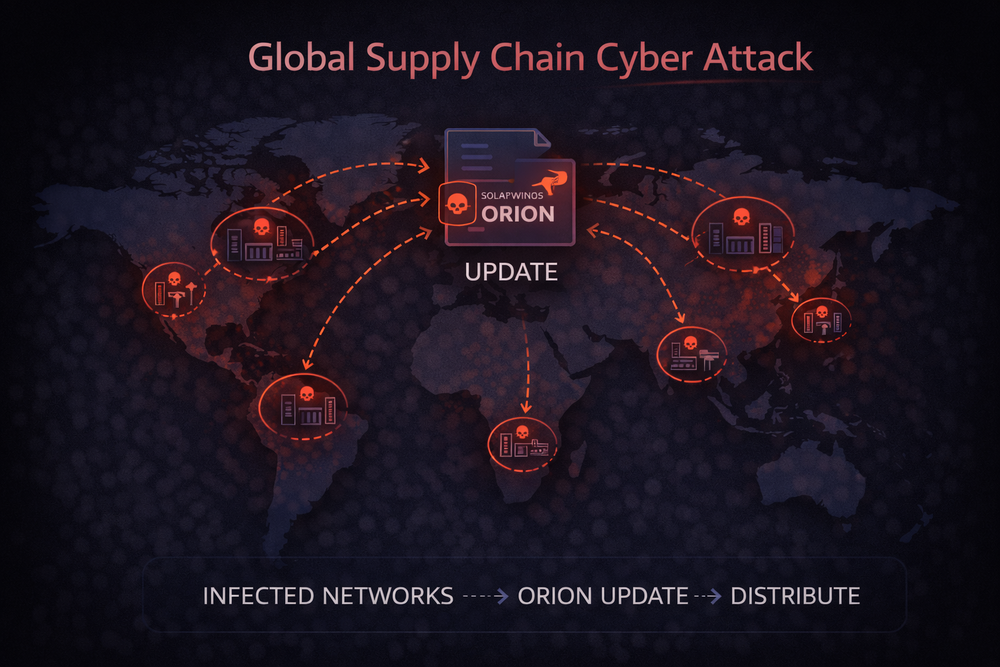
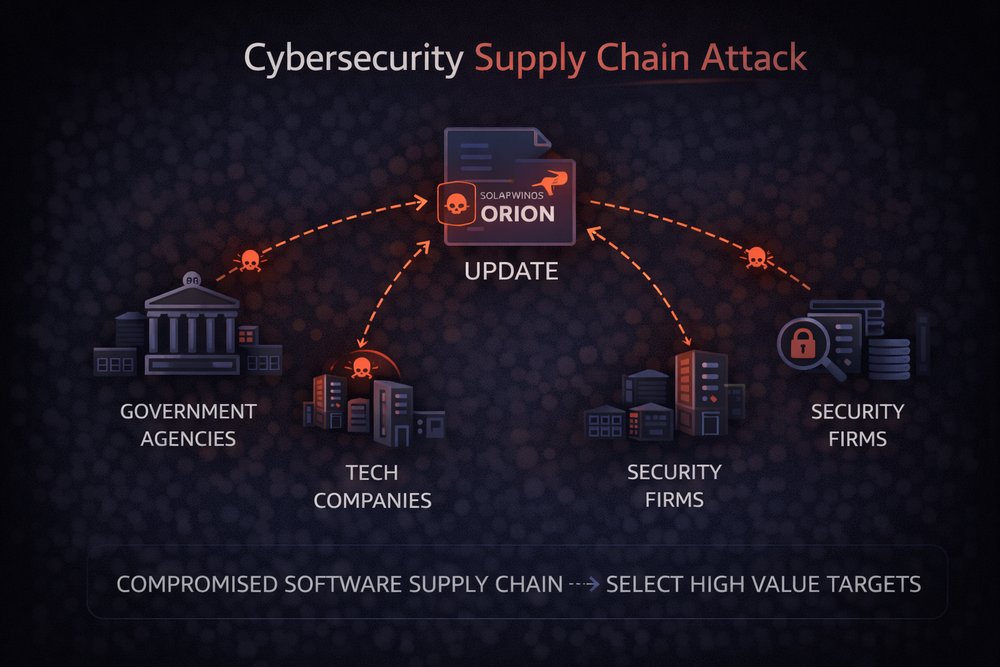
After SUNBURST was embedded into Orion updates, the attack began to spread quietly. The compromised updates, distributed through SolarWinds’ official update system, reached Orion users around the world. Because Orion was already widely used across numerous organizations, the attack—whether intended or not—resulted in a massive infection surface. Investigations later confirmed that approximately 18,000 organizations had downloaded the Orion updates containing the malicious code. This scale went far beyond a typical security incident, as there had been few, if any, cases where a single software update had been installed across so many organizations simultaneously.
However, an important detail is that not all of these 18,000 organizations became actual targets of the attack. The SUNBURST backdoor initially operated in a dormant state, collecting environmental information. Only when an organization matched criteria defined by the attackers would further stages of the attack be activated. In other words, the attackers did not target every infected organization but instead selectively engaged high-value targets. This approach differs significantly from typical malware campaigns that aim for financial gain through large-scale infections. Instead, the attackers conducted precision intrusions focused on strategically important entities.
Subsequent investigations revealed that the targets included major U.S. government agencies and large technology companies. Organizations such as the U.S. Treasury, Department of Commerce, Department of Homeland Security, and several leading tech firms were affected. In some cases, attackers were found to have maintained long-term access within internal networks. This elevated the incident from a corporate security breach to a matter of national security. The U.S. government described it as one of the most serious cyberattacks in modern history, triggering a large-scale, multi-agency response to investigate and contain the breach.
Selective Targeting — Not Every Infection Became an Attack
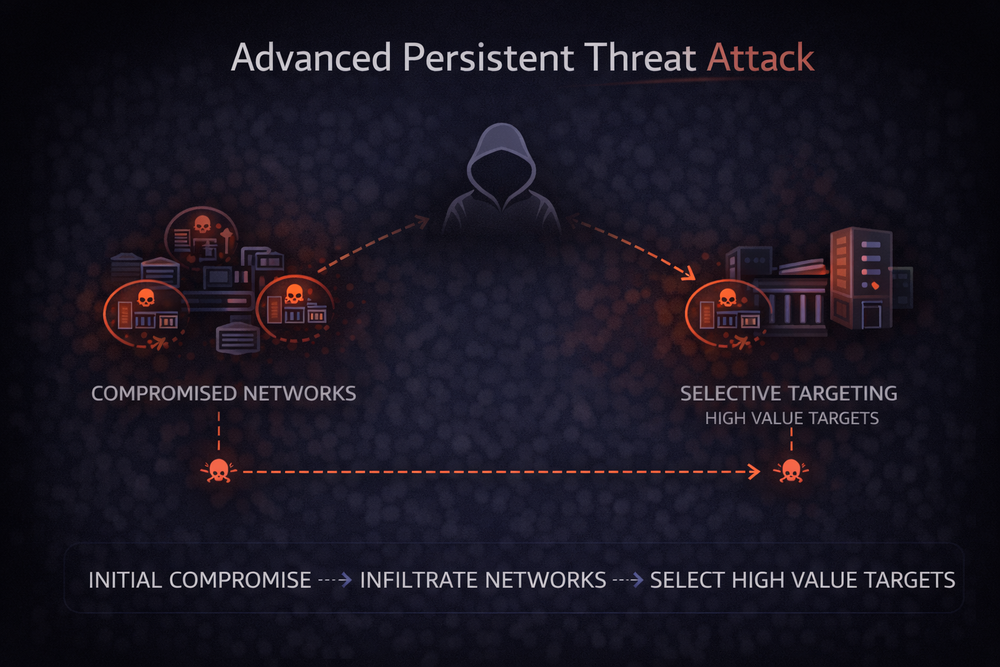
One of the most intriguing aspects of the SolarWinds incident, from a security research perspective, was the attacker’s selective targeting strategy. In typical malware campaigns, the goal is often to infect as many systems as possible. This is especially true for ransomware or financially motivated attacks, where the number of infections directly correlates with profit. However, the SolarWinds attack followed a completely different pattern. Even though malicious code was installed across 18,000 organizations, the attackers chose to actively target only a small subset of them.
This approach clearly indicates that the objective was not financial gain, but intelligence gathering and long-term infiltration. Using the SUNBURST backdoor, the attackers first collected environmental data from infected systems. They then evaluated whether each organization represented a strategically valuable target. Only those deemed valuable were subjected to further stages of the attack. At that point, the attackers could deploy additional payloads, compromise internal accounts, and move deeper into the network.
This method is characteristic of APT (Advanced Persistent Threat) operations. Unlike conventional attacks that aim for immediate disruption or profit, APT campaigns focus on maintaining long-term access within a target organization to collect information. In the SolarWinds case, attackers remained undetected for months while exploring internal networks. As a result, many organizations continued operating their systems without realizing they had been compromised.
The SolarWinds incident stands as a clear example of what happens when supply chain attacks are combined with APT strategies. Through a single supply chain breach, attackers gained access to thousands of organizations, then selectively targeted those of interest for prolonged infiltration. This was not merely a technical vulnerability—it demonstrated that the trust model of the software ecosystem itself can become an attack surface.
Why the SolarWinds Incident Became a Historic Security Event
The SolarWinds incident is considered historic not only because of its technical sophistication, but because it exposed how modern software ecosystems rely on complex structures of trust. There had been many hacking incidents before, including breaches of large corporations and government agencies. However, SolarWinds demonstrated something fundamentally different: attackers could gain access to numerous organizations without directly attacking each one. By compromising a single software supply chain, attackers created pathways into the internal networks of thousands of organizations. This is what made the incident so shocking to the security community.
Supply chain attacks existed even before SolarWinds, but most had relatively limited impact. In contrast, SolarWinds involved software that was widely used across the globe. The Orion platform, as a network management system, was deeply integrated into critical infrastructure within organizations. This allowed attackers to access far more than just a single system—they could potentially obtain network structures, system configurations, user credentials, and access to internal services.
After this incident, security researchers reached an important conclusion. In modern software security, the priority is no longer just preventing vulnerabilities in application code. Instead, it is about protecting the entire process by which software is created and distributed. Developers, build systems, package repositories, update servers, and distribution channels together form a single supply chain. If any one of these points is compromised, the outcome can be equally severe. The SolarWinds incident made this reality unmistakably clear.
The case also revealed a new dimension of cyber conflict between nations. Considering the sophistication of the attack, its long-term stealth, and the nature of its targets, many experts concluded that it was likely a state-level cyber operation. Investigations have linked the attack to a hacking group associated with Russia. If this assessment is correct, the SolarWinds incident represents not just cybercrime, but a form of information warfare between nations. In the aftermath, many governments began to treat cybersecurity not merely as an IT issue, but as a core element of national security.
A New Concept in Supply Chain Security — SBOM and Build Security
After the SolarWinds incident, one question rapidly spread across the security industry: how can we trust software? Most users and organizations are somewhat cautious about vulnerabilities within applications, but they rarely question software updates or official distribution channels. Typically, users install software through official websites or automatic update systems, assuming the process is safe. However, the SolarWinds incident demonstrated that this very trust model can become an attack surface.
In response, companies and security organizations began discussing new concepts and policies to strengthen software supply chain security. One of the most important among them is SBOM (Software Bill of Materials). An SBOM is essentially a detailed inventory of all components that make up a piece of software—similar to a materials list. By clearly documenting which libraries and components are included, organizations can quickly identify which systems are affected when a vulnerability is discovered in a specific component.
But SBOM represents more than just a list of dependencies. It reflects a broader philosophy: the entire process of software creation must be transparent and traceable. This includes the integrity of build systems, the software signing process, and the update distribution mechanism—all of which must be managed as part of a unified chain of trust. The SolarWinds incident showed that if even one link in this chain is compromised, the entire structure can collapse.
At the same time, protecting build systems themselves has become increasingly critical. Many organizations have begun strengthening access controls to build servers, operating build environments in isolated systems, and introducing mechanisms to audit the build process. Software signing practices have also become more rigorous. It is no longer enough to simply sign code—the management of signing keys and the security of the signing process itself are now recognized as essential security concerns.
Ultimately, the SolarWinds incident leads to a fundamental realization. The software we use is built on top of countless libraries, tools, and build systems. Behind every program lies a vast supply chain. And if any single point in that chain is compromised, the outcome can be equally severe. This case clearly demonstrated that software security is no longer just about verifying code—it is about protecting the entire process of software production.
Why Developer Tools Become the Most Dangerous Attack Surface
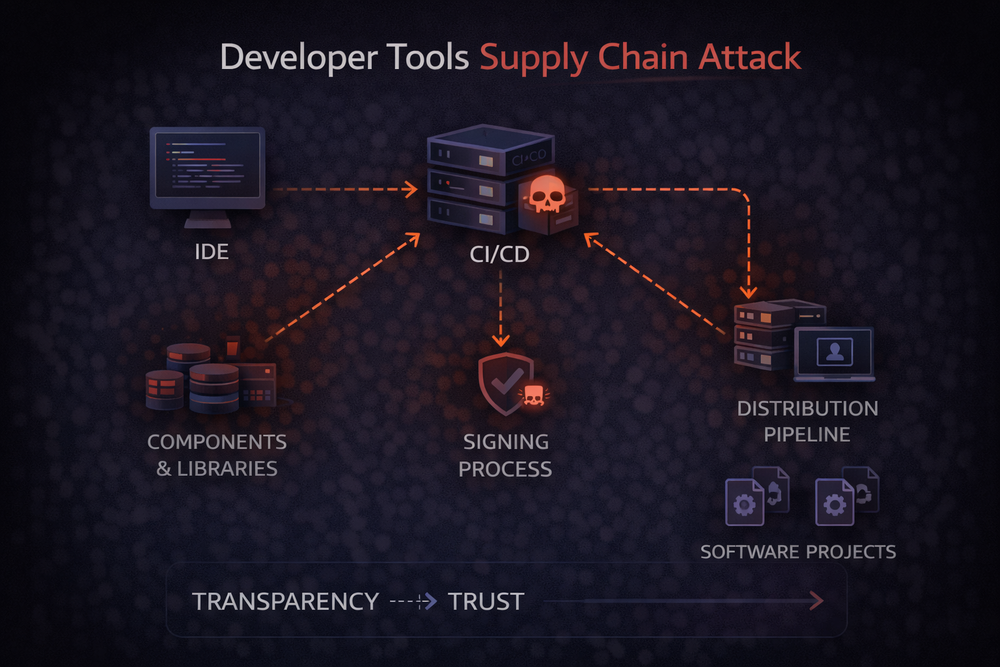
When the SolarWinds incident is viewed from a broader perspective, a clear pattern begins to emerge. Attackers are no longer satisfied with exploiting simple server vulnerabilities. Instead, they have started targeting the entire process through which software is created. And at the center of this process are always developer tools and build systems. IDEs, compilers, package managers, and build servers are not just applications—they are core infrastructure of software production.
Developer tools are not used to create just a single program. In most cases, they are reused across numerous projects. A single build system may compile dozens of services or applications, and a single package repository may provide shared libraries to countless projects. In such a structure, once an attacker gains control of a developer tool, the impact can extend far beyond a single application and spread across a wide range of software systems.
For this reason, in recent years, many attackers have begun to treat developer tools as primary targets. The SolarWinds incident was an example of targeting a build system, and subsequent cases have shown attacks directed at developer tools themselves. Attackers have come to understand that compromising the tools or update systems used by developers can be far more effective than directly attacking individual machines or servers.
This shift carries significant implications for security. Traditional security models have focused on protecting servers and networks. However, in modern software environments, the development environment itself has become a critical attack surface. IDEs, build systems, and package repositories used by developers must all be considered part of the security boundary. The SolarWinds incident stands as a symbolic example of this transformation.
In the next article of this series, we will examine another case where supply chain attacks took a different form. While the SolarWinds incident involved compromising a build system, the next case centers on an attack targeting the developer tool itself—the XcodeGhost incident, where malicious code spread through Apple’s development environment.
The Next Incident — The Day Apple’s Developer Tools Were Compromised
The SolarWinds incident remains one of the most symbolic events in modern cybersecurity history. Instead of directly attacking a single organization, the attackers took control of a point in the software supply chain, gaining access to thousands of organizations simultaneously. This case dramatically demonstrated that the process of building and distributing software itself can become an attack surface. At that point, security researchers began asking a critical question: what would happen if attackers targeted not the build system, but the developer tools themselves?
This was not merely a theoretical question. In real-world development environments, a wide range of tools are used, and these tools serve as the starting point for countless projects. IDEs for writing code, build tools for compilation, and environments for packaging applications are all core components of the software production process. If an attacker gains control of any one of these tools, the impact can extend far beyond a single organization. When the structure of supply chain attacks revealed by SolarWinds is expanded slightly, the scenario of developer tools themselves becoming targets becomes entirely realistic.
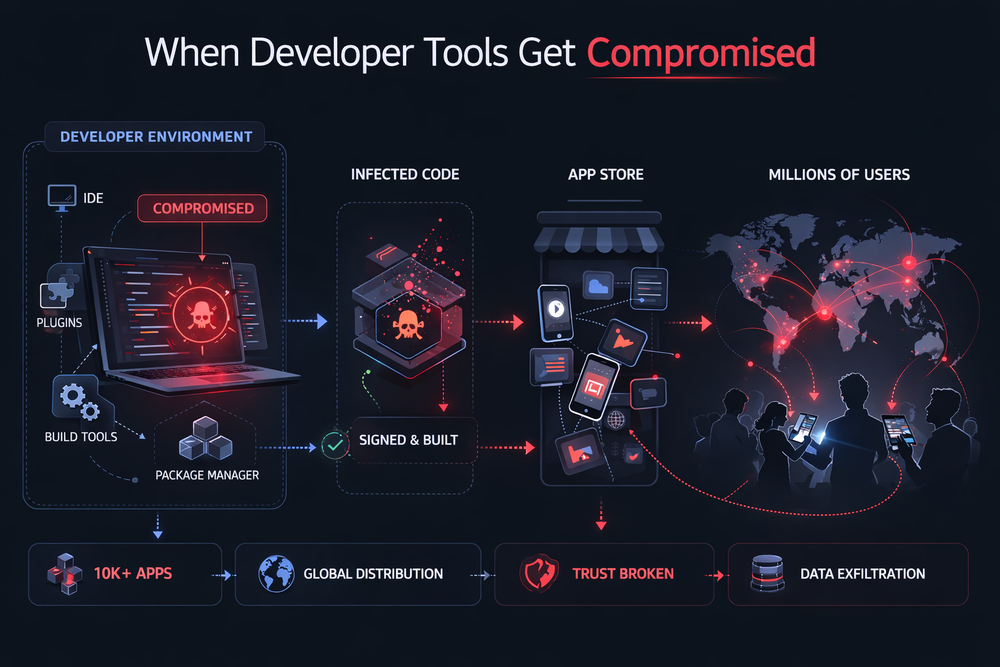
In fact, this scenario had already occurred years earlier. That incident was XcodeGhost. In this case, attackers modified Apple’s official development tool, Xcode, and distributed it online. Developers installed this version simply to obtain faster downloads, but in doing so, they unknowingly created applications containing malicious code. These applications were then distributed to users worldwide through the Apple App Store. In other words, the attackers did not need to directly target users or organizations—by compromising a single developer tool, they were able to infect countless applications simultaneously.
This incident forms a striking contrast with SolarWinds. In the SolarWinds case, attackers controlled software updates through the build system. In the XcodeGhost case, the developer tool itself became the center of the attack. While the methods differed, both incidents convey the same fundamental message: the most powerful attack surface in modern software ecosystems is not the application code itself, but the entire software production process. Developer tools, build systems, and update mechanisms together form a vast supply chain.
Through the SolarWinds incident, we have seen the scale and impact of supply chain attacks. In the next case, we will examine how that same supply chain can be compromised through developer tools themselves. In the following article of this series, we will take a closer look at the XcodeGhost incident in Apple’s development environment, analyzing what happens when attackers gain control of developer tools.