Strange Code Discovered in the App Store
In the fall of 2015, unusual reports began to surface among security researchers. Similar network communication code was discovered in multiple iOS apps developed by different developers. At first, it appeared to be an issue related to a common advertising SDK or a third-party library. In the mobile app ecosystem, it is not uncommon for the same library to be included across multiple apps, so finding similar code patterns was not, by itself, particularly suspicious. However, as researchers continued their analysis, they began to realize that this situation was different. The code found across apps from different companies and developers was not just similar—it was nearly identical.
The suspicious code was designed to communicate with a specific server when the app launched, transmitting device information and app-related data externally. At first glance, it could be mistaken for simple analytics code. The real problem, however, was that this code had not been intentionally added by the app developers. Some developers later discovered discrepancies between the code they had written and the code included in their final applications, which quickly drew the attention of the security community. What made the situation even more concerning was that these apps had all passed through Apple’s official App Store review process. The iOS ecosystem is relatively closed compared to Android, and Apple’s app review process has long been seen as a strong barrier against malware. The fact that dozens of apps on such a platform shared the same malicious code pattern clearly demanded an explanation.
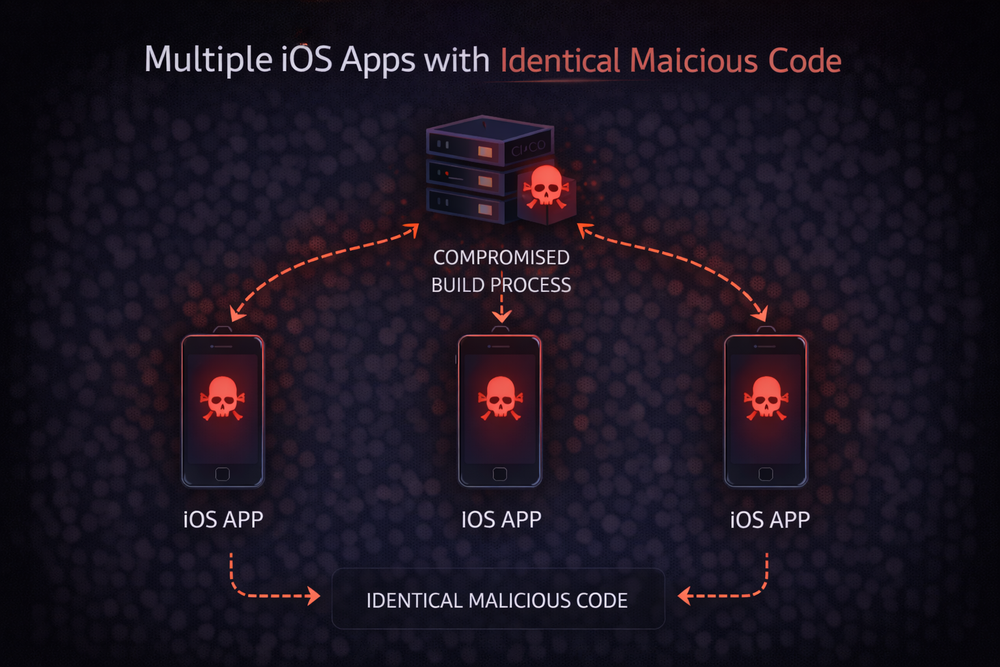
As more researchers joined the investigation, the issue spread rapidly. Security analysts compared code structures across multiple apps and confirmed that the same malicious pattern appeared repeatedly. One particularly notable detail was that the code was not tied to any specific feature of the apps. Instead, it was embedded in the common initialization routines executed when the app launched. This suggested that the code was not simply part of a shared library, but had likely been automatically inserted somewhere during the app build process. In other words, it raised the possibility that the attackers had not targeted individual apps, but rather the process by which those apps were created.
As this hypothesis gained traction, the focus of the investigation naturally shifted toward the development environment. If identical code appeared across many different apps, the common factor might not be the code itself, but the tools used to build those apps. At this point, the nature of the incident expanded beyond simple malware analysis into a broader suspicion of the entire software supply chain.
And in that process, one name began to emerge.
That name was Xcode.
The Common Factor in Infected Apps: Not Developers, but Tools
As security researchers compared the infected apps, the first thing they confirmed was the structural similarity of the code. Normally, apps built by different developers vary significantly in their internal structure—libraries differ, network request patterns differ, and architectures reflect each developer’s style. However, in these affected apps, the same code block appeared in nearly identical locations, regardless of those differences. In particular, identical Objective-C code patterns were repeatedly found in the initialization phase during app launch, and this code was confirmed to send data to a specific external server.
The code was designed to collect information such as the device name, operating system version, and app bundle identifier, and transmit it externally. What made this especially suspicious was that the code had no relation to the app’s core functionality. Whether it was a messaging app, a game, or a productivity tool, the same code appeared. This strongly suggested that the code had not been written by the developers themselves, but had been automatically injected. As researchers analyzed the insertion points and execution flow, a key possibility emerged.
If the code had not been written by developers, it must have been introduced during the build process. Mobile apps are created by compiling source code into executable binaries, a process typically handled by IDEs or build tools. In the iOS ecosystem, this role is performed by Apple’s official development tool, Xcode. Researchers began investigating the development environments used by affected developers and discovered that some had installed Xcode from unofficial sources rather than Apple’s official website.
This discovery fundamentally changed the nature of the incident. If Xcode itself had been tampered with, then malicious code could be inserted into every app built with it, regardless of the developer’s intentions. In other words, the attackers had not targeted individual apps—they had targeted the tool used to create them. As this hypothesis was confirmed, the security community began to recognize the case not as a simple malware incident, but as a software supply chain attack.
At this point, the incident entered a new phase. The attackers did not directly target individual developers or end users. Instead, they targeted the tools used by developers, resulting in the simultaneous infection of numerous apps. While this type of attack had previously been discussed only in limited contexts, this case made it clear that developer tools themselves can become attack surfaces.
And the tool used in this attack soon came to be known by a single name: XcodeGhost.
XcodeGhost: The Emergence of a Compromised Developer Tool
At its core, the XcodeGhost incident began with a very simple idea. Instead of attacking iOS apps directly, the attackers chose to tamper with the tool used to create those apps. Xcode is Apple’s official iOS development environment and is essentially required for building apps for iPhone and iPad. It includes nearly everything needed for iOS development—compilers, debuggers, interface builders, and simulators—so most developers download it directly from Apple’s developer site.
The problem lay in the size of Xcode and the download environment. At the time, the Xcode installer was several gigabytes in size, and downloading it from Apple’s servers in China was often extremely slow. In large development teams, where multiple developers needed to download Xcode simultaneously, this became a significant burden. As a result, within the Chinese developer community, it became common practice to share Xcode installers through file-sharing services like Baidu Cloud, which offered much faster download speeds than official servers.
The attackers exploited exactly this situation. They took the legitimate Xcode installer, modified certain internal files, and redistributed a tampered version that retained the same name and structure. On the surface, this altered package was almost indistinguishable from the original. The interface appeared identical, compilation worked as expected, and the development process showed no obvious anomalies. However, there was one critical difference.
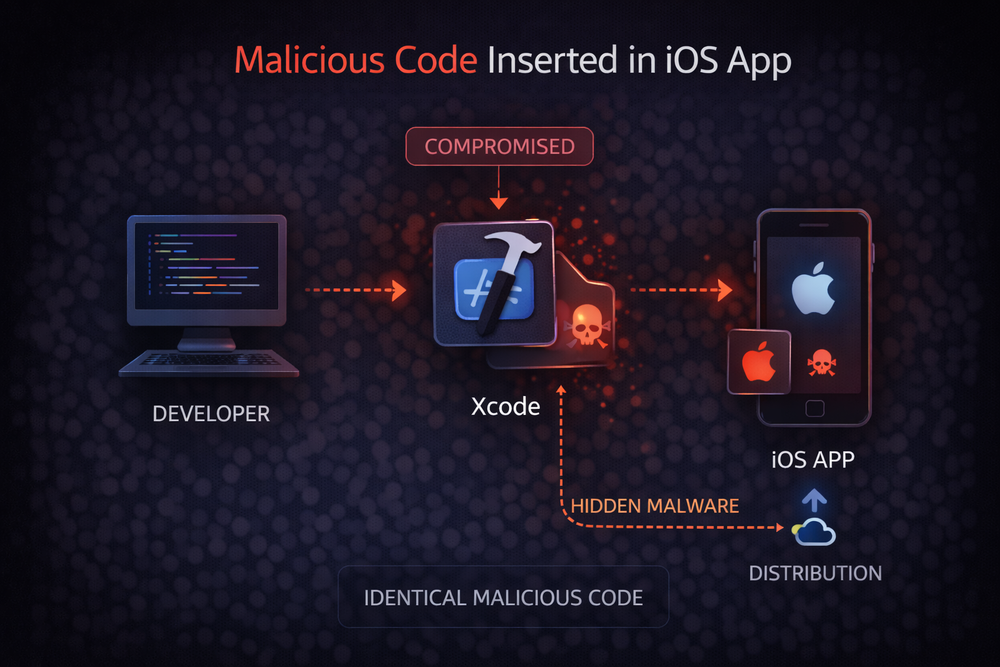
The modified Xcode had been designed to automatically inject malicious code during the app build process. Regardless of what app a developer created, the same code would be inserted during compilation. This meant that developers, simply writing code and building apps as usual, were unknowingly producing applications embedded with malicious code.
This attack method was extremely subtle. The attackers did not hack developers’ machines, nor did they compromise Apple’s App Store infrastructure. Instead, they infiltrated the very top of the supply chain by altering the tools developers relied on. As a result, countless developers unknowingly distributed apps containing attacker-controlled code, and these apps passed Apple’s review process and reached real users.
This is how the XcodeGhost incident began. It would later be recorded as one of the most representative cases of developer tool supply chain attacks in the security industry.
How the Malicious Code Was Injected: A Build System Attack
The most critical technical aspect of the XcodeGhost incident was that the malicious code was not directly added to the developer’s source code, but was automatically injected during the build process. Normally, an iOS app written by a developer is compiled through Xcode and packaged into an executable app bundle. During this process, the developer’s code, external libraries, and system frameworks are combined into the final binary. For developers, this process is largely automated, and in most cases, they do not need to deeply consider its internal workings.
The attackers exploited exactly this automation. The tampered version of Xcode included specific scripts and libraries that were configured to execute automatically during the build process. As a result, when a developer clicked the build button, XcodeGhost intervened in the compilation process and inserted additional Objective-C code into the app binary. This code was designed to be loaded automatically when the app launched and to perform background operations invisible to the user.
On the surface, the functionality of this malicious code appeared relatively simple. When the app ran, it collected basic information such as the device name, operating system version, network status, and app bundle identifier, and transmitted this data to a specific server. However, the more important aspect was not the data collection itself, but the fact that a communication channel with an external server had been embedded inside the app. Through this channel, attackers could send additional commands or instruct the app to download further malicious payloads. In other words, XcodeGhost was not merely collecting data—it was establishing a potential remote control channel for future attacks.
What made this even more concerning was that developers were completely unaware of this behavior. There were no issues in the code they had written, the apps built and ran normally, and no obvious anomalies appeared during testing. The application functionality worked as expected, and the user interface remained unchanged. As a result, many developers unknowingly submitted apps containing malicious code to the App Store.
This attack method was highly efficient. The attackers did not need to target individual developers or manipulate specific apps directly. By compromising a single tool used by developers, they were able to interfere with the build process of countless applications. Ultimately, the XcodeGhost incident was not just a case of malicious code insertion—it demonstrated that the software build system itself can become an attack surface. And from this point, the true scale of the incident’s impact began to emerge more clearly.
Infected Apps and Real-World Impact
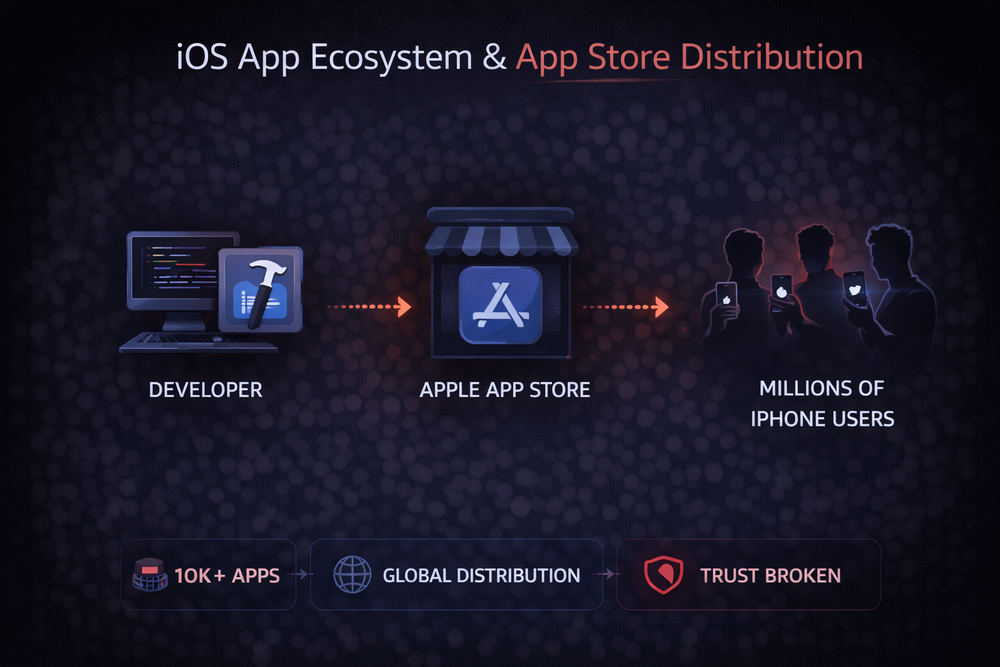
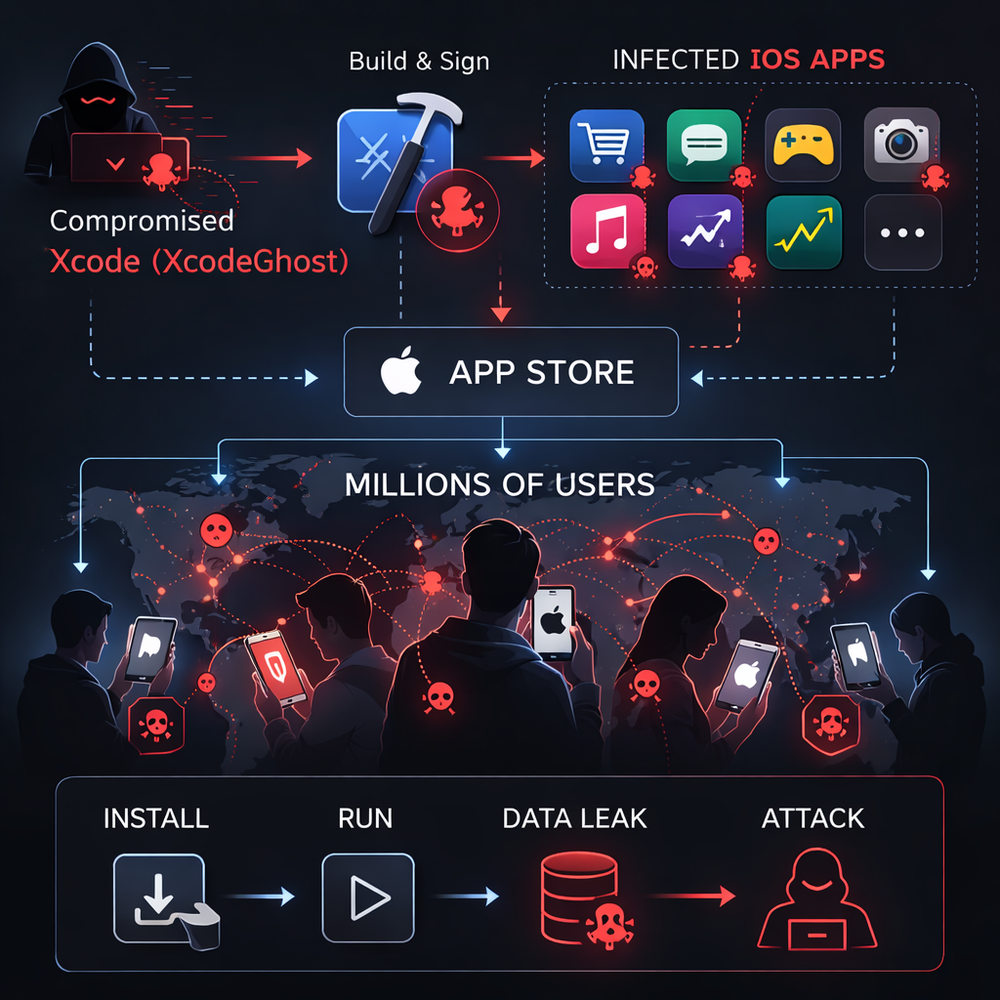
As the XcodeGhost incident came to light, security researchers began assessing the scale of infected apps. Initially, only a few apps appeared to be affected, but as investigations expanded, the number grew rapidly. What started as dozens soon became hundreds of apps, including some of the most widely used applications in China. The presence of popular services—such as messaging, mapping, and productivity apps with massive user bases—significantly heightened the severity of the incident.
One notable example was certain versions of WeChat, along with other widely used apps such as ride-hailing services, business card management tools, and file management applications. Many of these apps had millions of users, meaning the number of devices executing the malicious code was likely very large. While the data collected by the attackers appeared relatively limited and no immediate large-scale damage was widely reported, the real concern from a security perspective was not the scale of harm, but the method of the attack itself.
Apple responded quickly once the incident was disclosed. Infected apps were removed from the App Store, and developers were required to submit updated versions. Apple also advised developers to use only Xcode downloaded from official sources and instructed those who might have used tampered versions to reinstall their development environments. In some cases, Apple directly contacted affected developers to assist with remediation.
However, the impact had already been significant. Many users had downloaded compromised apps, and some of these apps had remained available on the App Store for extended periods. The fact that developers had unknowingly distributed applications containing malicious code was a major shock to the software ecosystem. This was not merely an incident involving a few infected apps—it demonstrated that malicious code could be distributed through an official app marketplace.
The incident also marked an important turning point in mobile security. Many experts began emphasizing the need to verify not only vulnerabilities within applications, but also the processes by which those applications are built. And at this point, another critical question emerges:
If Apple’s strong security systems were in place, why was this attack not detected in advance?
Why Apple’s Security Systems Failed to Prevent It
When the XcodeGhost incident was revealed, many people raised a critical question. Apple operates a relatively strict app review system, and the iOS platform is widely regarded as a highly secure ecosystem. Despite this, how were hundreds of apps containing malicious code able to pass through and be published on the App Store?
To understand this, we need to look at Apple’s security model. Apple relies on two primary mechanisms in its distribution process: code signing and App Store review. Code signing ensures that an app is created by a verified developer, while App Store review checks whether the app complies with Apple’s policies. These systems are generally highly effective, especially at preventing arbitrary malicious apps from entering the iOS ecosystem.
However, in the XcodeGhost case, this security model was bypassed in a completely different way. The attackers did not target Apple’s servers or the App Store itself. Instead, they compromised the tools used by developers. As a result, Apple’s code signing system detected no issues—the apps were signed with legitimate developer certificates and appeared entirely normal. Likewise, the App Store review process found no obvious violations.
Another factor is that App Store review focuses primarily on app functionality and policy compliance. Detecting small pieces of code inserted during the build process is inherently difficult. In the case of XcodeGhost, the injected code performed relatively simple data collection and did not interfere with the app’s core functionality. Because of this, no clear warning signs emerged during review, allowing the infected apps to be distributed as if they were legitimate.
This incident reveals an important reality: traditional security models are designed around the final artifact—the completed application. Supply chain attacks, however, occur much earlier in the process. If developer tools, build systems, or package managers are compromised, the final product is already altered before it is even reviewed. In such cases, existing security systems struggle to detect the manipulation.
The XcodeGhost incident exposed this structural weakness. The attackers did not directly break Apple’s security systems, but instead bypassed the trust assumptions those systems relied on—namely, that the tools used by developers are safe. Following this event, the security community began to seriously expand its perspective, recognizing that software security must extend beyond application analysis to include the entire software supply chain.
The Destructive Power of Attacks on Developer Tools
The reason the XcodeGhost incident is so frequently discussed in the security industry is not simply because malicious code was distributed. The real issue it revealed is that the attackers targeted the very top of the software production process. Most security incidents focus on end applications or servers—exploiting web application vulnerabilities, infecting user machines, or attacking network infrastructure. However, the XcodeGhost incident demonstrated a completely different approach. The attackers did not target applications, nor did they directly attack users. Instead, they targeted the tools used by developers.
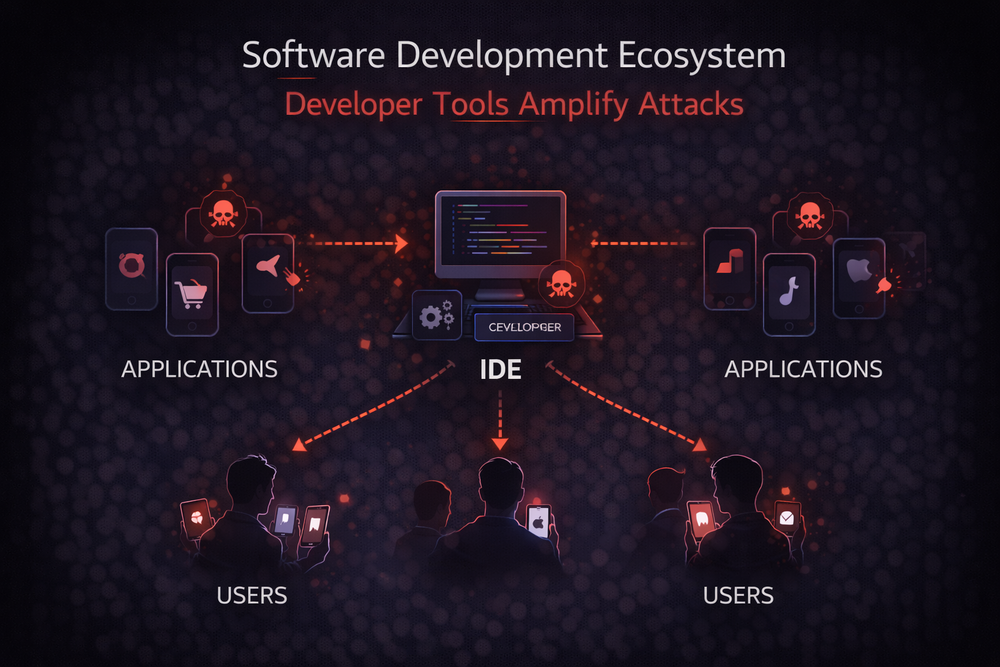
Developer tools occupy a unique position in the software ecosystem. A single tool is used by countless developers and serves as the starting point for the many applications those developers create. In other words, a developer tool is not just a program—it functions like the core machinery of a factory producing vast amounts of software. If that machinery is compromised, the consequences are profound. No matter how clean the developer’s code is, the final output can already be altered. This is the most powerful characteristic of attacks on developer tools.
The XcodeGhost incident clearly illustrated this structure. By tampering with Xcode, attackers were able to intervene in the build processes of numerous apps, resulting in identical malicious code being inserted into applications created by different developers. In this scenario, developers become both victims and unwitting distributors of the attack. They release apps without knowing they have been compromised, and users install those apps under the assumption that they are trustworthy. This type of attack had rarely been considered in traditional security models.
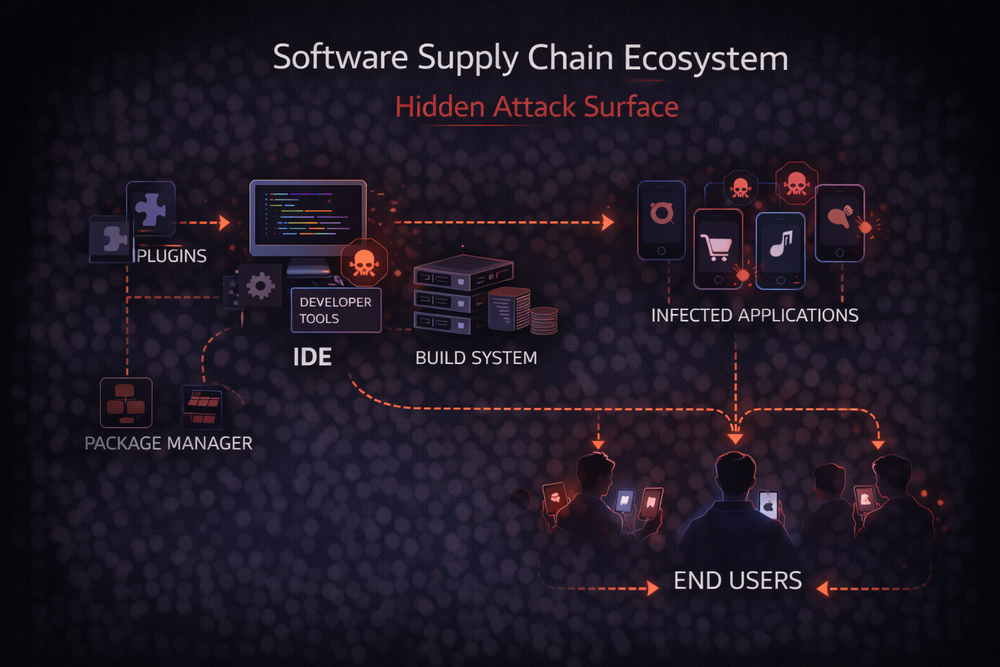
This incident left an important lesson for security professionals. Software security can no longer be viewed solely through the lens of application code or server infrastructure. Instead, elements such as developer tools, build systems, and package managers have emerged as critical attack surfaces within the software supply chain. Following this event, the question of how to secure the development environment itself became an increasingly central concern in the security community.
The Spread of Supply Chain Attacks After XcodeGhost
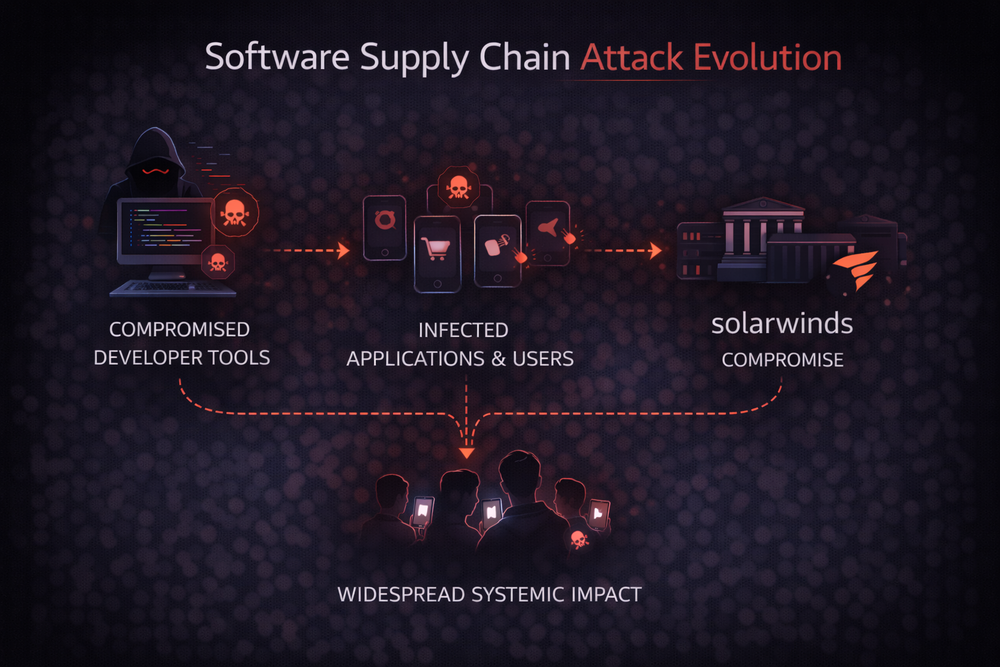
At the time of the XcodeGhost incident, many people viewed it as a relatively unusual case. It appeared to be a situation where a tampered developer tool was distributed within a specific regional developer community, leading to the infection of some apps. However, over time, this incident came to be recognized not as an isolated anomaly, but as an early example of a broader and emerging attack pattern—software supply chain attacks. In the years that followed, similar attacks with comparable structures began to appear more frequently.
A representative example is the SolarWinds incident. In that case, attackers compromised the build system of network management software and inserted malicious code into legitimate updates. As a result, numerous companies and government agencies were simultaneously exposed. While the scale of this attack was far greater than XcodeGhost, the underlying structure was strikingly similar. Instead of directly targeting individual systems, the attackers intervened in the software production process, gaining access to a vast number of systems at once.
Another example can be found in supply chain attacks within package manager ecosystems. Attackers insert malicious code into open-source repositories or upload packages that mimic the names of popular libraries, tricking developers into installing them. These attacks follow the same fundamental pattern as XcodeGhost: target the tools or dependencies used by developers, and allow the applications they build to become carriers of the attack.
As these incidents accumulated, the security industry reached an increasingly clear conclusion. In modern software environments, the attack surface is no longer limited to individual applications—it extends to the entire software supply chain. In particular, developer tools and build systems possess significant influence within this structure, making them highly attractive targets for attackers. The XcodeGhost incident can thus be seen as an early signal of the era of supply chain attacks that would soon follow.
The Era of Attacking Developer Tools
Looking back at the XcodeGhost incident, it becomes clear that this was more than just a security breach. It reveals how attackers have changed the way they view the software ecosystem. In the past, attacks typically targeted specific systems or user accounts. Modern attackers, however, take a much broader perspective. Instead of attacking a single system, they choose to target the structure that connects many systems together.
Developer tools sit at the center of this structure. Developers write code, build tools transform that code into executables, package managers fetch dependencies, and the final product is delivered to users. This entire process forms a long supply chain. And at the very top of that chain are always developer tools. If this point is compromised, the impact can extend far beyond a single system and spread across the entire software ecosystem.
For this reason, the security industry has increasingly begun to treat development environment security as a critical concern. IDEs, build systems, package managers, and code repositories are now all considered potential attack surfaces. The XcodeGhost incident was an early example demonstrating why this shift is necessary. Developers inherently trust the tools they use—but that very trust can become the easiest point of exploitation for attackers.
The incidents examined in this series all convey a common message. Software security is no longer limited to analyzing vulnerabilities in individual programs. What matters more is the entire process through which software is created and distributed. And at the center of that process are always developer tools. This is precisely why attackers are increasingly focusing their efforts on them.
In the next article, we will explore this trend from an even broader perspective. When events like XcodeGhost and SolarWinds are connected, a clear pattern emerges: an invisible war surrounding developer tools—a war that is still ongoing today.