
A Story That Began with a Single Email
In the summer of 1991, the internet was not the massive platform it is today, but rather a loose network connecting a small number of researchers and developers. In that space, there was a short message left by a university student. Posted on the comp.os.minix newsgroup on Usenet, the message was neither technically nor stylistically remarkable. It was calm, even somewhat cautious in tone. “I am doing a (free) operating system (just a hobby, won’t be big and professional).” This single sentence was so ordinary that, on its own, it would be difficult to recognize any historical significance. Yet it would become the starting point of an event that would reshape the entire software industry over the following decades.
The person who wrote this message was Linus Torvalds. At the time, he was a student at the University of Helsinki, and rather than pursuing an ambitious goal of building a complete system, he was driven by a simple desire to satisfy his technical curiosity. This detail matters. It is easy to assume that most innovations begin with grand visions, but Linux had a completely different starting point. It began from a personal discomfort—“I don’t like this system.” And a small experiment created to resolve that discomfort began to expand through the medium of the internet.
At this point, what matters is not the result, but the structure. Linus Torvalds did not release a finished product—he shared a project in progress. This was an uncommon approach at the time. Software was typically developed internally and released only in its completed form. But Linux existed from the beginning in an “open state.” This decision enabled community participation and ultimately changed the way the project itself would grow.
The reason this single line of email holds meaning is not simply because Linux succeeded. More importantly, it marked the beginning of a shift in how software is created. The pattern of an individual project expanding into global collaboration—and then reshaping the entire industry—began to emerge in earnest from this moment. This message is the first scene of that flow.

The World at the Time: Why a New Operating System Was Needed
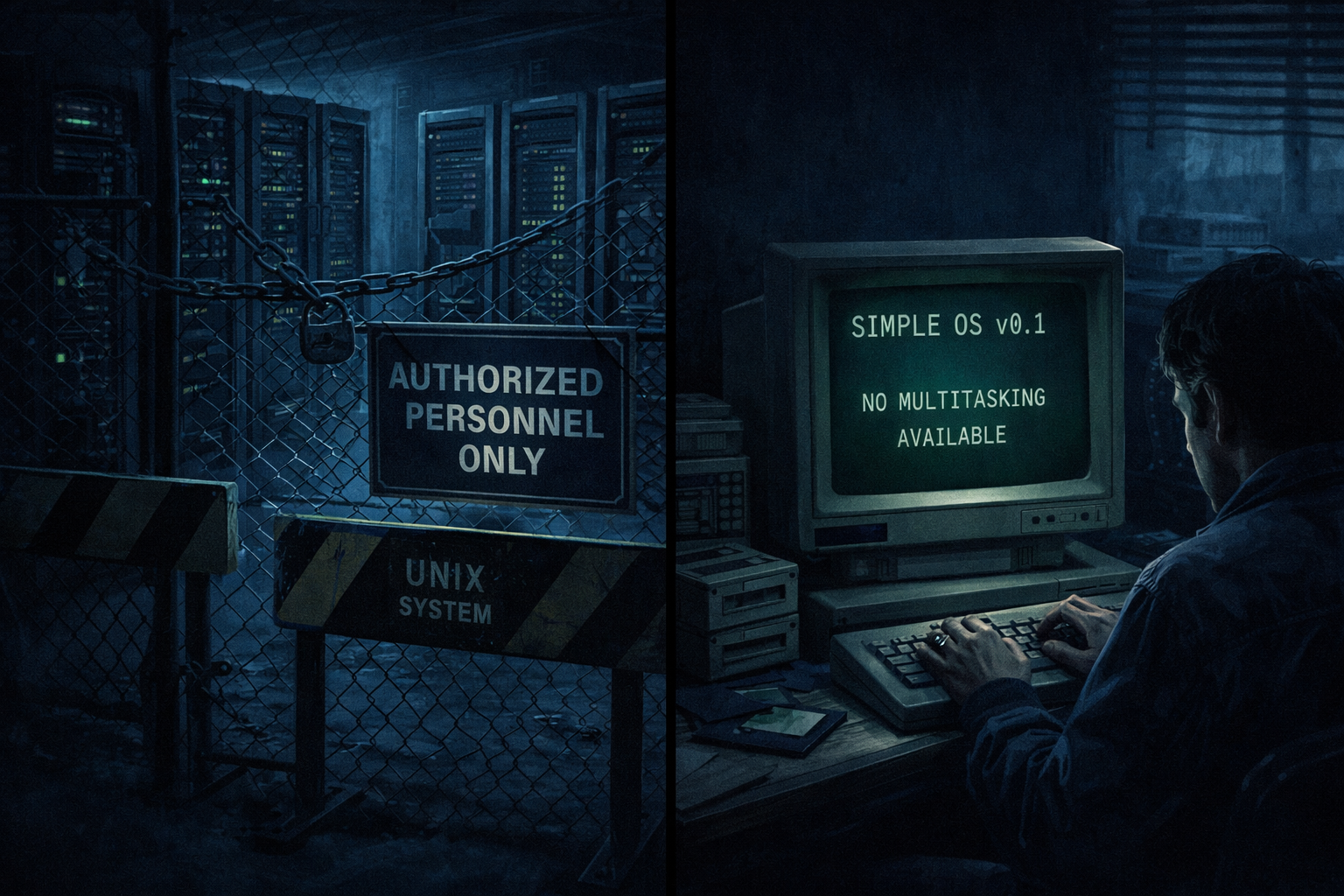
To understand the emergence of Linux, we must not simply group that era under the label of “the past.” The early 1990s were a time when operating system structures had already reached a certain level of maturity, yet accessibility and freedom were still highly restricted. Unix-based systems were widely used in corporations and research institutions, but they were mostly governed by commercial licenses, creating high barriers for individual developers. Modifying or redistributing source code freely was, in practice, nearly impossible.
In personal computing environments, the situation was even more limited. MS-DOS was widely used, but it lacked multitasking and most features associated with modern operating systems. In other words, it was not a suitable environment for system-level experimentation by individual developers. Between these two worlds, Minix emerged. Designed as a Unix-like operating system for educational purposes, Minix was extremely useful for understanding system architecture, but it had significant limitations in practical use. Performance was restricted, feature expansion was intentionally limited, and most importantly, its design philosophy was centered on “learning.”
This environment produced a common problem: “there was no freedom to fully control the system.” Developers could experiment relatively freely at the application level, but at the operating system level, they were confined within predefined boundaries. This was more than an inconvenience—it became a structural limitation that hindered experimentation and evolution of new systems.
Linux emerged precisely at this point. It was not initially intended as a replacement for existing systems, but as an attempt to fill the freedom that existing systems lacked. In other words, the birth of Linux was driven not only by technical necessity but by structural necessity. And because this structural gap existed, it created fertile ground for a small, individual project to spread rapidly.
Conflict with Minix: Discomfort Drives Innovation
The direct trigger for Linus Torvalds to begin developing Linux was Minix. While using Minix to learn about operating system structures, he increasingly felt constrained by its limitations. Minix was structurally elegant due to its educational purpose, but it presented several inconveniences in practical use. There were performance limitations, and expanding the system was restricted. However, the more critical issue was not technical—it was about control.
Linus Torvalds did not simply want a faster system; he wanted the ability to modify and extend the system in his own way. But Minix did not align with that goal. Its creator intentionally limited complexity to preserve its educational purpose, which naturally suppressed extensibility and experimentation. At this point, Linus Torvalds faced a choice: continue working within the constraints of the existing system, or build a new one himself.
He chose the latter. At first, it was a simple experiment. He began writing a small kernel to understand the protected mode of the Intel 386 processor, and gradually added features until it began to take the shape of a system. What matters here is that it was not a “complete design,” but an “ongoing experiment.” Linux did not aim for perfection from the beginning; instead, it evolved incrementally.
This choice would later influence the way Linux grew. Rather than striving for a perfect initial design, the approach of adding small features, receiving community feedback, and continuously improving became the foundational pattern of open source development. In this sense, the conflict with Minix was not merely the event that led to the creation of a new operating system—it was also the starting point of a transformation in how software itself is developed.
Ultimately, Linux did not begin as an attempt to build a “better operating system,” but as an attempt to build a “more free system.” And this distinction would go on to become a key factor in transforming the software world over the following decades.
The Birth of Linux: An Experiment That Began with a Small Kernel
The choice that began within an uncomfortable relationship with Minix eventually started to take on a concrete form. Linus Torvalds did not stop at criticizing existing systems—he began writing code himself. At first, there was no grand ambition. The starting point was simple technical curiosity: a desire to properly utilize the protected mode of the Intel 386 processor. In the process, he began implementing fundamental features such as memory management and process control, and gradually, the shape of a kernel emerged. At this stage, Linux was closer to an experimental piece of code than a full operating system. What mattered, however, was not completeness, but direction.
The early structure of Linux was very simple, yet it contained important design choices. Linus Torvalds chose a monolithic kernel rather than a microkernel architecture. This decision offered advantages in performance, but also carried the risk of increasing design complexity. This is precisely why Andrew Tanenbaum, the creator of Minix, criticized the choice. However, Linus Torvalds prioritized practical usability and performance over theoretical ideals. This decision later became a key foundation for Linux’s strong performance in server environments.
Because Linux was not a finished system from the beginning, it evolved through the gradual addition of features. File systems were attached, device drivers were added, and user-space programs were connected one by one, eventually forming a complete operating system. This process was not merely a technical progression—it marked the beginning of a development philosophy: “release early and improve continuously, even if it is not perfect.” This principle would later become a core foundation of open source development.
Ultimately, the birth of Linux was not the introduction of a finished product, but the starting point of a system that continuously evolves and expands. And this characteristic naturally connected with community-driven development, allowing Linux to grow beyond a simple personal project.

The Decisive Choice: GPL Changed Everything
At the moment when Linux began to move beyond a personal project, there was one critical decision: the adoption of the GPL license. Early Linux was released without a clearly defined licensing policy, but Linus Torvalds soon chose the GNU General Public License. This decision was not merely a legal matter—it determined the very structure of how the project would grow.
The core of the GPL lies in Copyleft. Software under this license can be freely used by anyone, but any modifications or redistributions must retain the same license. This creates a structure that forces the code to remain open. In other words, even if someone builds new features on top of Linux, those results must also be returned to the community. This mechanism goes beyond simple sharing—it enforces continuous collaboration.
This choice fundamentally changed the speed at which Linux spread. If Linux had adopted a more restrictive license, companies and individual developers would have had fewer incentives to participate actively. However, the GPL provided the same conditions to everyone, and as a result, countless developers began contributing to Linux. Through this process, Linux started to be recognized not as a single project, but as a shared asset.
Additionally, the GPL made integration with the GNU project possible. The GNU project had already developed a wide range of tools but lacked a kernel, and Linux filled that gap. This integration was not just a technical combination—it was closer to a philosophical alliance. The concept of free software was realized as a fully functioning system.
Ultimately, the GPL played a decisive role in expanding Linux from a piece of code into an ecosystem. Without this decision, Linux might have remained an interesting personal project. Instead, the GPL created a structure that encouraged participation, accumulated contributions, and enabled continuous growth.
A Revolution in Development: The Community Writes the Code
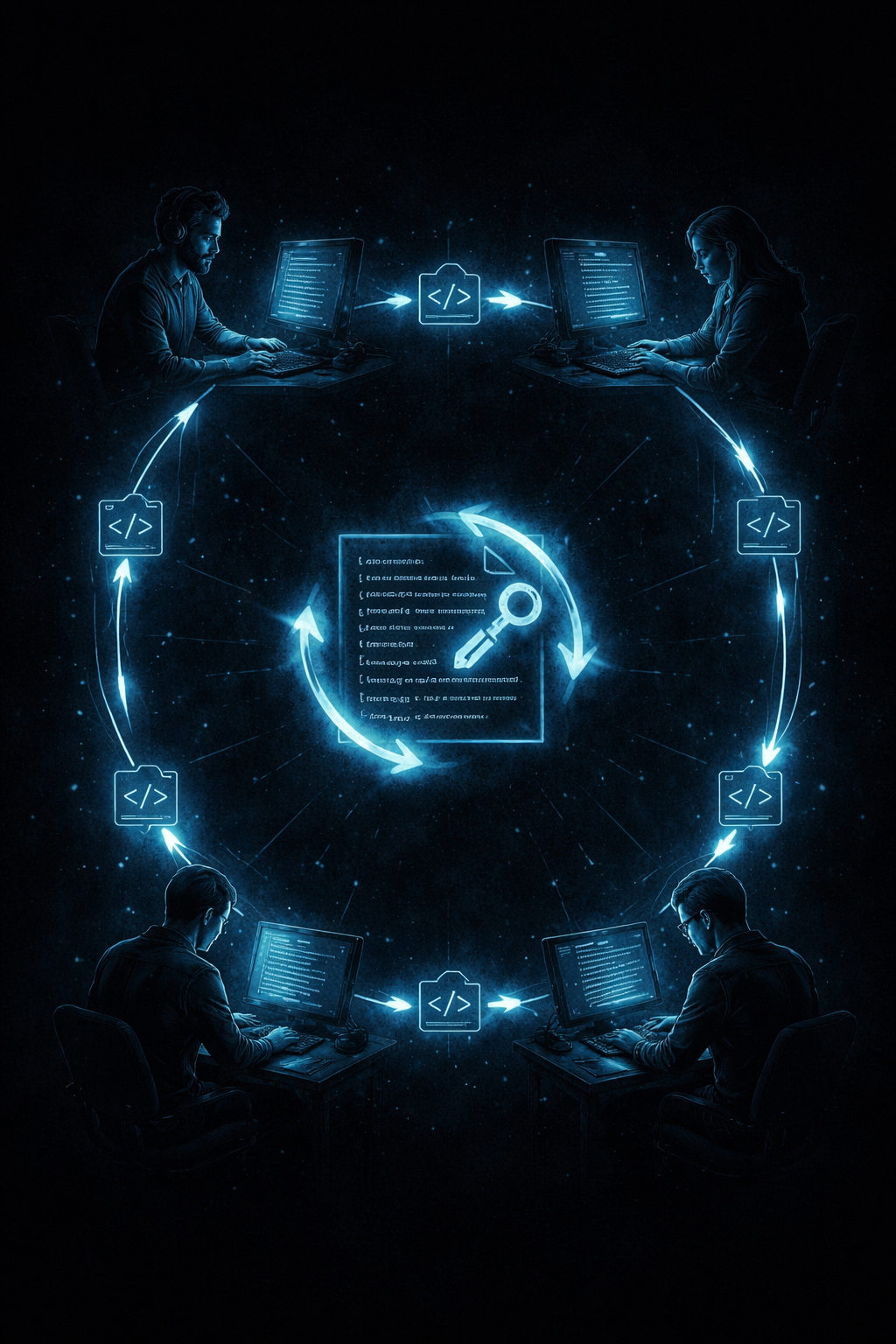
Built on top of the GPL structure, Linux began to grow in a fundamentally new way. The essence of this model was simple: code was no longer created within a single organization, but by developers across the world working together. Early Linux development revolved around mailing lists. Developers would share discovered bugs and submit fixes in the form of patches. Linus Torvalds took on the role of reviewing and integrating these contributions.
This structure was fundamentally different from traditional software development models. Previously, there were clearly defined organizational structures and roles, and the flow of code was tightly controlled internally. Linux broke down these boundaries. Anyone could participate, and the standard for contribution was not position or affiliation, but the quality of the code. This approach provided developers with a new kind of motivation. It was no longer just about fulfilling company tasks—it became meaningful to contribute directly to a system used worldwide.
This community-driven development model did more than expand the scope of collaboration. It changed both the speed and direction of software evolution. Because users and developers from diverse environments could directly identify and solve problems, the system evolved rapidly. At the same time, it was no longer bound to the strategy of a single company, but instead developed organically based on the needs of its users and contributors.
This model would go on to influence countless open source projects. Git’s distributed version control system, GitHub’s Pull Request model, and today’s collaboration practices all evolved from this flow. In this sense, Linux did not simply create an operating system—it redefined how software itself is built.
Ultimately, the success of Linux cannot be explained by technical excellence alone. It was the result of a combination of code, people, and structure. And this combination would go on to become a new standard across the entire software industry.
Linux + GNU: A Complete System Takes Shape
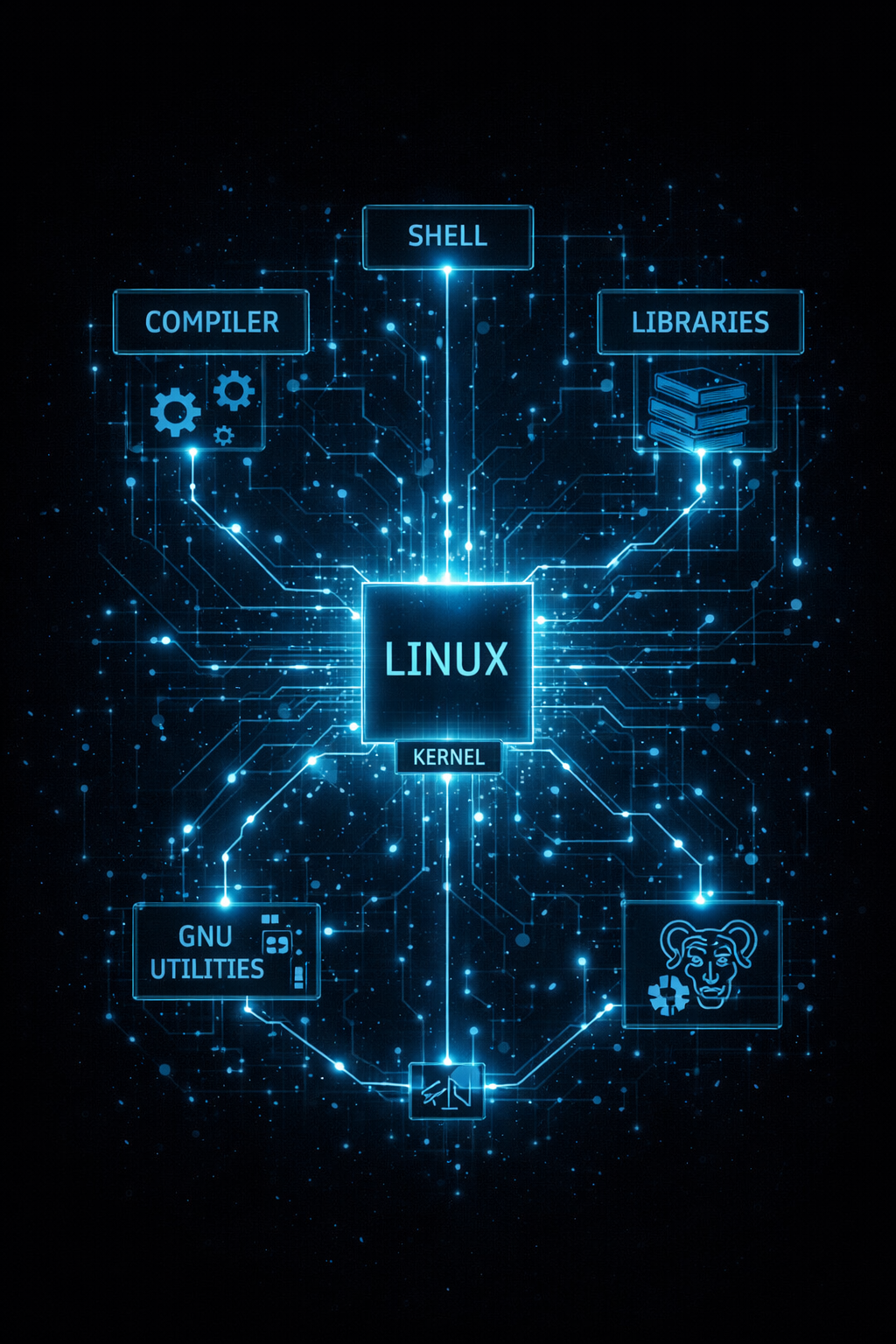
At the point when community-driven development was beginning to take hold, Linux still had a critical limitation. It was not a “complete operating system.” What Linus Torvalds had built was a kernel, and for it to function as a full operating system, it required user-space tools such as a compiler, shell, libraries, and utilities. It was the GNU project that filled this gap. Led by Richard Stallman, the GNU project had already developed a wide range of tools, but it lacked a core kernel. When these two streams came together, a complete system finally began to take shape.
This combination was not merely a technical integration. Linux and GNU had different starting points, but they naturally connected under the shared philosophy of “free software.” GNU already provided essential components such as the GCC compiler, the Bash shell, and glibc, while Linux provided the kernel capable of running them. This combination went beyond simply filling functional gaps—it created a complete environment that developers could actually use. From this point on, Linux was no longer seen as an experimental project, but as a system ready for real-world use.
What is important in this process is that no single organization built everything. Linux provided the kernel, GNU provided the tools, and countless developers connected and expanded them. In other words, the system was the result of distributed contributions coming together. This structure would later become the typical model of the open source ecosystem—independent projects evolving separately while connecting to form a larger system.
Ultimately, the combination of GNU and Linux was not just the completion of an operating system—it was a demonstration of how open source collaboration could produce a real, functional system. This structure would be repeated across countless open source projects, eventually becoming a new standard for software development.
The Growth of the Internet and the Spread of Linux
The point at which Linux truly began its explosive growth came in the mid-1990s, when the internet started to expand rapidly. With the emergence of the web as a new platform, demand for server infrastructure increased dramatically. At this moment, companies and developers faced a choice: continue using expensive and inflexible commercial Unix systems, or adopt a new alternative. Linux emerged as the most practical alternative at exactly this moment.
Linux was free, its source code was open, and it could run on a wide range of hardware. In particular, in web server environments, Linux combined with Apache to form a powerful stack. The so-called LAMP stack (Linux, Apache, MySQL, PHP/Perl/Python) became the standard infrastructure for early internet services. This structure did more than reduce costs—it provided a foundation that allowed developers to build and scale services quickly.
At this stage, the spread of Linux was not merely a technical choice, but also an economic and structural choice. Startups and early internet companies needed to build services with limited resources, and Linux met that need precisely. Additionally, because of community-driven development, solutions to various problems were shared quickly, strengthening both the stability and scalability of the system.
The growth of the internet and the spread of Linux reinforced each other. As the internet expanded, the use cases for Linux increased, and as Linux evolved, more services could be built on top of the internet. This virtuous cycle ultimately established Linux as a core component of internet infrastructure.

Why Companies Chose Linux
The moment Linux became a true “standard” came when companies began adopting it at scale. Initially used mainly by individual developers and small projects, Linux gradually made its way into large-scale service environments. Companies such as Google and Amazon built their infrastructure on top of Linux. This choice was not simply about reducing costs—it was a strategic decision to gain technical flexibility and control.
One of the most important factors for companies is scalability. As services grow, systems must handle increasing amounts of traffic, requiring flexible architectures. Because Linux is open source, companies can modify or optimize the kernel according to their needs. This provides a level of control that is nearly impossible with commercial systems. Additionally, because Linux evolves through a community, it is not tied to any single vendor—another critical advantage.
At the same time, Linux became highly competitive in terms of stability and performance. With countless developers testing and improving it across diverse environments, the system became increasingly robust. This was not just about features—it represented reliability proven in real-world operations. Based on these characteristics, companies chose Linux, and as a result, it became not just an alternative, but the default choice.
Ultimately, corporate decisions shape the direction of the market. As Linux established itself at the center of enterprise infrastructure, its surrounding ecosystem also grew. Companies like Red Hat emerged, various distributions were developed, and Linux evolved into a platform with strong industrial foundations. At this point, Linux was no longer a “hobby project.” It had become the core infrastructure supporting services worldwide, standing at the center of a transformation in the software industry.
The New Rules Created by Linux
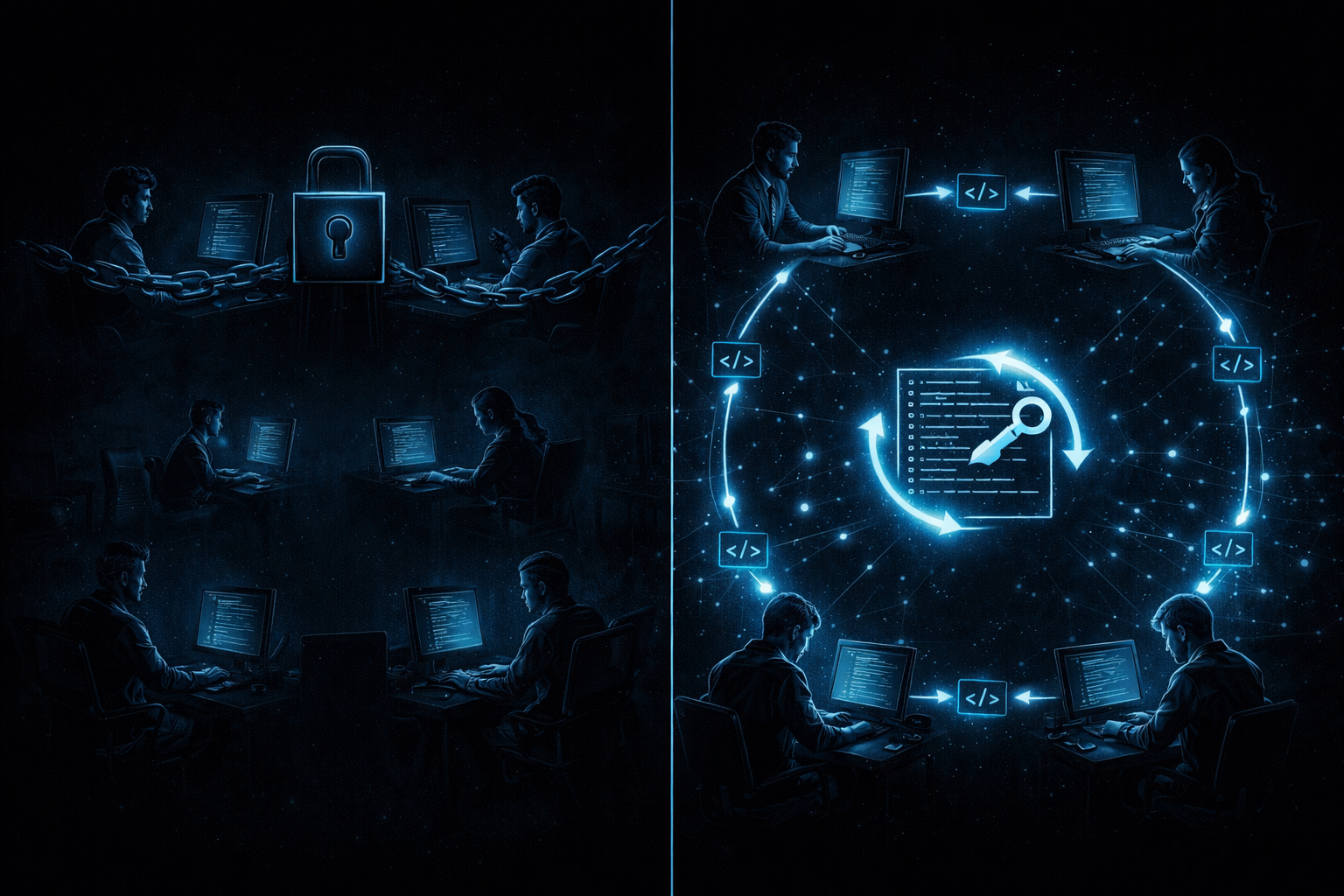
The fact that Linux became central to the industry through corporate adoption goes beyond a simple success story. It signaled that the very way software is created, distributed, and maintained had changed. Previously, the software world operated on a structure where specific companies built products and users consumed them. Linux fundamentally disrupted this model. Developers were no longer just consumers—they could also become producers, and software began to be seen not as a finished product but as a continuously evolving process.
At the core of this transformation were two elements: “openness” and “participation.” Linux made its code public, and anyone could participate. But more importantly, this participation went beyond simple contribution—it became a force that shaped the direction of the system itself. A structure emerged where not a single company or organization, but the entire community collectively built the system. This model later became more refined through tools like Git and GitHub, eventually establishing itself as the fundamental model of modern software development.
Linux also transformed the concept of software ownership. Previously, software was considered the asset of a specific company, but Linux existed in a form that no single entity could monopolize. This was not just an ideal—it was a model that actually worked. Companies could use Linux while simultaneously contributing to its development, creating a unique ecosystem where competition and collaboration coexisted. This structure later became the foundation for modern technologies such as cloud computing, containers, and orchestration.
Ultimately, Linux did not just create an operating system—it redefined the rules of the software industry itself. Development was no longer an activity confined to closed environments, but a form of collaboration conducted across a globally connected network. Software was no longer a finished product, but a system that continuously evolves. This transformation is still ongoing, and most of the technologies we use today are built on top of this flow.
Conclusion: How a Hobby Project Changed the World
To view the story of Linux merely as a success case is to miss its true essence. This story is less about “how it succeeded” and more about “why this way of working was possible.” Linus Torvalds did not begin with a grand vision. He simply wanted to build the system he desired and chose to share that process. Yet that method of sharing, and the structure that formed around it, ultimately connected developers across the world and gave rise to a massive system.
What matters in this process is not the technology itself, but the choices. Linux was technically impressive, but that alone would not have been enough to reach its current position. The decisive factors were the adoption of the GPL license, community-driven development, and continuous evolution in an open state. This structure has since been repeated across countless projects, becoming the fundamental pattern of the software industry. In that sense, Linux was not just a result—it was a methodology.
Today, we use tools like Git, GitHub, Kubernetes, and Docker as if they were natural, yet most of them emerged on top of the flow created by Linux. Concepts such as open code, community collaboration, and distributed development now feel obvious, but they were once unfamiliar approaches. Linux was one of the first cases that turned that unfamiliar model into reality.
And this story does not end here. The software world has continued to evolve after Linux. Open source is no longer just a culture among a subset of developers—it has become the center of the industry, and has even expanded into a strategic asset at the level of corporations and nations. In the next story, we will examine how this flow took on a more defined form—specifically, the moment when Netscape opened its code and the open source movement began in earnest.