
The Expectation That AI Agents Will Replace Everything
In recent years, one of the most frequently repeated narratives in the tech industry has undoubtedly been AI agents. Moving beyond simply generating code or writing sentences, they are now being described as entities that can perform tasks autonomously. It has become natural to imagine them managing schedules, reading documents, gathering necessary information to make decisions, and even connecting multiple systems to execute real work. In this context, AI is no longer discussed as a tool, but rather as an independent unit of labor. And this narrative is not merely imagination—it becomes even more powerful as it aligns with real-world examples. Some companies have already begun adopting AI-based agents to maximize individual productivity, and there are even attempts to reshape organizational structures themselves.
This shift is not merely about technological advancement, but is understood as a movement that redefines the very concept of work. Tasks that were once performed by humans are increasingly broken down into smaller units, and it has become natural to accept structures in which parts of those tasks are carried out by AI. Taking this one step further leads to the conclusion that the role of humans themselves may be reduced or redefined. Especially for repetitive tasks or information-processing work, where AI can perform much faster and more accurately, the question begins to emerge: “Why should humans continue doing this work?” This question is no longer just about efficiency—it expands into a question of organizational design. Structures that were once centered around people now face the possibility of being reorganized around AI.
At this point, AI agents begin to be imagined not just as automation tools, but as the fundamental building blocks of organizations. A job once handled by a single employee can be divided among multiple agents, each interacting with one another to complete tasks—this is no longer a science fiction scenario. In fact, some companies are already experimenting with such models, where AI agents used by individuals start functioning as part of a team. Following this trajectory leads to a natural conclusion: AI agents will eventually replace most knowledge work.
However, at this point, one important question must be raised. Can this narrative truly be applied equally across all industries? The advancement of technology does not mean that it can be introduced in the same way across every domain. In some areas, the very manner in which technology is adopted can be fundamentally different. This question is not merely about possibility—it reveals a fundamental conflict that arises at the intersection of technology and structure. And that conflict is beginning to surface faster and more clearly than expected.
But When Applied to Regulated Industries, It Suddenly Feels Wrong
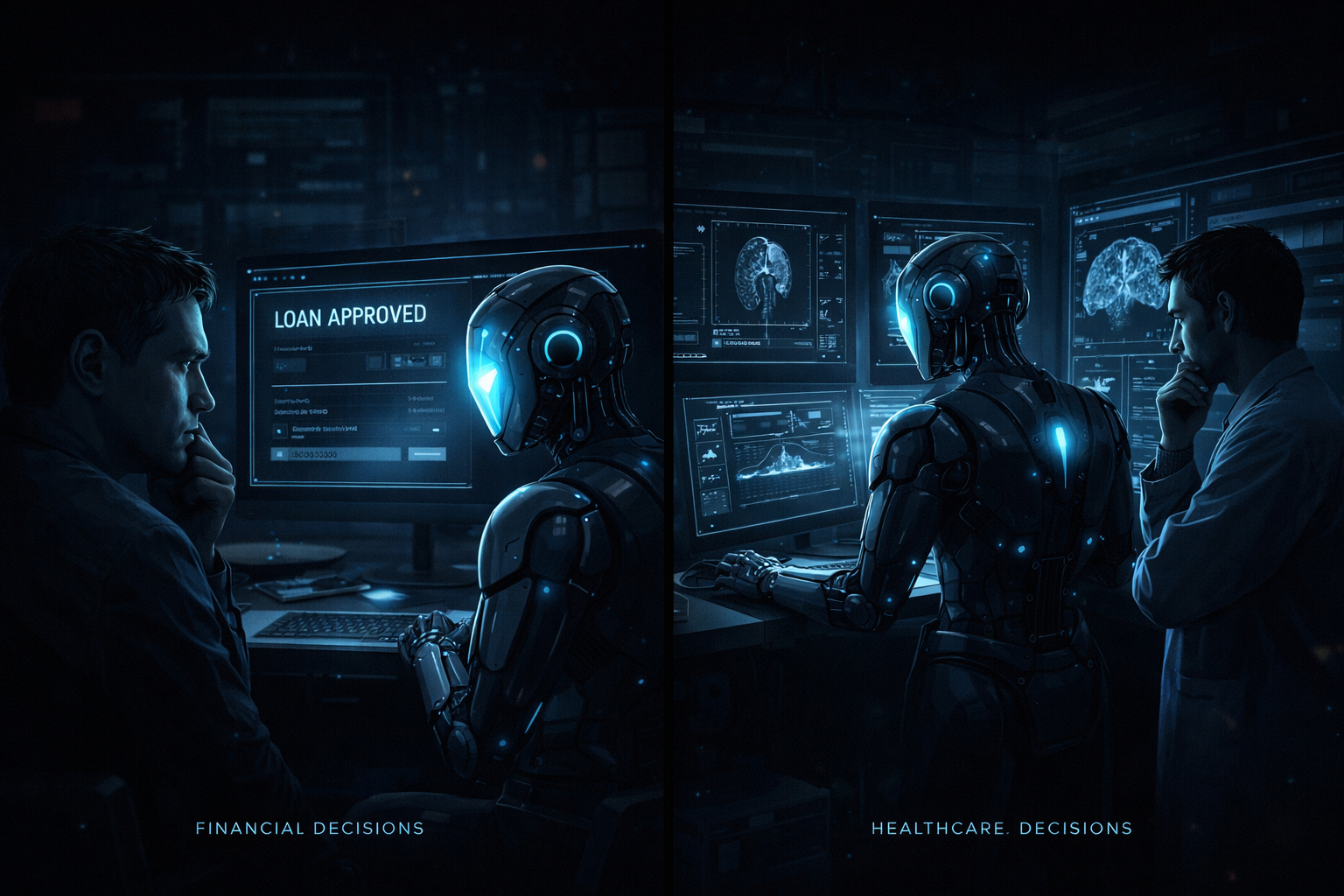
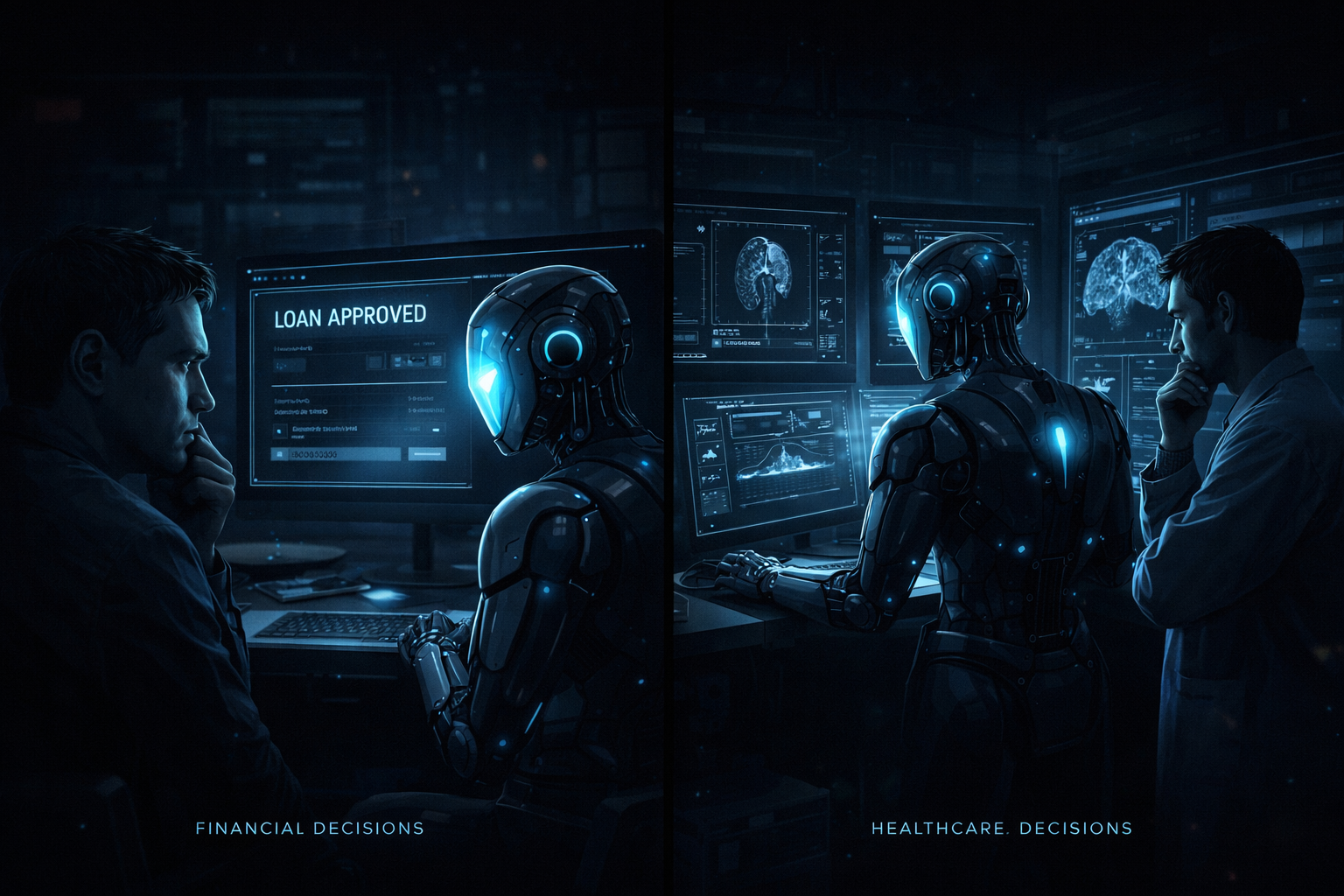
When the expectations surrounding AI agents are directly applied to regulated industries such as finance, healthcare, and law, something begins to feel strangely off. For example, imagine an AI making decisions to approve or reject loans. Technically, this seems entirely feasible. Credit scoring models already exist, sufficient data is available, and AI can process more variables faster than humans. However, when this scenario is considered in more detail, an uncomfortable question naturally arises: when that decision is wrong, who is responsible? Can responsibility simply be transferred to AI on the basis that the model is highly accurate?
The same issue appears in the medical domain. AI analyzing patient symptoms and making diagnoses is becoming increasingly realistic. In fact, in some areas, AI has already demonstrated higher accuracy than human doctors. However, when we consider what happens if the diagnosis is wrong, the problem shifts to an entirely different dimension. If a patient’s condition worsens or incorrect treatment is administered, where should the responsibility lie? AI is not a legal entity and cannot bear responsibility. Ultimately, the responsibility falls on the individual or organization that approved the decision. At that moment, the role of AI is reduced once again to that of a mere technical tool.
This sense of discomfort is not simply psychological resistance—it is, in fact, a highly rational response. In regulated industries, process matters more than outcomes, and responsibility matters more than accuracy. Even if the same result is produced, it cannot be accepted if the process cannot be explained or reproduced. In this context, the autonomy of AI agents becomes a risk factor. The ability to make independent decisions and take actions may be an advantage in general industries, but in regulated industries, it represents a lack of controllability. And a system that cannot be controlled is, by definition, a system that cannot be adopted.
At this point, we begin to move toward a conclusion that is very different from the one we initially expected. The narrative that AI agents will replace everything may be naturally accepted in some industries, but in others, it fundamentally does not hold. In particular, in regulated industries, the moment this narrative is applied, the discussion shifts from a technical one to a structural one. It is no longer a question of “Is it possible?”, but rather “Is it permissible?”. And to answer this question, we must first understand not the technology itself, but the structure into which that technology is introduced.
The Core Issue Is Not Technology, but the “Structure of Responsibility”
Explaining the difficulty of adopting AI in regulated industries purely in terms of technological limitations is inaccurate. In many cases, technology has advanced sufficiently, yet adoption remains restricted. To understand this gap, we must completely shift our perspective. The issue is not how intelligent AI is, but who can bear responsibility for its decisions. From this viewpoint, the adoption of AI is no longer a technical problem—it becomes a problem of organizations and institutions. In other words, adopting AI is not simply about adding a system, but about redesigning the structure of responsibility.
In regulated industries, every decision must be recorded, and it must be possible to explain how that decision was made. It is not just about whether the result was correct, but whether the process was justified. For this reason, explainability, auditability, and reproducibility are not optional—they are mandatory requirements. Given the same input, the same result must be produced, and it must be clearly traceable which rules or criteria led to that result. These requirements fundamentally demand a deterministic system. In contrast, AI—especially generative models—possesses probabilistic and non-deterministic characteristics. This difference is not merely technical; it reflects a difference in system design philosophy.
At this point, an important shift occurs. We often understand AI adoption as a matter of automation, but in reality, it is not. The essence of AI adoption is not automation, but the transfer of responsibility. When tasks previously performed by humans are taken over by AI, the location of responsibility must also shift accordingly. However, current systems and institutional structures do not allow that responsibility to be transferred to AI. As a result, AI cannot be introduced as a fully autonomous entity—it must operate within the existing structure of responsibility. This constraint does not represent a limitation of technology; rather, it defines the form in which technology can be introduced.
Once this point is understood, the source of the earlier discomfort becomes clear. The expectation that AI agents can replace everything only holds in environments where responsibility can be freely reassigned. But in regulated industries, that assumption does not hold. Therefore, even the same technology must be reconstructed in a completely different form. AI can no longer function as an independent entity; it must exist within a controllable structure. And how that structure is designed becomes the starting point for all subsequent discussions.
Why the Approach of “Explainable AI” Fails
At this point, a natural solution comes to mind. What if we simply make AI more explainable? In fact, many research efforts and products have been moving in this direction. Techniques have emerged to visualize the basis of a model’s decisions, analyze how specific inputs influence outcomes, or even provide explanations in natural language. In particular, generative AI, with its ability to produce human-like sentences, makes it seem relatively easy to explain “why a certain decision was made.” Because of this, many people expect that explainable AI could be sufficiently applied even in regulated industries.
However, this approach fails at a critical point. The issue is not whether an explanation exists, but whether that explanation actually reflects the true basis of the decision. The explanations generated by generative AI may sound natural and highly persuasive, but there is no guarantee that they accurately represent the internal logic that produced the result. Even with the same input, slight changes in conditions can lead to entirely different explanations. In such cases, the explanation is merely a “post-hoc narrative”, and cannot serve as valid justification in a regulated environment. In other words, there is an explanation, but no real grounding.
Another problem is reproducibility. In regulated industries, not only must the same conditions produce the same results, but the same explanations must also be reproducible. However, probabilistic models struggle to meet this requirement. Even small changes in model versions or internal parameters can alter both the output and its explanation. This is not just a matter of technical instability—it makes auditing itself impossible. If a decision made at a certain point in time cannot be reproduced later for verification, the system cannot be used in a regulated environment. Ultimately, while the concept of “explainable AI” may hold technical value, it is structurally insufficient to meet the level of explainability required by regulated industries.
At this point, we are confronted with an important realization. The problem is not that AI fails to explain sufficiently, but that the very concept of explanation does not align with how AI operates. Explanation requires tracing a determined logic, whereas generative AI is optimized to produce outcomes rather than trace logic. This is not a gap that can be resolved through incremental improvement. Without changing direction, this problem will inevitably persist. And it is precisely at this point that a transition to the next approach becomes necessary.
The Answer Is the Opposite — Place AI Inside an Explainable Structure
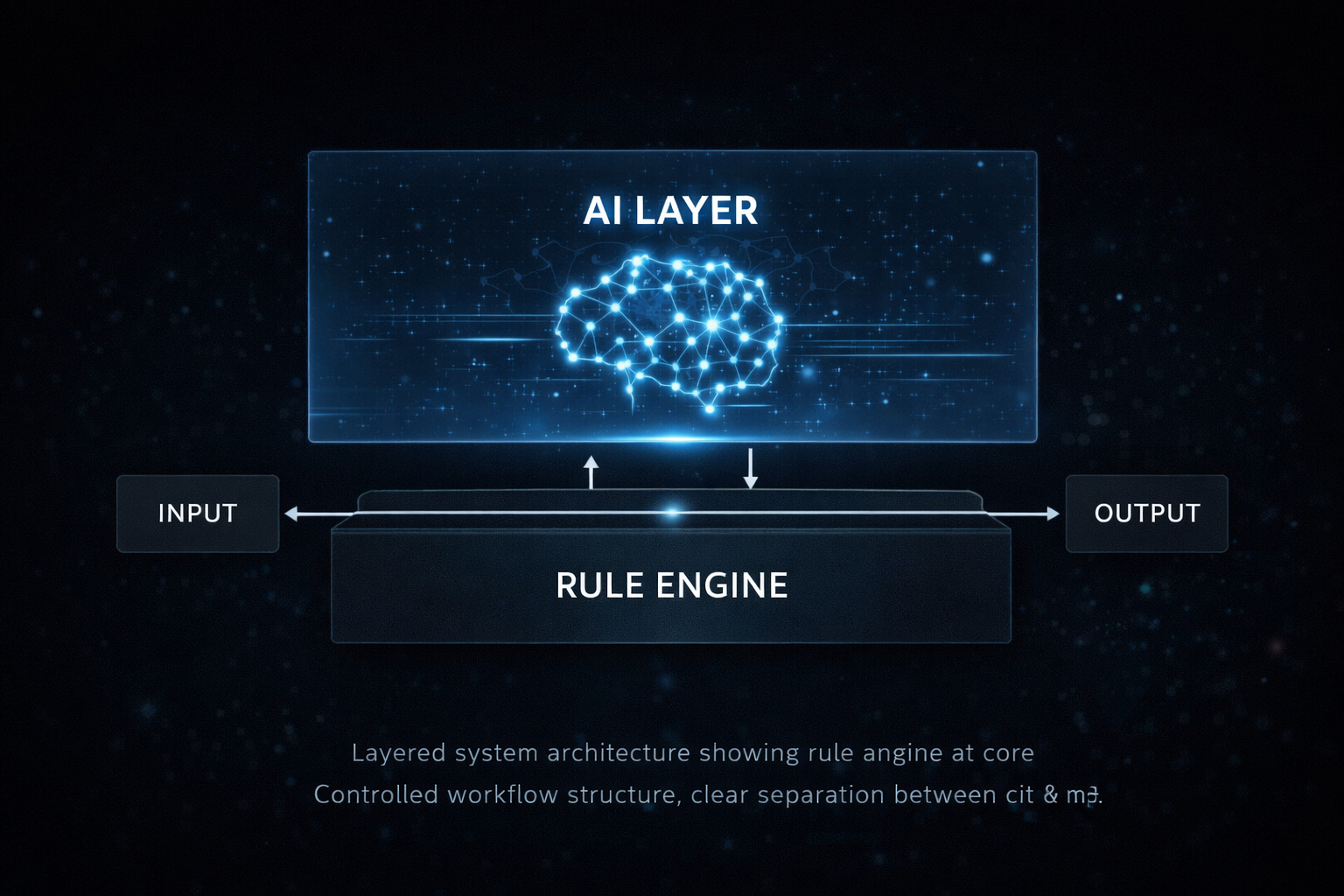
If making AI explainable is inherently difficult, then the approach itself must change. What emerges here is a completely opposite strategy: instead of making AI explainable, place AI within an already explainable structure. This approach does not change the technology itself, but redefines where the technology is positioned. Existing systems in regulated industries are already designed around explainability and auditability—rule-based systems, clearly defined approval processes, and traceable decision-making workflows. The idea is to preserve this structure while using AI as a supporting component within it.
In this structure, the key point is that AI is no longer the decision-making authority. Decisions are still made within deterministic systems, and AI functions as a tool to make those decisions faster and more efficient. For example, if there is a rule that automatically rejects applications under certain conditions, that rule itself does not change. Instead, AI can be used to identify those conditions more quickly, provide additional information, or classify ambiguous cases. In this setup, AI is not the core of the system, but rather a layer that enhances system performance.
The advantages of this approach are clear. It allows organizations to leverage the strengths of AI while maintaining the existing structure of responsibility. Since decisions are made within the original framework, the location of responsibility does not change. At the same time, AI can reduce repetitive tasks, accelerate analysis, and uncover patterns that humans might miss. The critical point here is not to accept AI outputs as final decisions, but to use them as inputs or reference information. In other words, AI is not part of the decision itself, but a component that supports the decision-making process.
This structural shift is not merely a technical adjustment—it represents a change in mindset. It requires moving away from viewing AI as an independent agent, and toward seeing it as a tool that strengthens existing systems. In this process, the more important question is no longer “What can AI do?”, but rather “Where should AI be placed?”. And the answer to this question directly shapes how systems are designed and how organizations operate. Naturally, the next step is to examine how these principles are translated into concrete system architectures.
As a Result, AI Agents in Regulated Industries Take a Completely Different Form
At this point, the concept of AI agents itself needs to be reconsidered. Typically, agents are imagined as entities that, given a goal, can plan autonomously, select the necessary tools, and execute multiple steps to produce a result. In this structure, the agent controls the entire flow and has the autonomy to adjust its behavior as needed. However, in regulated industries, such autonomy cannot be allowed as-is. Considering the responsibility structures and audit requirements discussed earlier, agents must be redefined—not as entities that control the flow, but as individual steps within the flow.
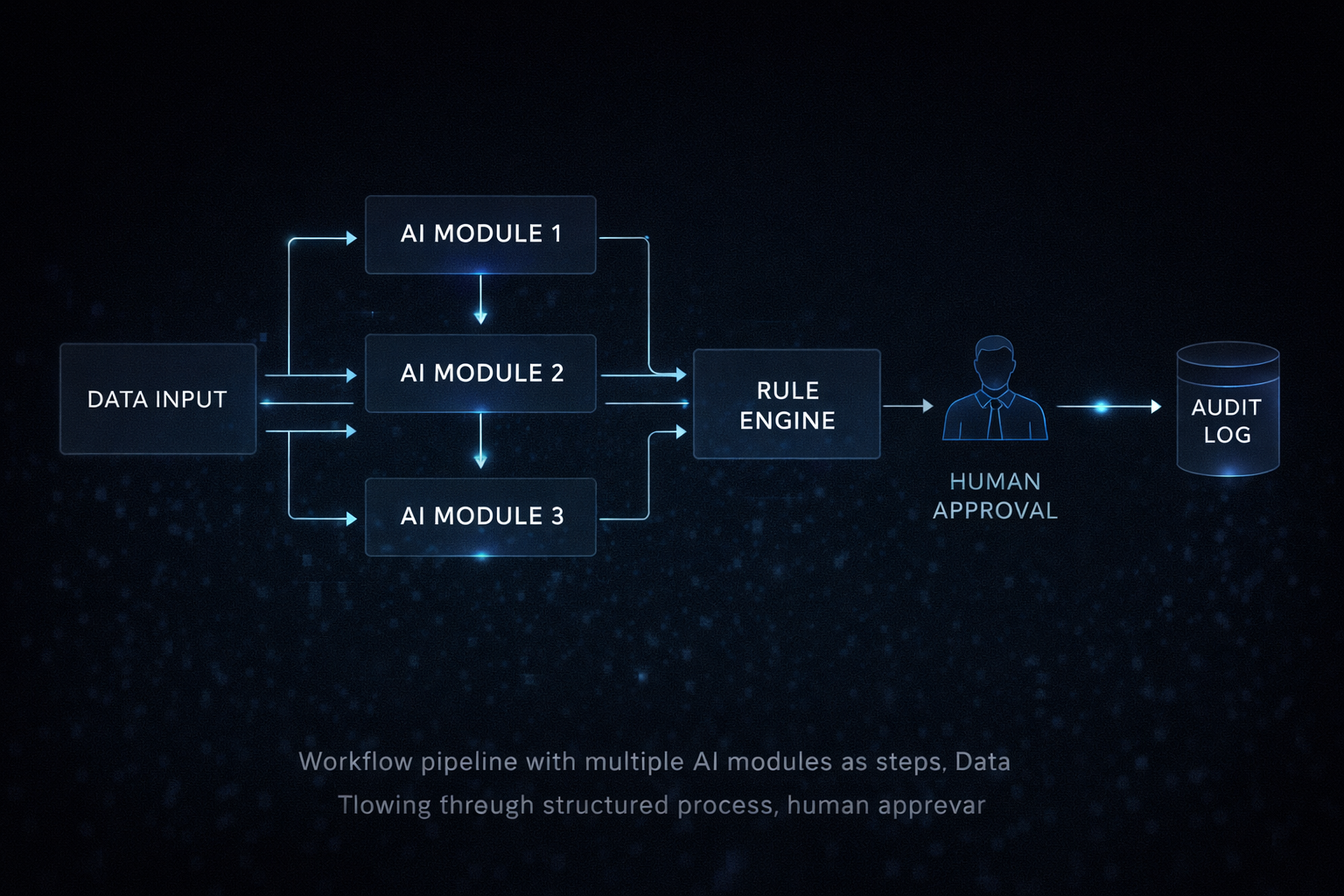
Agents reconfigured in this way take on a completely different form. First, their roles are strictly limited. They are designed to perform a single function, such as specific data processing, targeted analysis, or document generation. Inputs and outputs are clearly defined, and every step in the process is recorded. These agents do not expand their own decision-making scope or generate new behaviors. Instead, they operate strictly within predefined boundaries, and their outputs always serve as inputs for the next stage. In this structure, multiple agents are connected to form a workflow, and each step must be independently verifiable.
What is crucial here is that the final decision is still made outside the agent. Agents may organize data, perform analysis, and provide recommendations, but they do not have the authority to approve or reject outcomes. That authority remains with rule-based systems or human decision-makers. This structure limits the autonomy of AI, but in doing so, it ensures the overall stability and reliability of the system. At the same time, because every step is recorded, it becomes possible to trace how a decision was made after the fact. This is a key requirement for auditability in regulated industries.
As a result, AI agents in regulated industries evolve in a direction that is fundamentally different from what we typically imagine. They are no longer autonomous entities performing tasks independently, but rather a collection of controllable automation modules. Each module performs a limited role, and the entire system operates under clearly defined rules and procedures. This structure is not merely a constraint imposed for safety—it is what enables AI to be used continuously and sustainably. Once this distinction is understood, we can begin to view the concept of AI agents from a far more realistic perspective.
Change Happens First in “How Work Is Done,” Not in the Organization
Looking at the structure discussed earlier, one misconception needs to be corrected. There is a belief that because AI is difficult to adopt in regulated industries, there will be little change. In reality, the opposite is true. Change is clearly happening, but its direction is simply different from what we expected. Organizational structures themselves do not change easily. Hierarchies remain, approval processes remain, and the flow of responsibility remains intact. On the surface, it may appear that nothing has fundamentally changed. However, the way work is actually carried out internally is evolving rapidly. And this transformation is occurring at a much deeper level than it might seem.

The first area to change is how information is processed. In the past, it was essential for humans to directly search for data, organize the necessary information, and make decisions based on it. Now, a significant portion of this process is assisted by AI. Tasks such as reading and summarizing documents, analyzing data to extract key patterns, and synthesizing multiple sources into draft reports are becoming automated. What matters here is that AI is not making the final decisions, but providing the necessary inputs for decision-making much more quickly. As a result, humans no longer spend as much time gathering and organizing information, and instead focus more on the act of judgment itself.
This shift is not merely about speed. The density of work itself fundamentally changes. Within the same amount of time, more information can be processed, more cases can be reviewed, and more complex situations can be considered simultaneously. This leads directly to an increase in individual productivity. However, at the same time, the level of difficulty in work also rises. Being able to process more information faster means that higher-level judgment is required. In this process, existing roles remain, but the level of capability those roles demand continues to increase. Work is not reduced—it is compressed.
This transformation also has subtle effects at the organizational level. While the visible structure remains the same, the actual scope of each individual’s role expands. Tasks that were once divided across multiple stages may be integrated into a single stage, and repetitive intermediate work may disappear. However, this change does not manifest as a sudden organizational restructuring. Instead, it unfolds gradually and naturally. In this sense, the adoption of AI in regulated industries is less about disruptive innovation and more about quiet but continuous reconfiguration. And this trend naturally leads to a deeper question: does this transformation have limits?
Despite This, Limits and Tensions Remain
While the adoption of AI in regulated industries clearly brings improvements, there are also undeniable limitations. The first that becomes apparent is the difference in speed. In general industries, when new technologies emerge, they are quickly experimented with, improved through failure, and the process itself becomes a competitive advantage. However, in regulated industries, such an approach is not easily possible. The introduction of new technology requires validation, and passing that validation demands clearly defined criteria and procedures. This process inevitably takes time, which in turn slows down the adoption of technology. This difference is not merely about execution speed—it leads to a divergence in the pace of evolution between industries.
Another important limitation is the gap between technology and regulation. While AI is advancing rapidly, the regulatory frameworks governing it evolve much more slowly. As a result, situations frequently arise where something is technically possible but not institutionally permitted. For example, even if a particular AI model demonstrates extremely high accuracy, it cannot be applied in practice if its operation cannot be sufficiently explained. In such cases, the potential of the technology exists, but it remains unusable in reality. This situation also creates tension within organizations. Balancing the drive to adopt new technology with the need to control it becomes increasingly difficult.
Furthermore, the structure of responsibility itself can create new problems. As AI becomes involved in more aspects of decision-making, it becomes harder to clearly identify who actually made the decision. On the surface, it may appear that a human made the final call, but if that judgment heavily depends on AI recommendations, the question arises: to what extent can responsibility still be attributed to the human? This goes beyond a legal issue—it begins to challenge the very nature of decision-making within organizations. In this way, AI not only solves problems but also creates new ones.
These limitations and tensions are unavoidable in the process of adopting AI in regulated industries. The key is not to eliminate these tensions, but to keep them in a manageable state. The process of finding a balance between technological advancement and regulatory requirements must be repeated continuously. And through this repetition, each industry develops its own way of integrating AI. At this point, we return once again to a fundamental question: ultimately, what matters is not the technology itself, but how it is used.
The Real Question Is Not “Whether to Use AI”
Following this line of reasoning, we arrive at a clear conclusion. The question of whether to adopt AI is no longer important. The technology has already advanced sufficiently and is permeating industries in one form or another. Many organizations are already using AI in various ways, and its scope continues to expand. Therefore, the question “Should we use AI?” is already settled. The real question is how much authority can be delegated to AI.
This is not merely a technical decision—it reflects the philosophy and structure of an organization. Some industries can delegate more authority to AI, while others cannot. For example, in environments where rapid experimentation and iteration are possible, it is feasible for AI to directly perform decision-making. In contrast, in regulated industries, such authority is strictly limited. This difference does not stem from the level of technology, but from how responsibility is defined and distributed. Ultimately, the same AI can take on completely different roles depending on the environment in which it operates.
At this point, it is necessary to revisit the initial expectations surrounding AI agents. The concept of autonomous agents that can perform everything on their own can be a powerful model under certain conditions. However, it is not a universal solution applicable to all industries. In regulated industries, controllability, rather than autonomy, becomes the more important criterion. Based on this requirement, AI is restructured, and as a result, entirely different types of systems are created.
In the end, we must move beyond viewing AI as just a technology. AI is not something that is simply adopted—it is an element that is repositioned within existing structures. And the way it is positioned varies across industries. This naturally leads to the next stage of the discussion: as a result of this restructuring, what form of AI will we ultimately have, and what long-term implications will that transformation bring?
Conclusion — AI Is Not Adopted, It Is Reconstructed
Following the flow so far, a consistent direction becomes clear. We began with the expectation that AI agents would replace everything. Then, by applying that expectation to regulated industries and encountering the resulting discomfort, we confirmed that the core issue is not technology, but the structure of responsibility. We examined why the approach of explainable AI has limitations, and shifted our perspective toward placing AI within already explainable structures. As a result, AI agents are no longer autonomous entities, but are redefined as components within controllable workflows. This progression is not merely about choosing a technology—it leads to a fundamental shift in how we view entire systems.
At this point, the most important statement is this: AI is not adopted, it is reconstructed. In many cases, when a new technology emerges, we try to place it directly on top of existing systems. However, in regulated industries, this approach does not work. Technology does not reshape existing structures; instead, it adapts itself to fit within them. AI is no exception. Although it is designed around autonomy and scalability, the moment it enters an environment centered on responsibility and control, those characteristics are constrained and reorganized. In this process, AI no longer exists as an independent entity, but becomes a component that strengthens the existing system.
This reconstruction should not be seen merely as a limitation. Rather, it is what makes it possible to use AI in a sustained way. Fully autonomous systems may appear powerful in the short term, but in environments that demand accountability, they can be easily excluded. In contrast, AI that has been restructured into a controllable form may have limited autonomy, but it can be operated reliably. And this reliability enables greater long-term transformation. What begins as a supporting tool gradually expands into more areas, improving the efficiency of the entire system. These changes may appear small on the surface, but over time, they accumulate into significant differences.
Ultimately, what this discussion presents is not merely a description of a technological trend. It is about understanding how technology enters reality, and in that process, what remains unchanged and what is transformed. AI is undeniably a powerful technology and will continue to drive change across many domains. However, that change does not manifest in a uniform way. In some areas, autonomy is emphasized; in others, control becomes the priority. What matters is not which form is more advanced, but which form is possible and sustainable within a given structure.
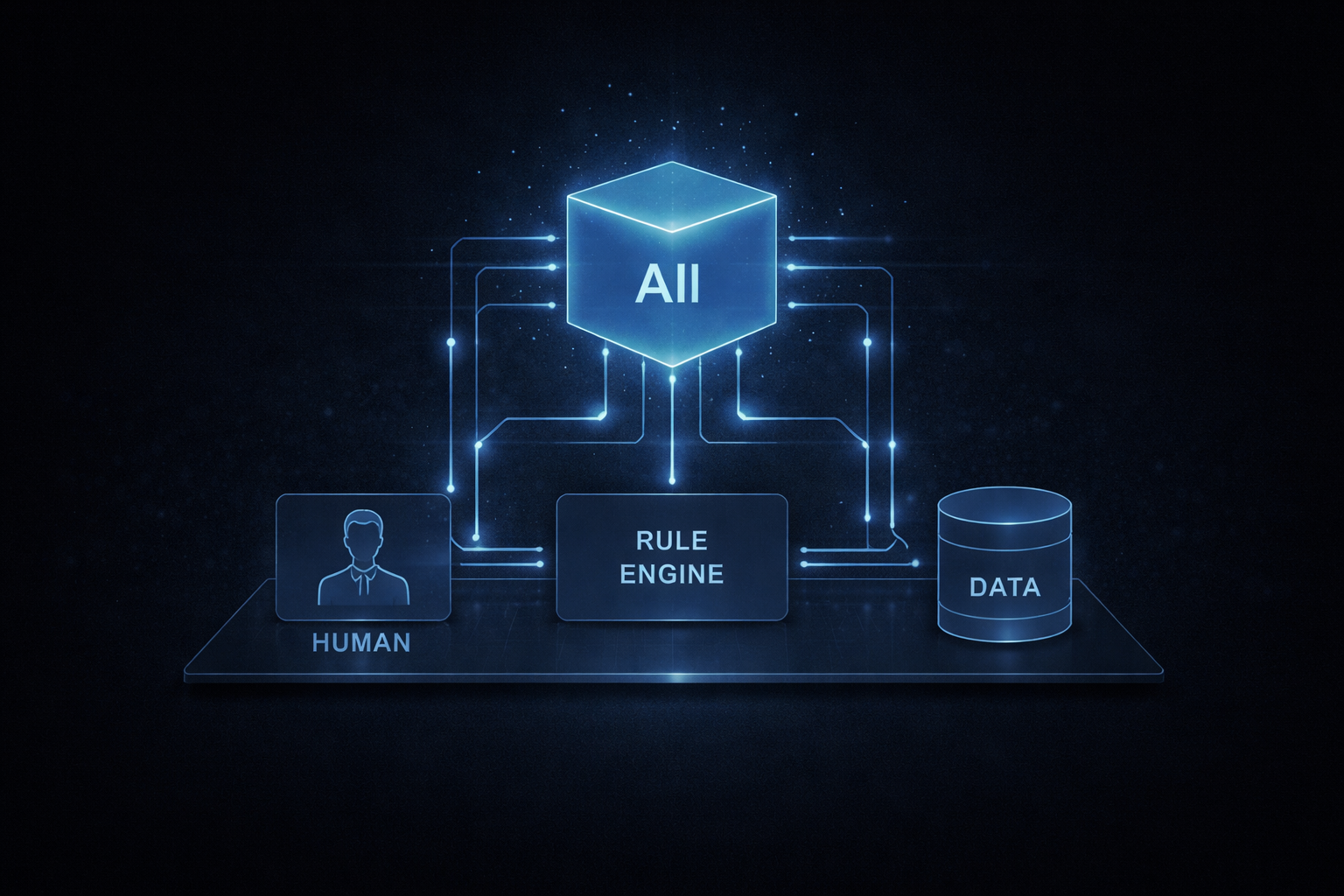
This question will continue to repeat itself. Each time a new technology emerges, we are forced to consider how far we can accept it. And the answer is determined not by the technology itself, but by the structure of the system we belong to. AI is no exception. Therefore, it is no longer sufficient to ask “What can AI do?”. Instead, we must ask “How should this technology be reconstructed within our existing structures?”. At that moment, AI ceases to be a vague concept of the future and becomes a practical problem of system design.