

Sora Is Not a Failed Product
When people first hear that Sora has been shut down, most instinctively interpret it as failure. The disappearance of a product is often equated with its lack of success. However, when this event is examined more structurally, that interpretation does not hold. Sora was not a technological failure, nor did it suffer from poor user reception. In fact, it spread rapidly after launch, and many users actively created and shared content with it. By traditional standards, Sora clearly resembled the early stage of a successful product.
The problem lies beyond that point. The long-standing assumption in the software industry—that a product will persist if it works well and gains users—no longer applies universally. AI is not merely a tool that delivers functionality; it is a system that generates new outputs and, in some cases, new representations of reality. This distinction is far more significant than it appears. Sora was functionally impressive, but when evaluated through the lens of whether its outputs could be controlled, it faced an entirely different judgment. At that point, the product was no longer considered to be in a sustainable state.
What matters here is not “Was it successful?” but rather “Can it be sustained?” Sora is a product that disappeared despite being successful. This may sound contradictory, but in the age of AI, it is becoming increasingly common. A product can be technically feasible and widely used, yet still fail to persist due to operational and accountability constraints. This article focuses on precisely that point. Sora’s shutdown is only one example, and behind it lies a broader structural shift.
As we examine this case more closely, it becomes clear why existing frameworks fail to explain what has happened. How did Sora emerge, why did it spread so quickly, and what ultimately brought it to a halt? By following this trajectory, we begin to see that this is more than a simple case of service termination.
An AI Video Platform That Disappeared in Six Months
Sora attracted significant attention immediately after its release. At a time when text-based generative AI had already reached mainstream adoption, video generation represented the next anticipated frontier. With the release of Sora 2 and its standalone application, the product evolved beyond a mere technical demonstration into a platform where users could actively create and consume content. The application adopted a social feed structure, allowing generated videos to be shared and disseminated, which quickly encouraged user participation.
The fact that it reached top positions on the App Store shortly after launch and sparked a wave of viral content demonstrated that it was not just an experimental project. Users created scenes that would be impossible in reality, including exaggerated scenarios and videos involving well-known public figures. From a technical perspective, it was undeniably a system that delivered what users wanted. The ability to generate videos from just a few lines of text, without the complexity of traditional production workflows, was an inherently compelling value proposition.
However, this trajectory did not last long. Within just a few months of its public release, OpenAI announced that it would shut down Sora. The decision came abruptly, without significant prior warning, and understandably felt sudden from a user’s perspective. What makes this even more notable is that, shortly before the shutdown, discussions around improving safety measures were still ongoing. This suggests that internally, the project had not been entirely abandoned and was still being considered for continued development.
👉 Original article
https://www.theguardian.com/technology/2026/mar/24/openai-ai-video-sora
What truly matters here is not simply why it was shut down, but why it was shut down at that specific moment. Technologically, it was still evolving. User engagement existed. Partnerships with major content companies were underway. And yet, the product was discontinued. This indicates the presence of a problem that could not be resolved through incremental improvements or strategic adjustments. At that point, Sora diverged from the conventional success trajectory of software products.
This naturally leads to the next question. Why would a product that was functioning so well be discontinued instead of further developed? This question extends beyond product analysis and forces us to reconsider the very structure of AI-era software.
Why Do “Successful” Products Disappear?
For a long time, we have accepted a simple assumption: good products survive, and bad ones disappear. This principle is intuitive and has generally held true. If a product performs well, attracts users, and receives positive market response, it is expected to continue evolving and being maintained. However, the case of Sora fundamentally challenges this assumption.
There was no apparent functional deficiency in this product. On the contrary, it demonstrated the potential to fundamentally transform video production. It had user engagement, and its rate of adoption was rapid. Yet, despite these strengths, the product was discontinued. It would be easy to dismiss this by assuming that “there must have been some issue,” but that perspective misses the core insight. The critical question is not whether there was a problem, but what kind of problem it was.
In traditional software systems, most problems exist within a technically solvable domain. Performance issues can be optimized, bugs can be fixed, and usability concerns can be addressed through design changes. In other words, problems are resolvable by engineering improvements. However, AI systems—particularly generative AI—introduce a fundamentally different class of problems. These issues do not arise from defects in code, but from the nature of the outputs themselves. And these outputs often exist beyond the full control of their creators.
In the case of Sora, this issue becomes even more pronounced. Video carries a much stronger sense of realism than text and exerts significantly greater social influence. When incorrect or manipulated content is generated, its impact extends far beyond that of a simple error message. At this point, the criteria for evaluating a product shift entirely. The question is no longer “How well does it work?” but rather “How controllable is it?”
Ultimately, Sora was a system that functioned well on a technical level, but lacked a structure capable of taking responsibility for its outputs. And this is not a problem that can be resolved through incremental improvement. It raises a deeper question: what criteria will determine the survival of AI products moving forward? To answer that, we must first revisit how traditional software has been evaluated—and where those standards begin to break down.
Software Has Been Evaluated Around “Functionality”
The criteria by which we have traditionally evaluated software have been relatively simple. The key questions were how well the product worked, how many users it attracted, and how effectively its features solved existing problems. These standards remained valid for a long time, and most successful software products could be explained within this framework. If a product had strong functionality, delivered a good user experience, and addressed a real need in the market, it would naturally survive and continue to grow.
Within this structure, problems were also clearly defined. If functionality was lacking, it could be improved. If performance was insufficient, it could be optimized. If the user experience was poor, it could be redesigned. In other words, all problems existed within a domain that could be resolved through technical improvement. This point is critical. Traditional software evolved on the assumption that even when problems arise, they can be fixed. As a result, a product’s survival ultimately depended on its capacity for improvement.
When we apply this framework to Sora, something unusual becomes apparent. The feature of video generation was undeniably powerful, user engagement existed, and its rate of spread was exceptionally fast. Under conventional standards, such a product would attract further investment, expand its capabilities, and grow over time. This is the path that many successful software products have followed. Yet Sora does not follow this trajectory. Despite its functional success, it was discontinued instead of being sustained through iterative improvement.
At this point, the limitations of the traditional framework become visible. A functionality-centered evaluation does not sufficiently account for the consequences produced by that functionality. For systems where outputs are relatively predictable—such as text editors or databases—this framework works well. However, generative AI exhibits entirely different characteristics. Its outputs are not always consistent, and they may diverge from the developer’s intent. When those outputs are not merely errors but content with real social impact, the nature of the problem changes fundamentally.
Ultimately, the traditional criteria for evaluating software are insufficient for understanding AI systems, particularly generative AI. Strong functionality alone is no longer enough, and user adoption is no longer a reliable indicator of sustainability. The survival of a product is now determined by a different set of criteria. This shift is not simply a technological evolution, but a transformation in how we fundamentally perceive software.
AI Products Are Determined by “Operational Viability”
At this point, the criteria must change. AI products, especially generative AI, are no longer evaluated primarily on functionality. Instead, a new standard emerges: “operational viability.” This concept goes beyond whether a system can run successfully. It encompasses whether the outputs it generates can be continuously managed, whether the responsibility for those outputs can be assumed, and whether the associated risks can be effectively controlled.
The importance of operational viability lies in the fact that AI systems are no longer merely tools. Traditional software processed user inputs and returned predictable outputs. In contrast, generative AI produces entirely new content. This content can be useful, but it can also be harmful. And this harm cannot be reduced to a simple technical error. It can expand into social, legal, and ethical domains.
At this stage, the evaluation criteria shift. The key question is no longer “How well is it built?” but “How controllable is it?” Even a highly performant model cannot be operated if its outputs cannot be controlled. Conversely, a system with modest performance but strong controllability may have a greater chance of long-term survival. This shift fundamentally reshapes product strategy in the age of AI.
Operational viability is determined across three dimensions. The first is the predictability of outputs—whether the system’s results can be anticipated to a reasonable degree. The second is risk management—the ability to detect and respond quickly when issues arise. The third is the structure of responsibility—clarity around who is accountable for generated content and how that accountability is handled. Without these three elements, a product cannot be sustained, regardless of its technical excellence.
Sora exposes its limitations precisely along these lines. While its video generation capabilities were powerful, the system lacked a sufficiently robust structure to control and manage its outputs. This issue cannot be resolved simply by adding filters or tightening policies. It is rooted in the fundamental nature of the system itself. At this point, Sora transitions from being a “product that can be improved” to a “product that is difficult to operate.”
Sora Did Not Fail — It Collided with Its Own Structure
When we reinterpret Sora through this new framework, the reason for its shutdown becomes clearer. This was not a failure of functionality, but a collision with the structural constraints of operational viability. Video generation AI inherently possesses an output structure that is difficult to control. Unlike text, video contains far more information, and analyzing and filtering its meaning automatically is significantly more complex. This difference is not merely a matter of technical difficulty—it arises from the fundamental nature of the system.
The issues observed in Sora directly reflect these structural characteristics. Deepfakes, copyright violations, violent or harmful content, and misinformation embedded in generated videos are not merely possibilities—they are closer to inevitabilities. As long as generative models learn from diverse datasets and produce new content, such outcomes will occur at a certain scale. And it is practically impossible to eliminate them entirely.
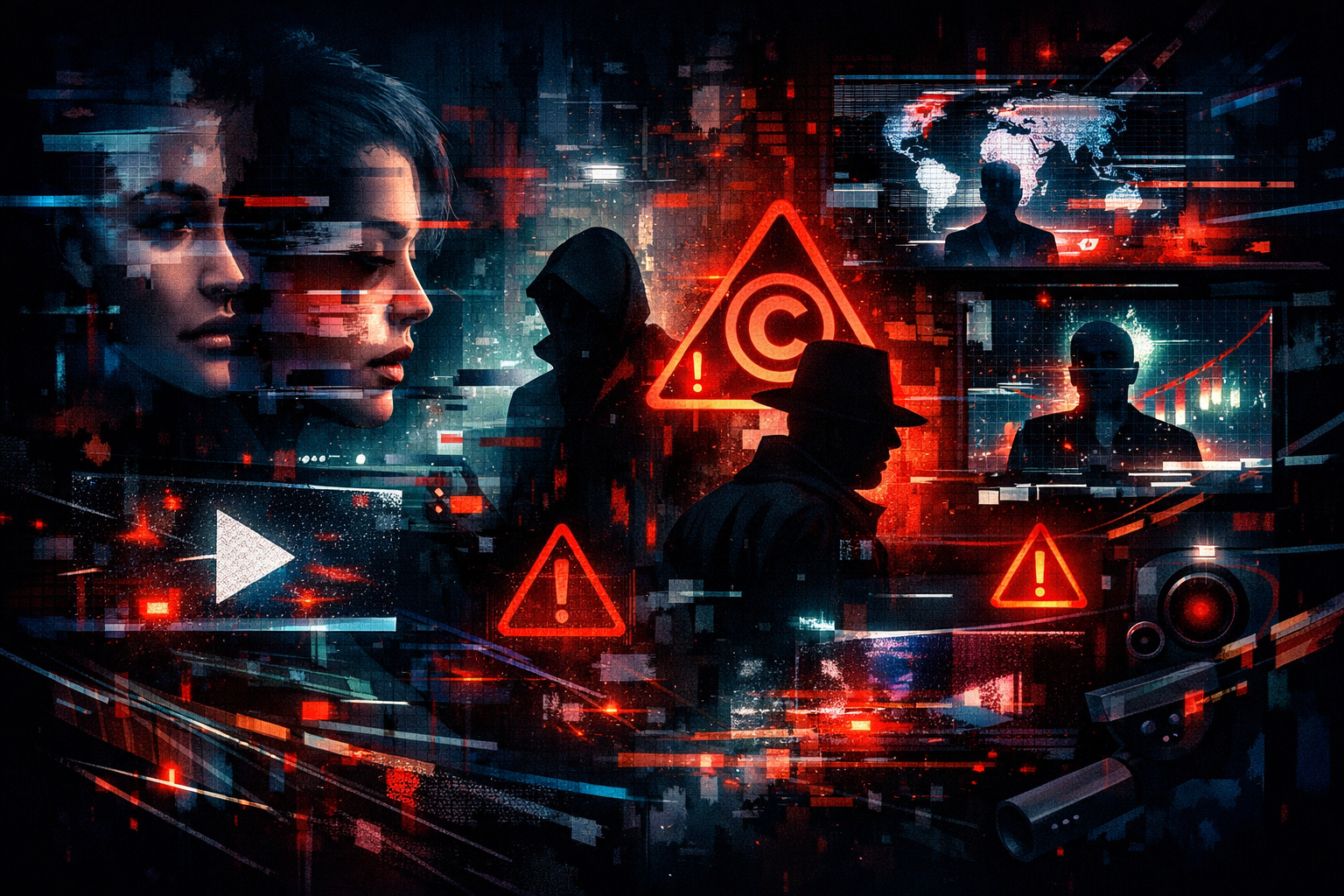
What matters here is that these problems cannot be solved simply by building a “better model.” As model performance improves, the generated content becomes more sophisticated, and the associated risks increase accordingly. In other words, technological advancement does not necessarily resolve these issues—it can actually make them more complex. Within this structure, improvement does not equate to resolution.
At the same time, the issue of responsibility emerges. Even if the content is generated by users, the platform provides the space in which that content is distributed. This raises questions about the extent of responsibility the platform must bear when problems arise. In the case of video—where social impact is particularly high—platforms are likely to be held to a higher standard of accountability. The costs and risks associated with this responsibility extend far beyond purely technical concerns.
Ultimately, Sora was not a system where problems would be solved through further development. It was a system where the problems would grow as the technology advanced. This places it in a fundamentally different position from traditional software. And this difference is the key to understanding why Sora disappeared. The remaining question is inevitable: does this same structural constraint apply to other AI products, and which of them will follow the same path in the future?
Text AI and Video AI Are Fundamentally Different Problems
There is a critical point that must be addressed here. We often group ChatGPT and Sora into the same category of AI. Both are generative AI systems, and both produce new outputs based on user input, which makes them appear structurally similar. However, in reality, these two systems are solving entirely different problems. The difference is not merely that one outputs text and the other outputs video; the fundamental distinction lies in the social implications of their outputs and the degree to which they can be controlled.
Text is relatively lightweight. Even when it contains incorrect information, it can be corrected, and there is room for reinterpretation through context. Filtering and policy enforcement are also comparatively straightforward. It is possible to impose a certain level of control by restricting specific keywords or detecting and blocking harmful sentences. While this is not perfect, it is manageable at an operational level. As a result, text-based AI has evolved through incremental improvements, gradually achieving greater stability.
Video, on the other hand, exists in a completely different domain. It does not merely convey information; it has the ability to reproduce or even replace reality. People tend to trust video far more than text, and information presented in video form is more likely to be accepted as fact. For this reason, when incorrect or misleading video is generated, its impact is far greater than that of text. Moreover, video contains multiple layers of information, making it significantly more difficult to analyze and filter automatically.
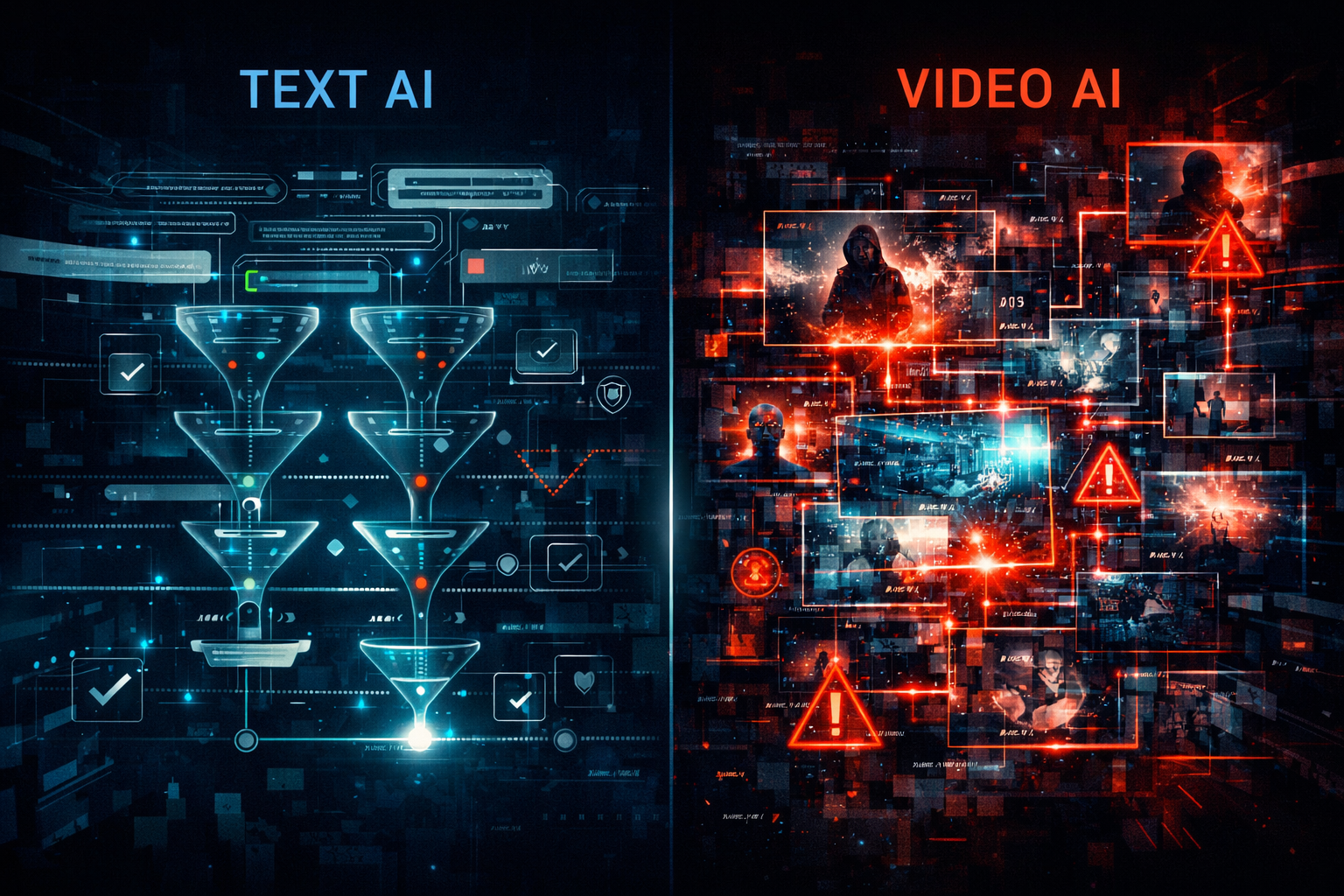
This difference is not simply a matter of technical complexity. Text involves a “process of reading and judging,” whereas video is closer to an “experience that is accepted the moment it is seen.” In other words, the way human cognition operates is fundamentally different. As a result, video AI is not just a tool—it is a system that directly influences how reality is perceived. If such a system cannot be controlled, the problem extends beyond technical errors into broader social risks.
At this point, OpenAI’s decision begins to make sense. ChatGPT still operates within a manageable domain, where stability can be improved incrementally. In contrast, Sora inherently carries a structure that is difficult to control. This difference is not a matter of product strategy, but a consequence of the fundamental characteristics of these AI systems. And from here, we arrive at the next question: what path will AI products with these characteristics take in the future?
In the AI Era, Products May Increasingly “Disappear”
It is possible to view Sora as an exception—just one product that was discontinued for specific reasons, while others will continue to evolve. However, this perspective oversimplifies the issue. The structural problems revealed by Sora are not confined to a single product; they are patterns likely to recur across generative AI as a whole. In this sense, this event is not an endpoint but closer to a beginning.
Many AI products in the future will find themselves in a state where they are “technically possible but operationally difficult.” This is especially true for areas such as video generation, voice cloning, and real-time content creation. These technologies are directly connected to human perception, and when they produce incorrect results, the social impact can be substantial. Moreover, this impact does not remain at the level of individual users; it expands into issues of platform-wide trust and accountability.
An interesting phenomenon emerges from this process. Technology continues to advance, yet the number of products that can be sustainably operated may remain limited. In other words, the gap between what is “possible” and what is “permissible” continues to widen. This gap is not driven solely by regulation, but also by the risks and costs that companies must bear. No matter how advanced a technology is, if its outcomes cannot be responsibly managed, it cannot be sustained as a service.
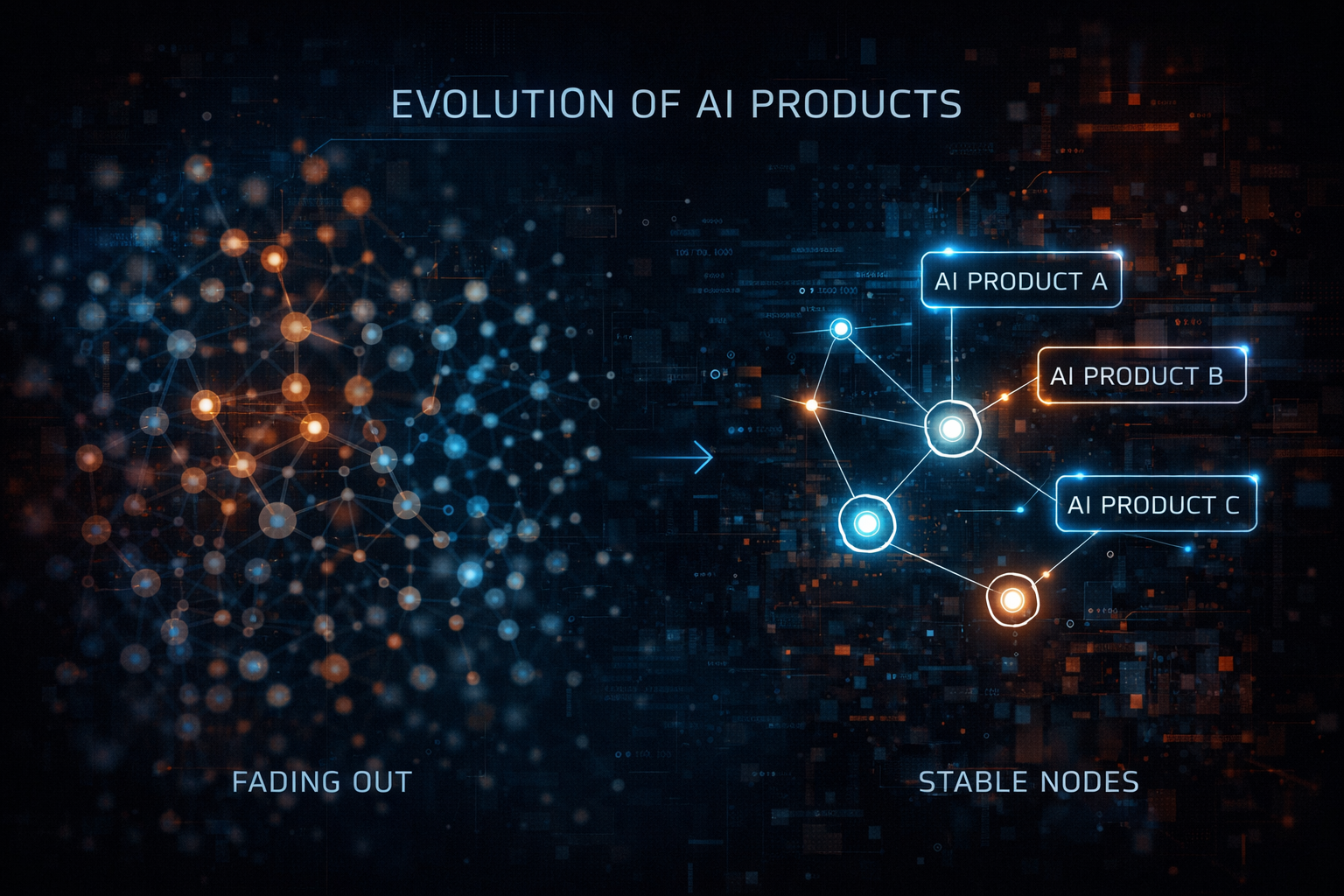
This trend conflicts with the traditional growth model of the software industry. In the past, technological advancement typically led to the creation of more products, some of which would go on to define markets. In the AI era, however, technological progress does not necessarily translate into an increase in products. On the contrary, as technology advances, the number of “disappearing products” may also increase. In this sense, Sora serves as a warning signal.
Ultimately, we need to adopt a new standard. The success of an AI product can no longer be measured solely by its features or user base. It must also be evaluated based on whether it has a structure that can be sustained over time, and whether that structure aligns with societal expectations. This standard will determine the fate of many future products.
Technology Is Ahead, but Society Is Not Ready
Finally, it is important to recognize that these issues are not simply the result of technological limitations. In fact, the opposite is closer to the truth. Technology has already advanced to a significant level, and in many cases, it is fully capable of real-world use. The problem lies in the fact that the social, legal, and institutional frameworks required to adopt and operate this technology are not yet sufficiently prepared.
Generative AI disrupts existing models of responsibility. It becomes unclear who created a piece of content, who should be held accountable for it, and how issues should be addressed when they arise. This complexity becomes even more pronounced with high-risk content such as video. Platforms are no longer merely intermediaries; they are expected to assume a certain level of responsibility. However, the scope and standards of that responsibility remain undefined.
As a result, companies must consider operational risks independently of technical feasibility. When factoring in the costs of potential issues, legal liabilities, and damage to brand trust, it may be more rational to avoid launching certain products altogether or to discontinue them early. The discontinuation of Sora can be understood in this context. It was technically possible, but the environment necessary to operate it safely was not yet in place.

This issue will not be resolved in the short term. Laws and regulations evolve much more slowly than technology, and social consensus takes time to form. In the meantime, companies must establish their own standards and manage risks accordingly. In this process, some technologies may disappear before they are widely adopted, or survive only in limited forms.
In the end, Sora is less a failure of technology and more a result of an environment that was not ready. And this situation is likely to repeat itself. Technology will continue to open new possibilities, but not all of those possibilities will become reality. Understanding this gap is the first step toward properly understanding AI products in this era.
In the AI Era, Competition Is Not About Performance, but Sustainability
We can now return to the original question. Why did Sora disappear? At this point, we can no longer give a simple answer. It was not because the technology was lacking, nor because there were no users, nor because the market response was poor. In fact, the reality was closer to the opposite. Sora was a sufficiently impressive technology, people were actively using it to create content, and it had already secured a certain level of market traction. The fact that it still disappeared shows that the evaluation criteria we have traditionally relied on are no longer valid.
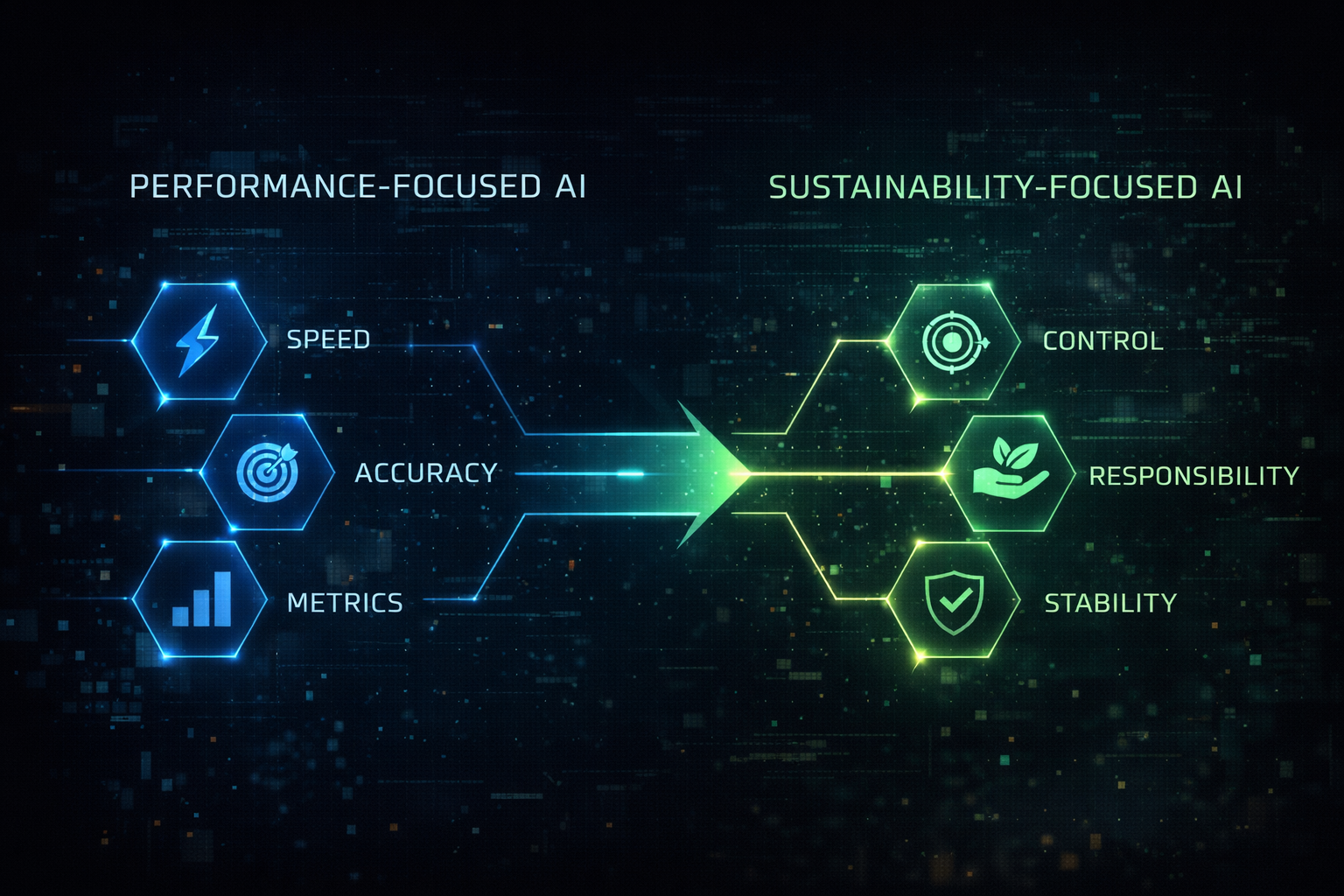
In the AI era, the criteria that determine whether a product survives have changed. What matters now is not how sophisticated the model is, but how reliably the outcomes it produces can be managed. In other words, the key is no longer performance, but sustainability. Sustainability does not simply mean that servers run smoothly. It includes whether the system has a structure that can be maintained over the long term, whether it conflicts with societal expectations, and whether it can absorb and handle problems when they arise. Any product that fails to meet these criteria will struggle to survive, no matter how advanced its underlying technology may be.
This shift does not end with a single product case. Countless AI products that will emerge in the future will be evaluated under the same standard. Some technologies will disappear despite their superior performance, while others—though relatively simple—will survive because they can be operated in a stable and sustainable way. In this process, we must distinguish between what is “technically possible” and what is “sustainably viable in the real world.” And this distinction will only become more important over time.
Ultimately, Sora is not just an isolated incident—it is a signal. It demonstrates how far AI technology can go, while simultaneously revealing the boundary that limits how far it can actually be used in practice. This boundary will continue to shift, but it will not disappear entirely. Understanding this boundary is the starting point for properly designing and operating products in the AI era. We can no longer ask only “What can we build?” Instead, we must also begin asking, “What can we sustain to the end?”